 Nihon Chomiryo Tabi
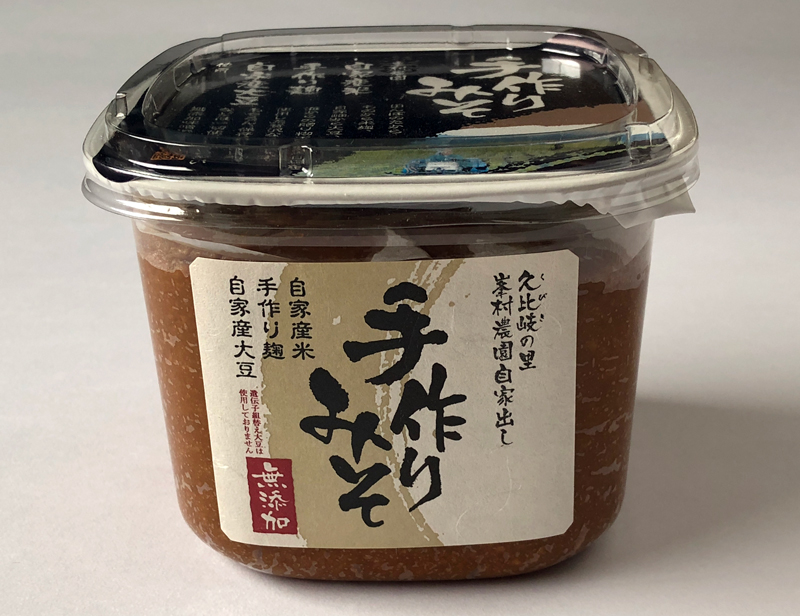
Kubiki no Sato Jukusei Miso (久比岐の里 熟成味噌)
The story behind it
Kubiki no Sato, in the Kubiki district of Joetsu, is not a miso shop but an agricultural corporation. As the second-oldest farming cooperative in Joetsu, it makes its rice, its mochi and its miso entirely by its own hands. Minemura, who heads it, says they go out to the paddies and fields every day and have never once neglected to check how the crop is coming along.
The rice koji for this aged miso is started from rice they grew themselves. Washed, soaked, steamed, cooled, seeded, and drawn out as koji after roughly forty-four hours. To that they add Niigata soybeans and mineral-rich sun-dried sea salt, and set the mash.
Once mashed, it is left to rest for more than a year. Because no alcohol is added before shipping to halt fermentation, the koji arrives alive. The same maker's koshi miso is strained smooth; this one is not strained, so the grains of koji are still there.
Even after households largely stopped mashing their own miso, this form of it has not disappeared. The people who grow the rice start the koji from that rice and turn it into miso. It is one bottle in which the order runs unbroken from beginning to end.
How to use it
Start with miso soup. The koji grains are still in it, so the soybean and rice aromas come up more than with a strained miso. It holds its own in a dashi-heavy soup like tonjiru. Used without much heat, spooned straight onto cucumber or furofuki daikon, or brushed onto grilled rice balls, the sweetness of the koji reads clearly.