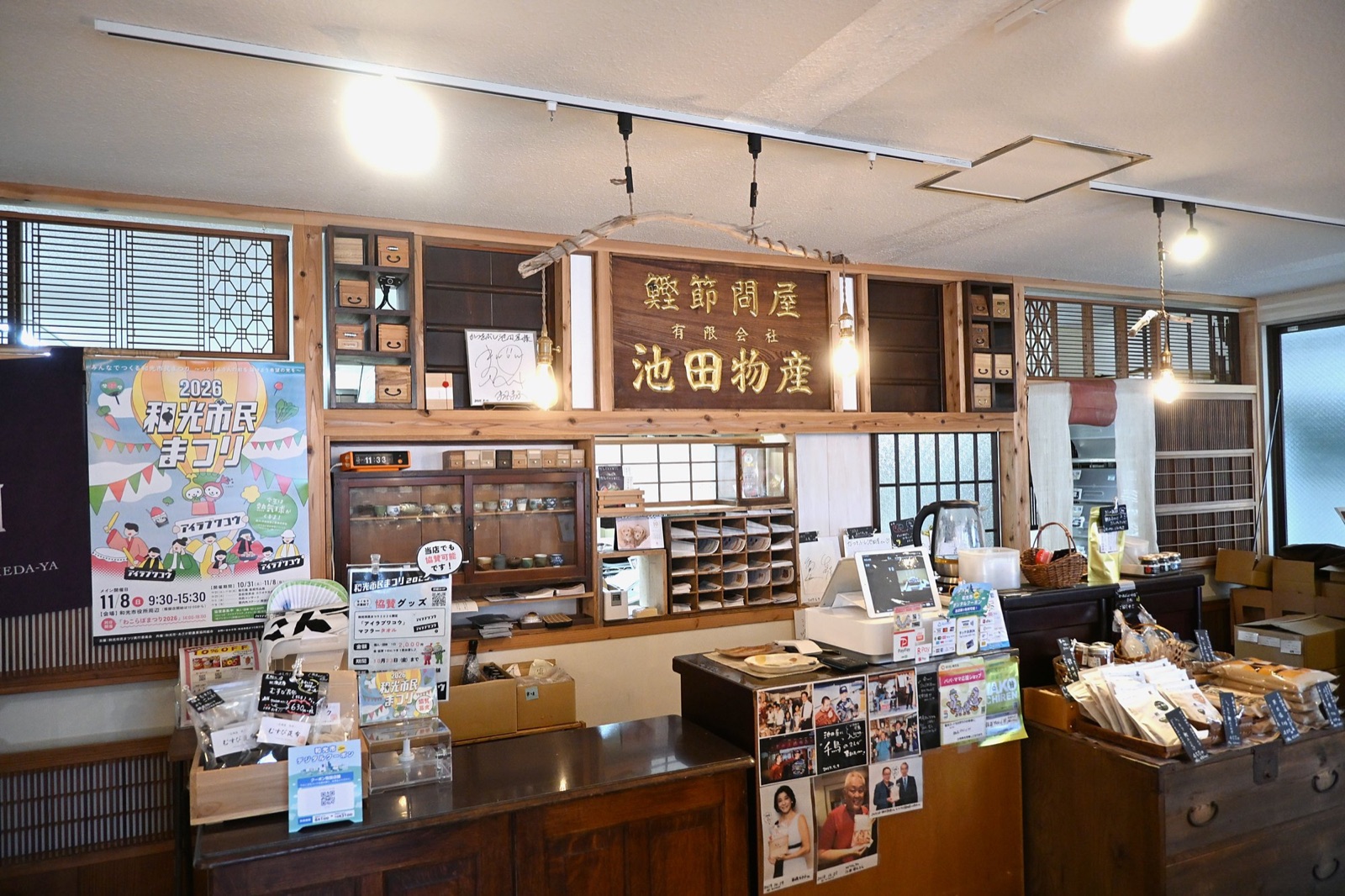
When you buy hanakatsuo (shaved bonito flakes) at the supermarket, what do you go by? Apart from the price and the amount in the bag, there is not much to go on.
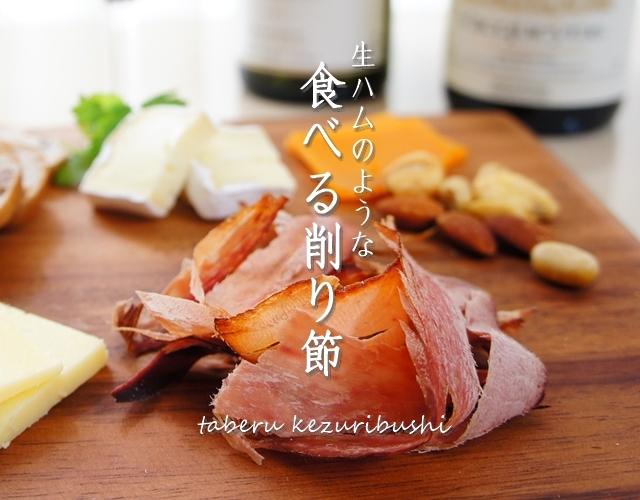
Katsuobushi Ikedaya (かつをぶし池田屋, Ikeda Bussan Co., Ltd. 有限会社池田物産) in Wako, Saitama Prefecture, is a specialty shop for katsuobushi (dried, fermented bonito) and dashi ingredients, founded in 1978 (Showa 53). While supplying dashi ingredients to soba restaurants and school lunch programs, it has spread the word about "eating flakes" (taberu kezuribushi), known as "prosciutto-like bonito."
We spoke with President Ikeda and Managing Director Ikeda about how they choose and shave the bonito, how they came to sell flakes meant to be eaten as they are, and the dashi classes they have been teaching at elementary schools in Wako.
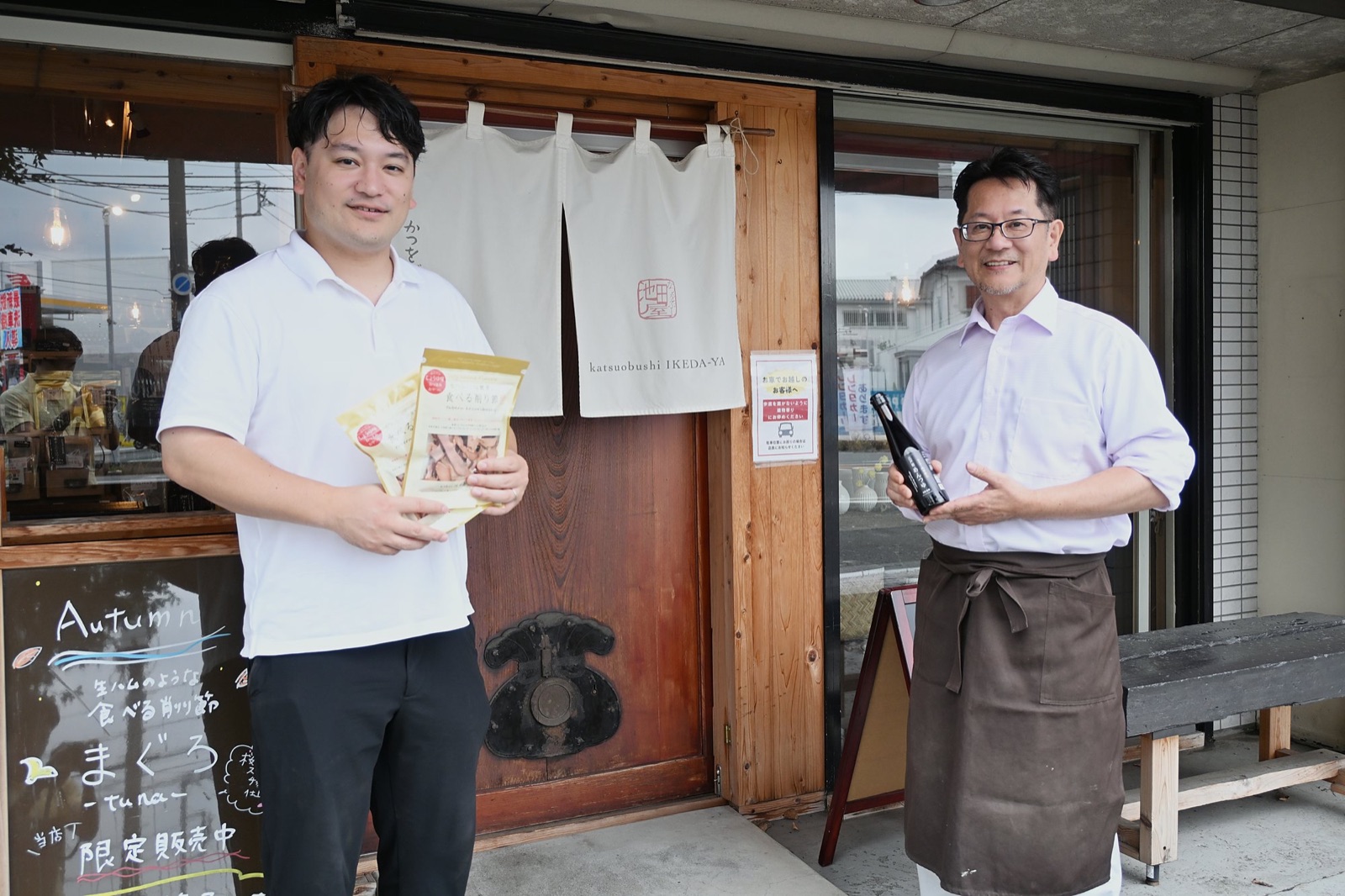
A bonito shop that began by supplying soba restaurants
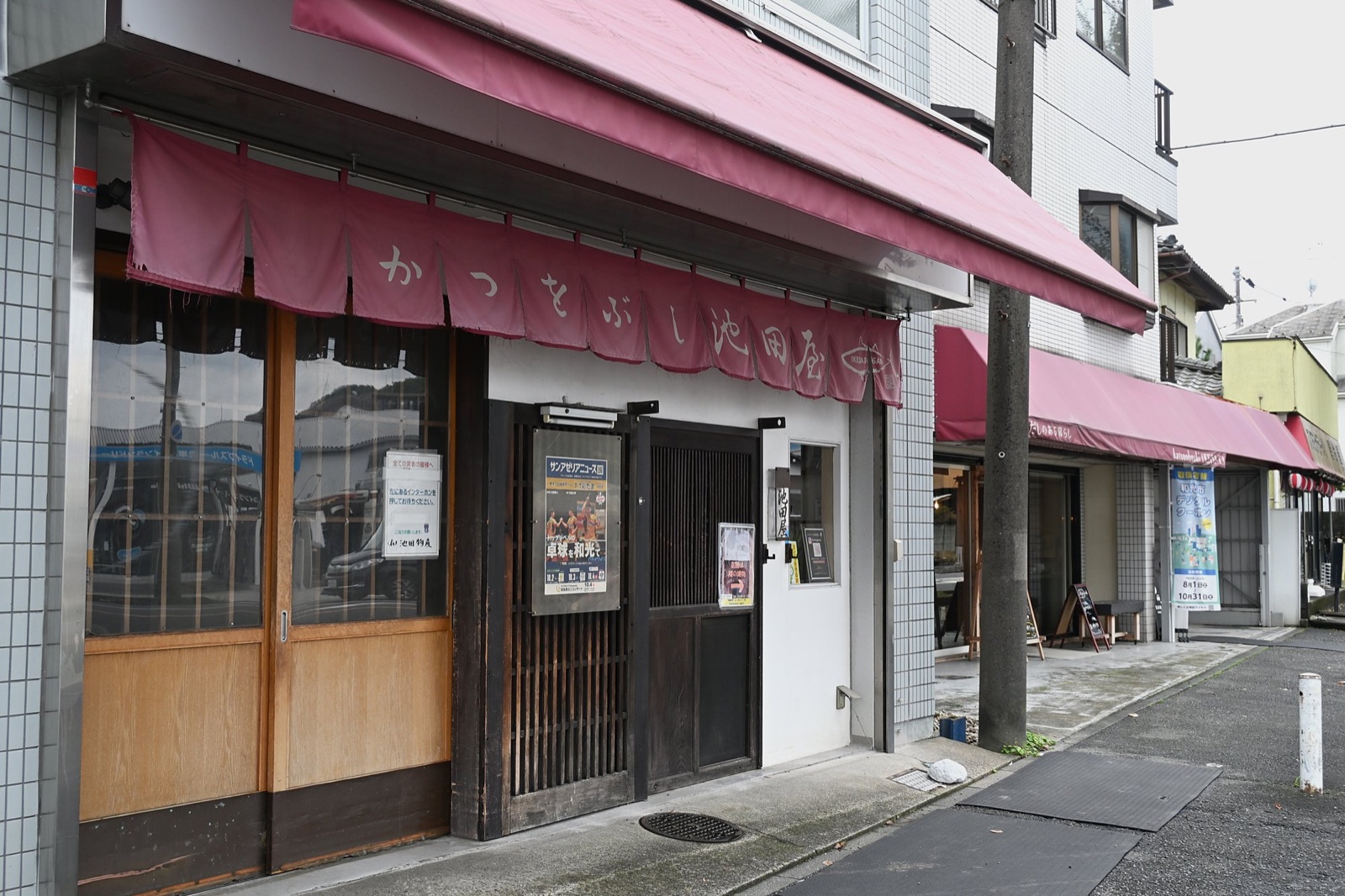
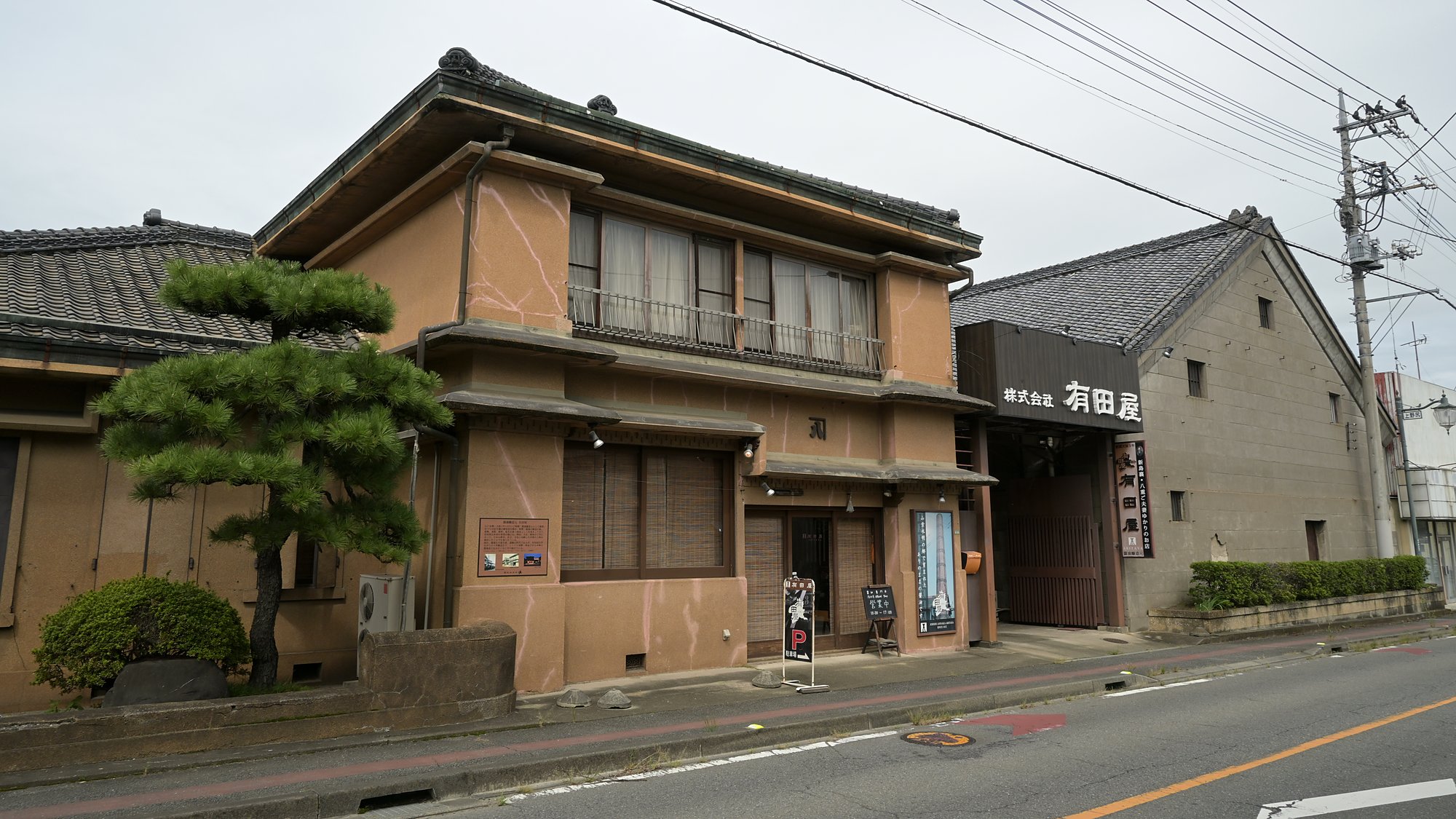
Ikedaya was founded in August 1978 in Toda, Saitama Prefecture. Today the shop and the factory stand in Shirako, Wako.
The founder started the shop after leaving a company that dealt in katsuobushi. His first customers were Japanese soba restaurants. Processing flakes for commercial use and delivering them became the foundation of the business, and supplying soba restaurants continues today.
Cured bonito aged for 10 months or more, shaved without steaming
Two things at Ikedaya have not changed since its founding.
The first is the use of karebushi (枯節), cured bonito that has been aged for a long time. Karebushi is katsuobushi that has been smoked and dried, then covered with mold and left to rest until it is finished. Ikedaya mainly handles bonito aged for 10 months to more than a year, and says this is the biggest difference from the large makers. Securing the raw material gets harder every year, but they have not changed this policy.
The second is the way they shave it. Ordinary bonito flakes are made by steaming the block first, drying it slightly, and then shaving it. When steam is applied, the aroma and the extracts of umami come out along with it, and the moisture content also goes up. So in the previous president's time, they worked out a way of shaving without steaming. They wash the block, let it rest for a day, apply heat with a machine, and shave it just as it is. This method keeps aroma and umami in a state close to shaving by hand, and it is patented.
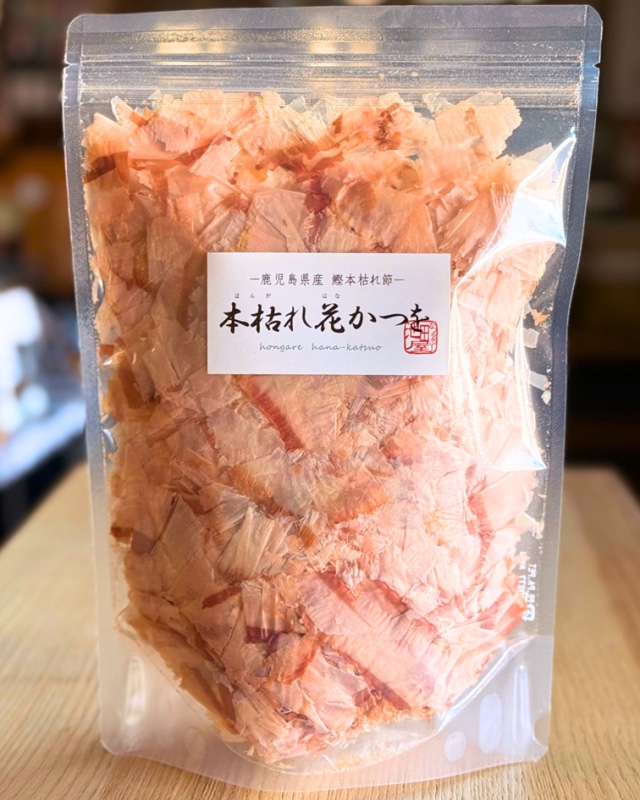
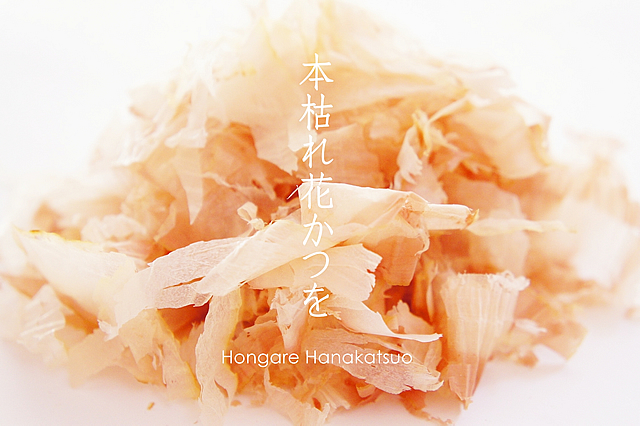
Because the flakes are well dried, they are light, and it takes a larger volume to fill the same weight. That is hard on the business side, but the difference shows up in the texture. Flakes that kept moisture from steaming leave a coarse feel on the tongue. Flakes with little moisture crumble and melt in the mouth. We were told that Hongare Hanakatsuo is the easiest one to compare with ordinary hanakatsuo.
At every purchase, they make dashi to check
There are standards for the bonito they use, too. What they want to avoid is bonito with high salt content and bonito that is too fatty. Blocks made from fatty bonito tend to give a cloudy dashi.
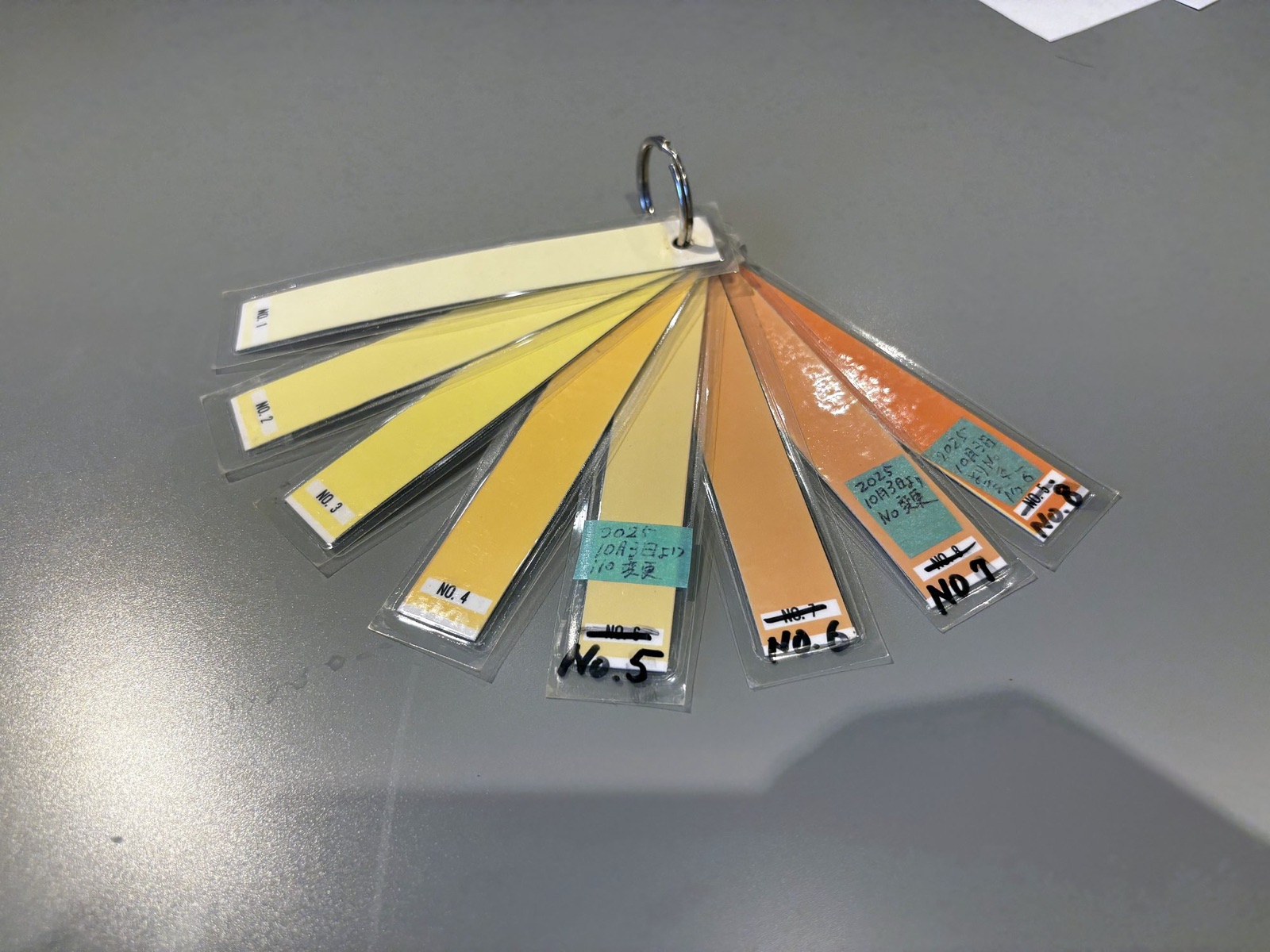
Even so, looking at a block tells you only 60 to 70 percent; the rest you cannot know without making dashi from it. At Ikedaya, when they buy, they make dashi from that block and check the color, saltiness and aroma. They compare the color of the dashi against a sample, and judge sweetness, saltiness, bitterness, cloudiness and fishiness by their own standards.
The main source is Kagoshima. Bonito is caught year-round by deep-sea fishing, but blocks prepared in spring take the mold better, and they would like to use those if they can. Blocks cut and prepared in spring are finished in summer or later.
Prices rising and catches falling: no longer able to pick their blocks
Buying katsuobushi has become harder over the past few years. In the past, they could choose from blocks that craftspeople at the source had made and kept in stock. Now prices have climbed so far that sometimes the blocks are not made unless you promise to buy them, and when the promised blocks are finished, the fish turns out not to be what they wanted. Bonito with less fat has become scarcer, and the places where it is caught have shifted. This year, they say, catches of mackerel and soda (frigate mackerel), which are also made into blocks alongside bonito, have dropped sharply.
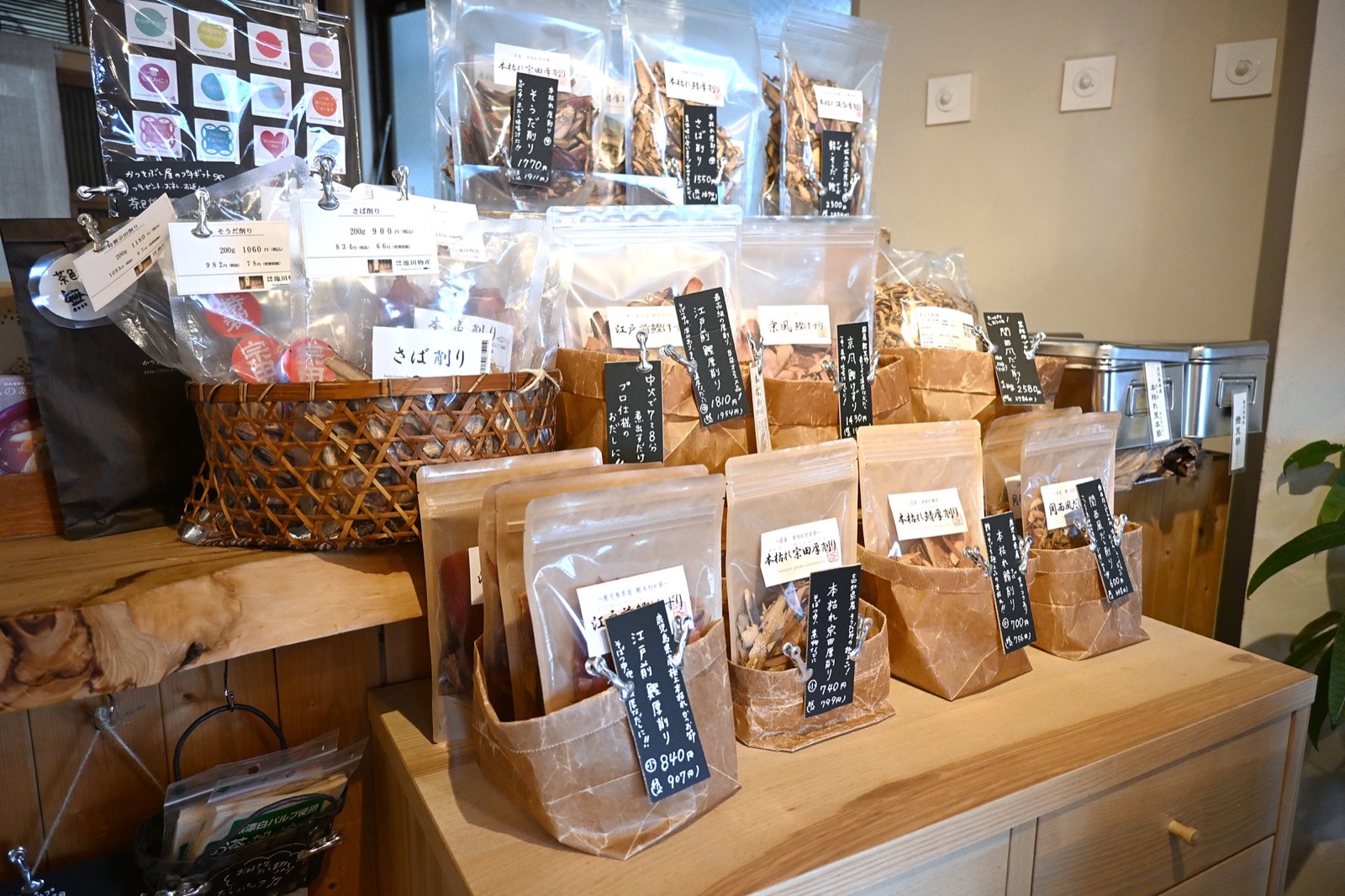
Nor is there only one way of finishing a block. Counting those for commercial use, there are around 20 kinds, and both the flavor and the price change with the amount of work put in. Even when they sit side by side on the shelf as the same hanakatsuo, the raw materials are each different.
Dashi ingredients that did not sell, and "eating flakes"
What led Ikedaya to sell flakes meant for eating was taking a stall at marchés (open-air markets).
From more than ten years ago, markets began to be held in many places, and Ikedaya also set up at the farmers' market in Aoyama and elsewhere. But when they lined up only dashi ingredients, they hardly sold. There were people who liked them, but not enough to cover the stall fee. They wondered whether, by putting out something that even people who don't cook could eat, they might draw those people into dashi. What they put on the counter was the "eating flakes."
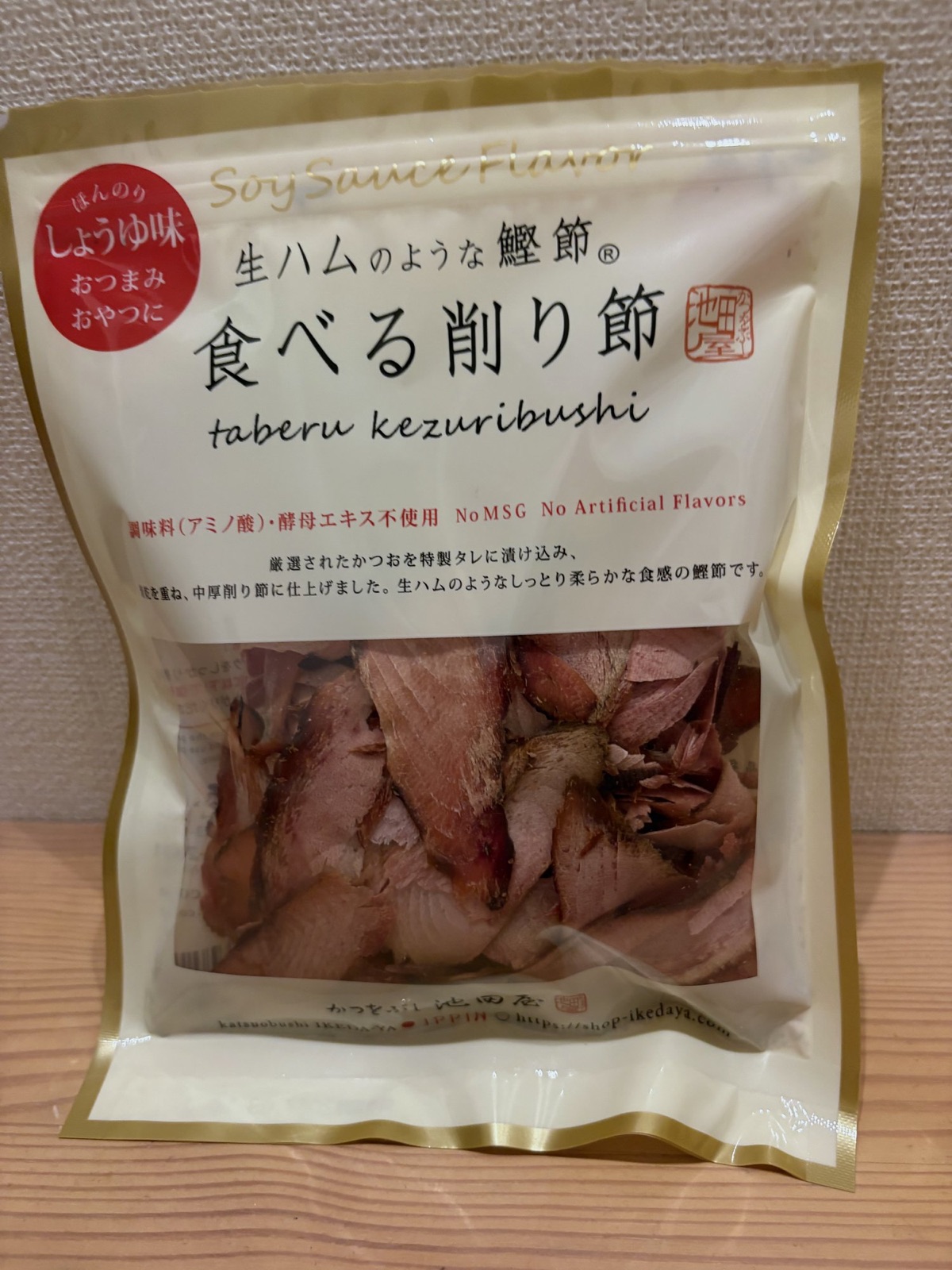
As they kept selling, the idea came up of adding umami seasoning to hold the price down even a little. They chose not to add it, as a matter of brand value. Later they also made a type without seasoning such as soy sauce.
Customers' reactions changed clearly from around 2013, when washoku (traditional Japanese cuisine) was inscribed on UNESCO's Intangible Cultural Heritage list. Even so, there was a long stretch where people did not understand until they tasted it.
At launch, the product was called just "Eating Flakes." In face-to-face tasting sales, they tried calling out with various catchphrases such as "soft katsuobushi" and "eating flakes." The one that drew the biggest response was "prosciutto-like bonito." When they put the same catchphrase on the package, people began to reach for it even on the shelf.
One thing that helped it spread was a commercial facility in Asakusa that gathers regional products from across Japan. Various buyers noticed it there, and business grew from that.
Another was a popular YouTuber and food researcher who featured it on social media (now X) around 2019. In a short post saying it was delicious, orders poured into Ikedaya's online shop. It also won the Grand Prize in the Food and Drink category at the Omiyage Grand Prix 2020.
If something becomes a talking point, people will buy it once. But if it doesn't taste good, there is no next time. The two of them said they make something that tastes good when you eat it and that you would want to give to someone. Today there are even people who buy 10 bags at a time.
Making Wako a "town of dashi": the dashi class at elementary schools
Ikedaya also supplies dashi ingredients for school lunches. They started it because they wanted local children to eat local products, and it has now been about 30 years.
When they mention that they supply elementary school lunches, adults almost always say, "So the children are drinking such luxurious dashi." Making dashi from raw ingredients used to be the norm. The two of them feel it has now become something special.
They also run classes that teach how to make dashi. They have kept it up in a small way for 7 or 8 years, and requests have increased over the last few years. Since around the year before last, they have been given one hour of a home economics class at elementary schools in Wako, where fifth graders make dashi. Fifth grade is the year children begin using fire in home economics, and this class comes just before that. This year they plan to visit about five schools. Through referrals between teachers, they sometimes get calls from schools outside the city and from parents' meetings.
Sometimes a child who took the class says at home, "I want to go buy dashi," and brings a parent to the shop. At the booth they set up at a city festival, two elementary school boys came by. They talked over which hanakatsuo to get, and bought it with their own pocket money.
When we asked about their goal, the answer was that they want to make Wako a "town of dashi." When they ran a survey, for some reason it turned out that many people in Wako make dashi. If they could get to the point where people say "Wako means dashi," that would be something, they told us.
Dashi for Japanese, Western and Chinese cooking, and the first bag to try
Ikedaya thinks that making dashi at home can be much looser. Restaurants keep to a fixed method in order to protect the flavor of their own shop, but when you do it loosely at home, that becomes the flavor of your house.
In the Ikeda family homes, they do not use consommé. Western and Chinese dishes are made with dashi from katsuobushi and kombu as well.
Even so, some people cannot spend time on cooking, even more so when both partners work or they are raising children. Ikedaya's thinking is that it is enough if they make it on a weekend or whenever they have time, and that eating flakes are an entrance to get them there.
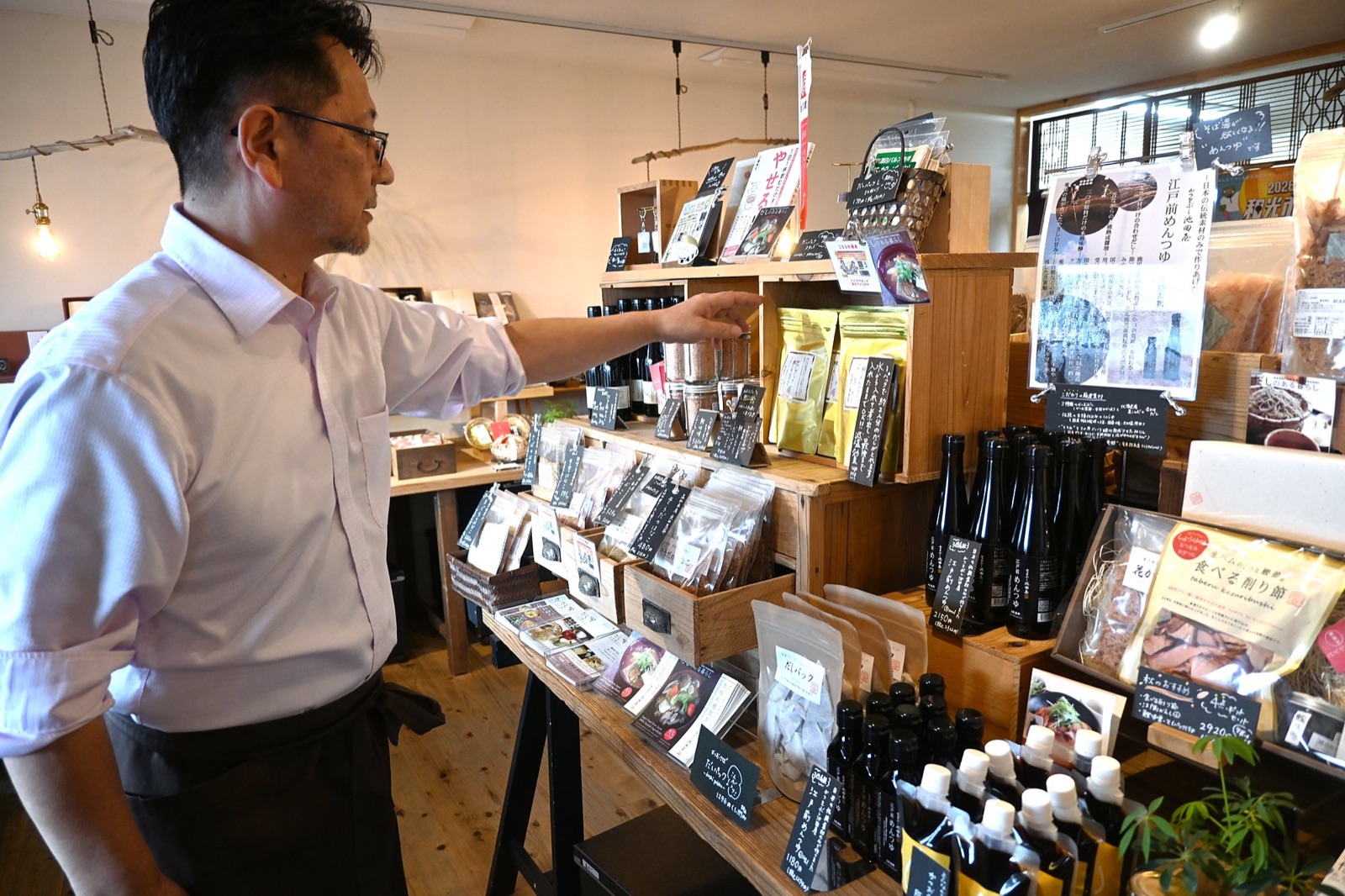
What they recommend when there is no time to make dashi is "Edomae Mentsuyu" (江戸前めんつゆ, a noodle dipping sauce). It combines a dashi of arabushi (smoked-and-dried bonito, before molding) and honkarebushi (fully cured bonito) from Kagoshima Prefecture with Hokkaido ma-kombu, together with soy sauce aged in cedar barrels, mirin brewed with rice shochu, and cane sugar from the Amami Islands. As a guide, use 1 part sauce to 2 to 3 parts water for cold noodles, and 8 to 9 parts water for hot, or use it undiluted as a dashi soy sauce.
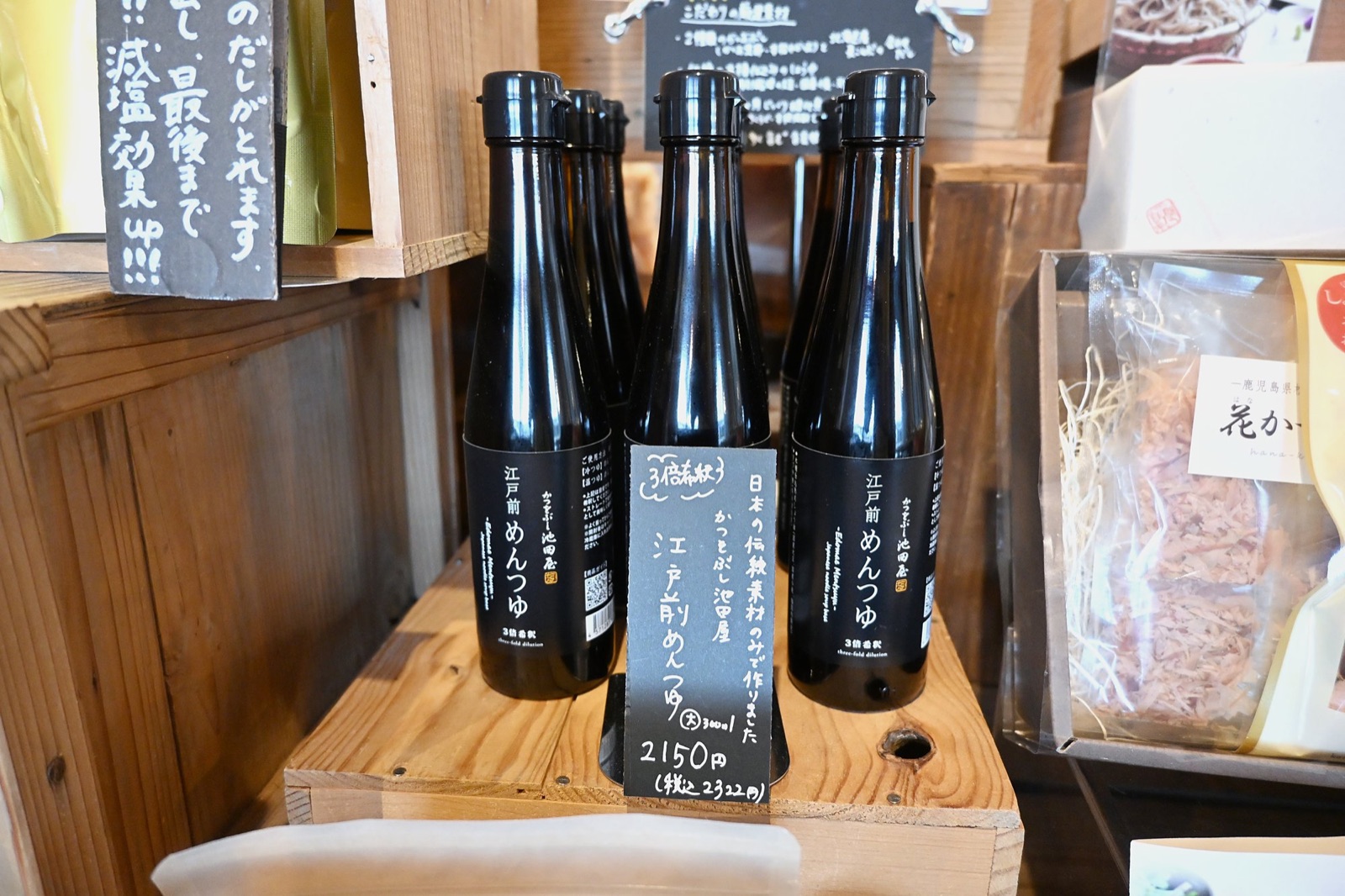
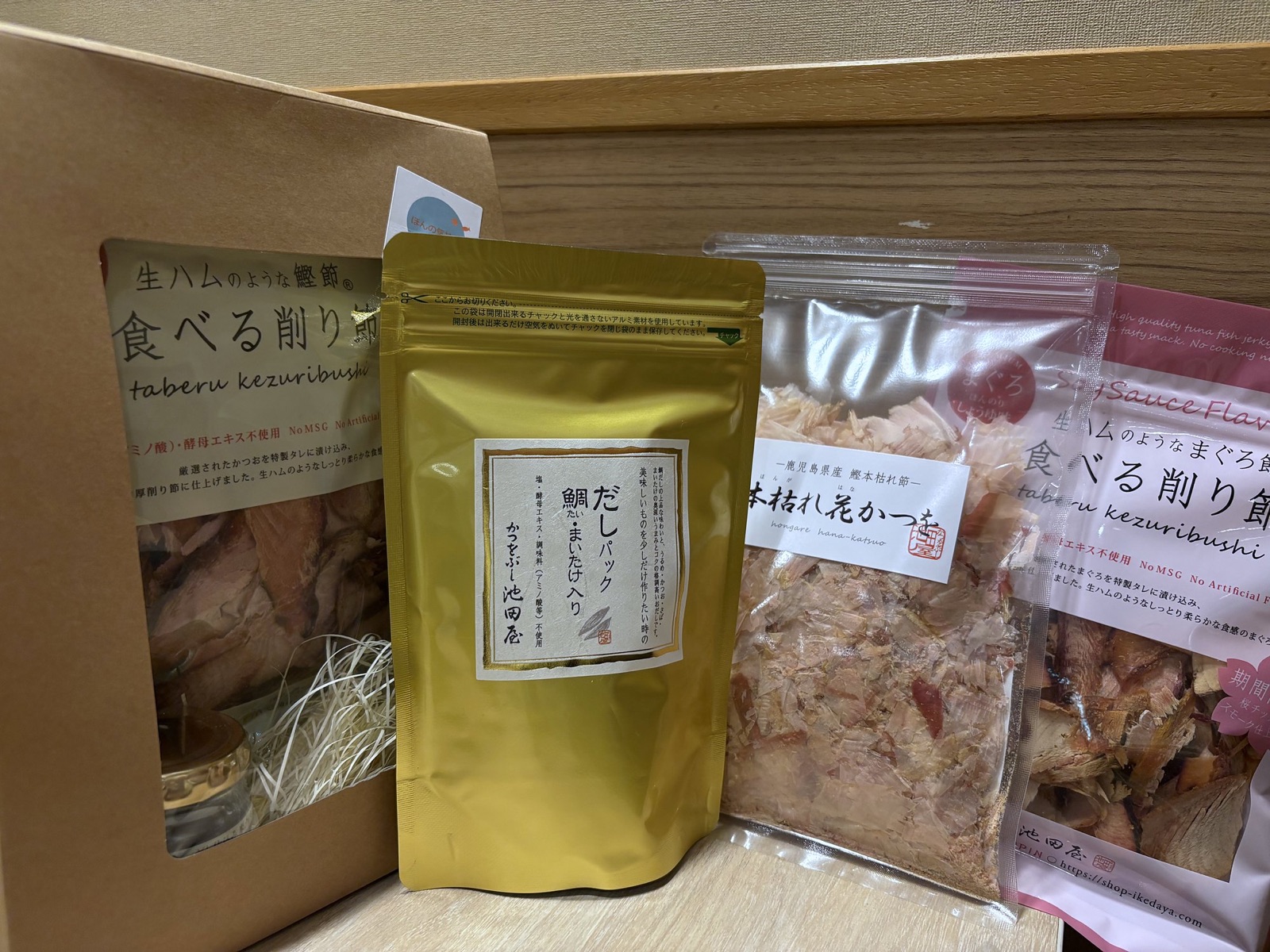
When we finally asked which product they recommend, what they pointed to was, once again, the eating flakes. Next came "Hongare Hanakatsuo." Because hanakatsuo is a little costly for making dashi, many people sprinkle it over rice or ohitashi (blanched greens in dashi).
When you open a bag of Hongare Hanakatsuo, try putting one flake straight into your mouth before you make any dashi. This is how Ikedaya first suggests customers eat it, and you can feel the texture of bonito shaved without steaming, melting in your mouth.
Shop information
Katsuobushi Ikedaya (Ikeda Bussan Co., Ltd.)
Shop and factory: 3-18-17 Shirako, Wako, Saitama Prefecture (埼玉県和光市白子3-18-17)
Official site / Official online shop
For your first bag: Prosciutto-like Eating Flakes (for the unseasoned version, see No Seasoning Added: Prosciutto-like Eating Flakes "Katsuo")
For your next bag: Hongare Hanakatsuo 70 g
For days when there is no time to make dashi: Edomae Mentsuyu
Interview: September 2026. Product lineup and prices may change.
Frequently asked questions
How is Ikedaya's Hongare Hanakatsuo different from other bonito flakes?
It is made mainly from karebushi (cured bonito) aged for 10 months to more than a year, and it is shaved without steaming (patented method, Patent No. 1311643). Because the flakes hold little moisture, they melt in the mouth.
What goes into the "prosciutto-like" bonito flakes you eat as they are?
According to the official shop's listing, the ingredients are bonito from Kagoshima Prefecture, a rice-fermented seasoning, soy sauce, sugar (sanontō, a light brown sugar) and fish sauce. No umami seasoning (MSG-type additive) is used. There is also an unseasoned "no seasoning added" version, without soy sauce and the like.
What did the dashi class show?
Miso soup made with the same ingredients was seasoned to taste just right in three groups: granulated dashi, dashi packs, and bonito flakes with kombu. The salt levels came out at about 1.1%, 0.9 to 1%, and 0.7%.
Where can I buy Ikedaya's products?
You can buy them at the shop in Shirako, Wako, and at the official online shop.