There is a miso that is not used for dashi or soup, but eaten as it is on rice or cucumber, in spite of its name. It is kinzanji miso (kinzanji-miso), a nameme-miso (a "lick miso" eaten as it is) with chopped vegetables mixed in. Ogawaya Miso-ten (小川屋味噌店) in Togane, Chiba Prefecture, was founded in 1848 (Kaei 1) as a koji shop, and has been making kinzanji miso since the 1940s (Showa 20s). Kinzanji miso is originally a food of Wakayama. Why did it take root in Togane, Chiba? We asked Mr. Hoshino (星野英幸), Representative Director, and Mr. Ishikawa (石川明男), Director and Plant Manager, how kinzanji miso came to Togane, how it differs from miso for soup, and how to eat it beyond cucumber.

How kinzanji miso came from Wakayama to Togane
— Kinzanji miso is a food of Wakayama. Why did it come to be made in Chiba, and in Togane in particular?
Apparently Wakayama and Choshi were connected by ship, on the current. So people who had been eating and making kinzanji miso in Wakayama came over to the Choshi area.
In the Edo period there were routes to Edo by river and sea, and the towns along them as relay points prospered. Sawara being called "Little Edo" is part of that. Togane was a town that prospered on a land route, but that isn't well known. I only heard it for the first time at this age myself.
— Were there other reasons it took root in Togane?
The climate was similar to Wakayama's. The technique took root in Togane, and people began making koji here.
Soy sauce is also said to have its roots in kinzanji miso. That soy sauce spread from Noda and Choshi. But kinzanji miso, for some reason, didn't go to Noda and came all the way to Togane.
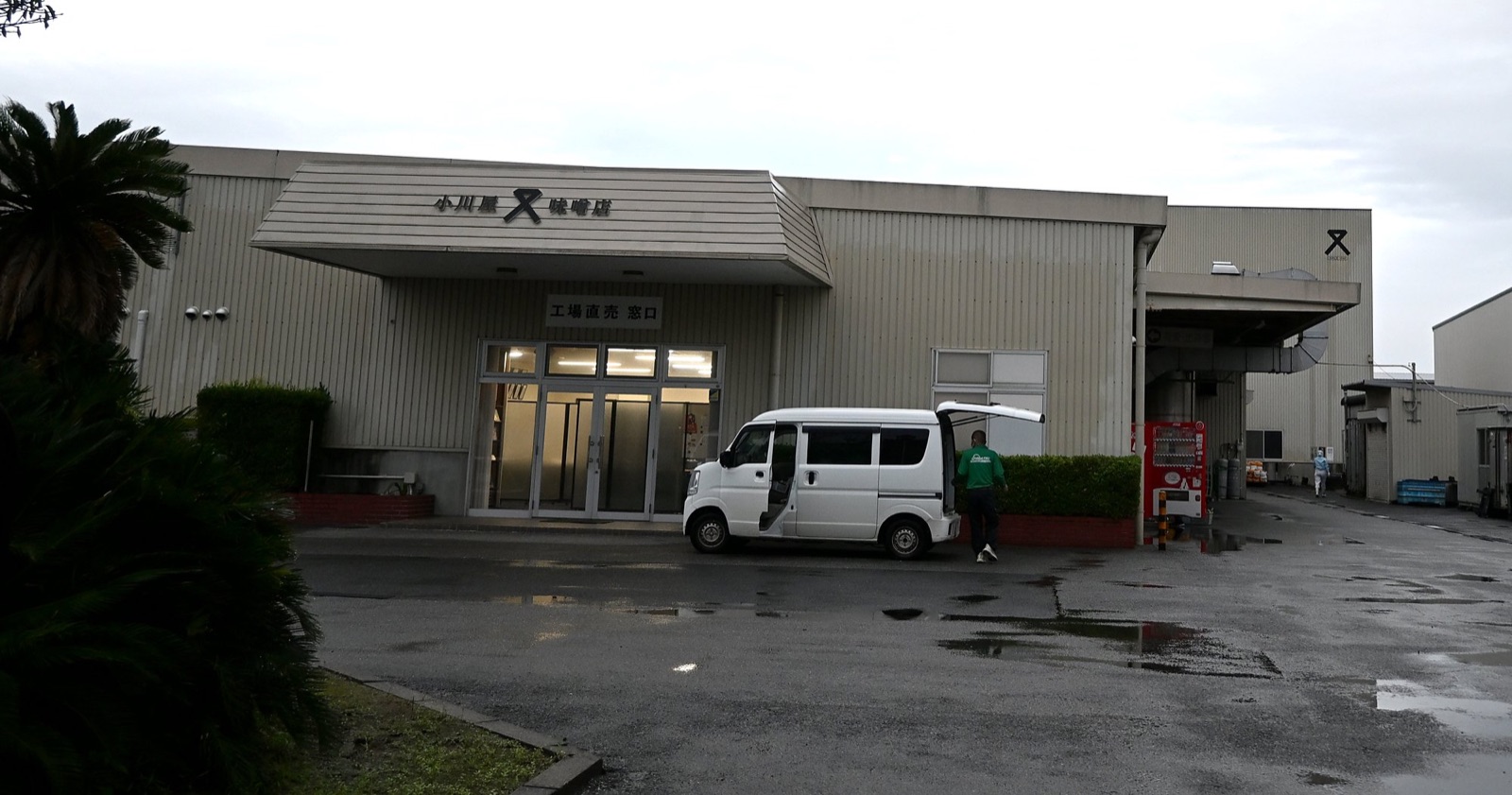
A town seasoning shop that began as a koji shop
— Ogawaya Miso-ten began as a shop that made koji, didn't it?
It started with koji, and they did all sorts of other things too. It was like a convenience store of the late Edo period. They handled seasoning-related goods in the town.
Production of kinzanji miso at Ogawaya Miso-ten began in the 1940s (Showa 20s). Today, besides kinzanji miso, we also make amazake, shio-koji (salt koji), rice koji and more.
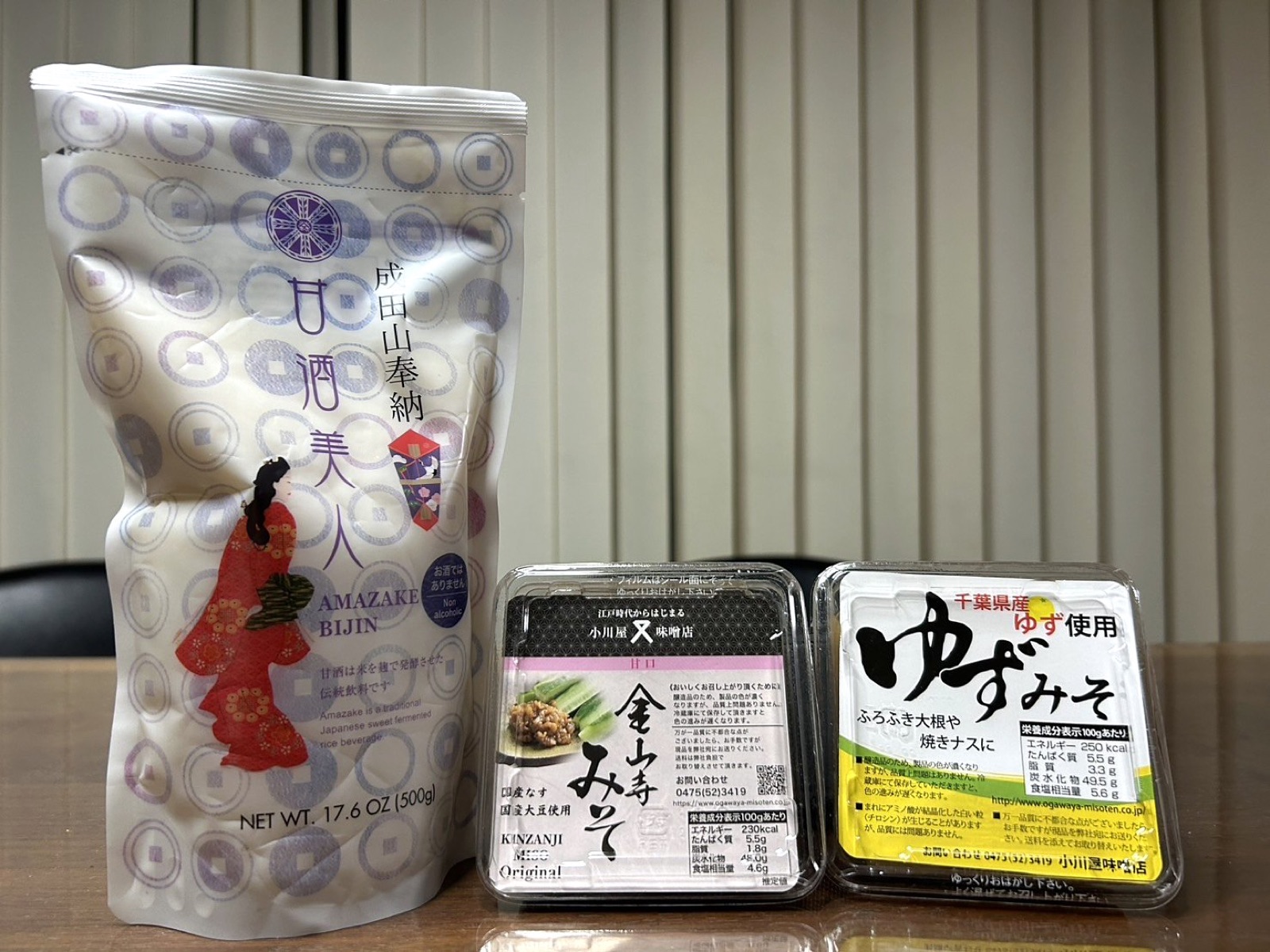
— How do new products come about?
We often start from what customers need. There is a team of six or seven people centered on the president, and we hold a product development meeting once every two weeks.
Recently we tried making a kinzanji miso with dashi added. Dashi is popular, but when we searched online for kinzanji miso with dashi, there turned out to be surprisingly little.
A miso for soup, and a miso for topping rice
— How is kinzanji miso different from the miso used for miso soup?
The use is different. Miso for soup is something you dissolve into a broth. Kinzanji miso is something you put on rice or eat together with other things. It is a nameme-miso that you eat as it is.
— Is the way it is made different too?
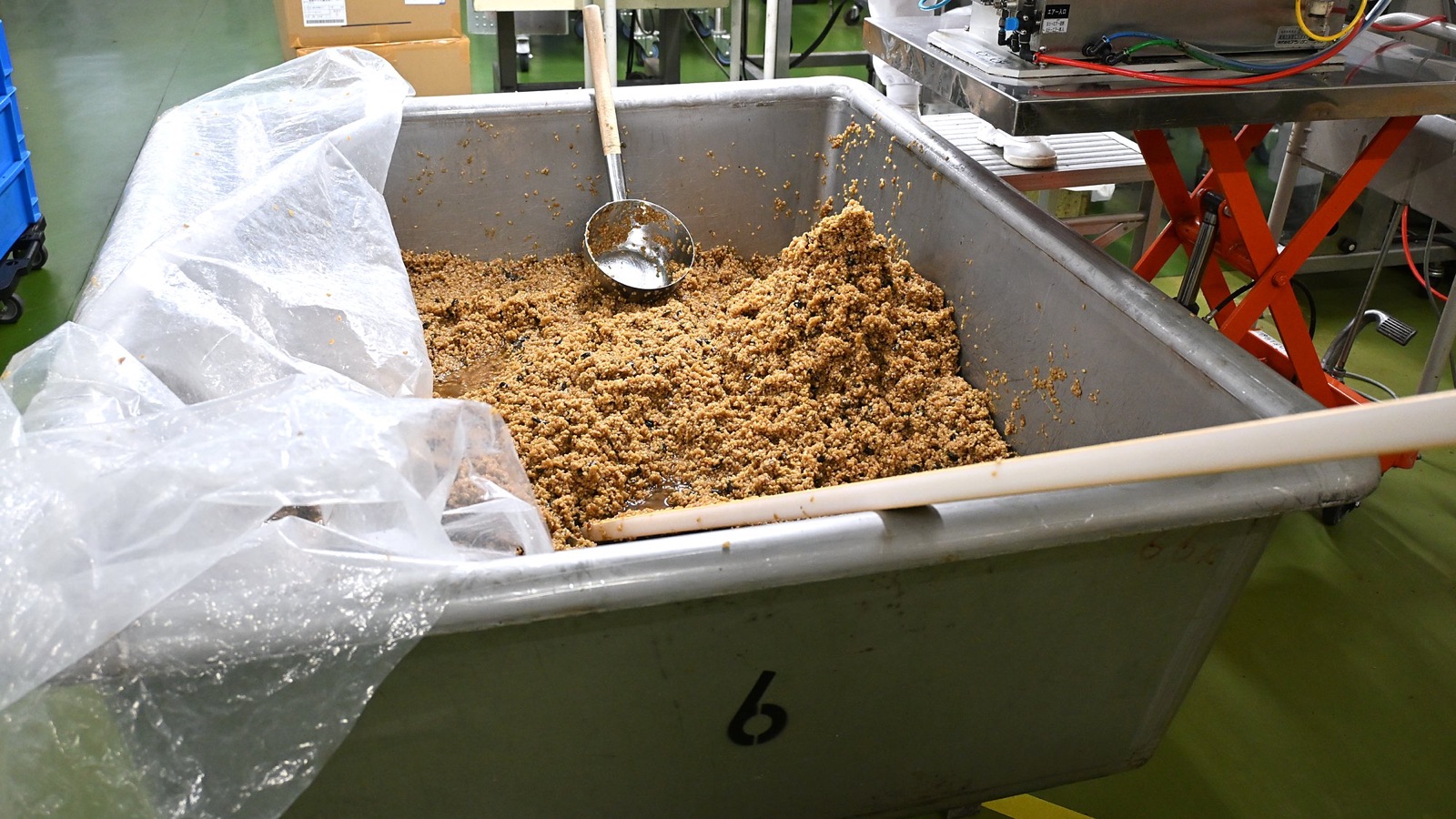
For kinzanji miso, we make koji from wheat and soybeans. We combine that with salt water and ferment it into moromi. Once the base moromi is ready, we mix in vegetables and adjust the flavor. Some versions add sugar, and the sweeter ones are what mainly sell now.
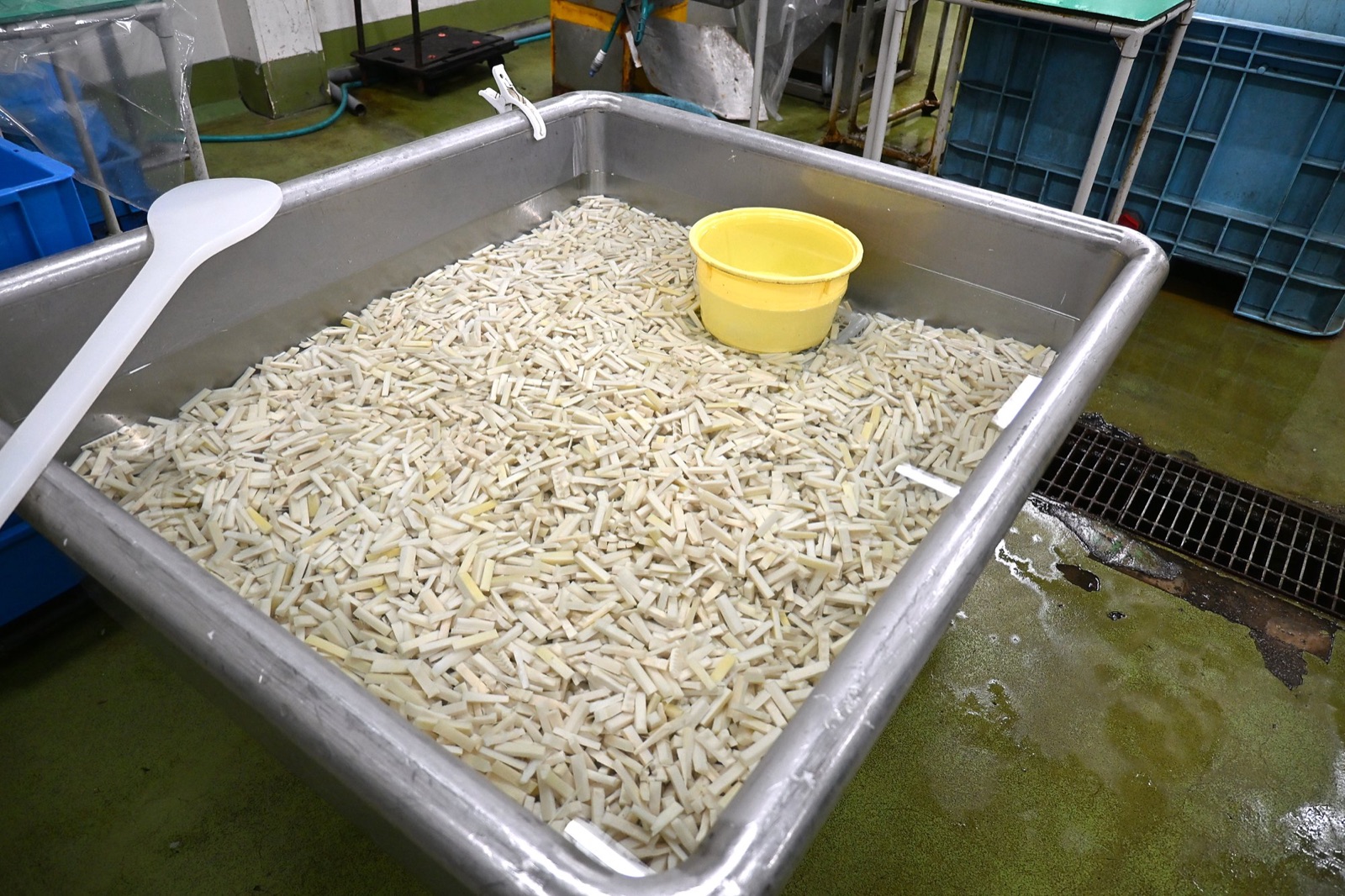
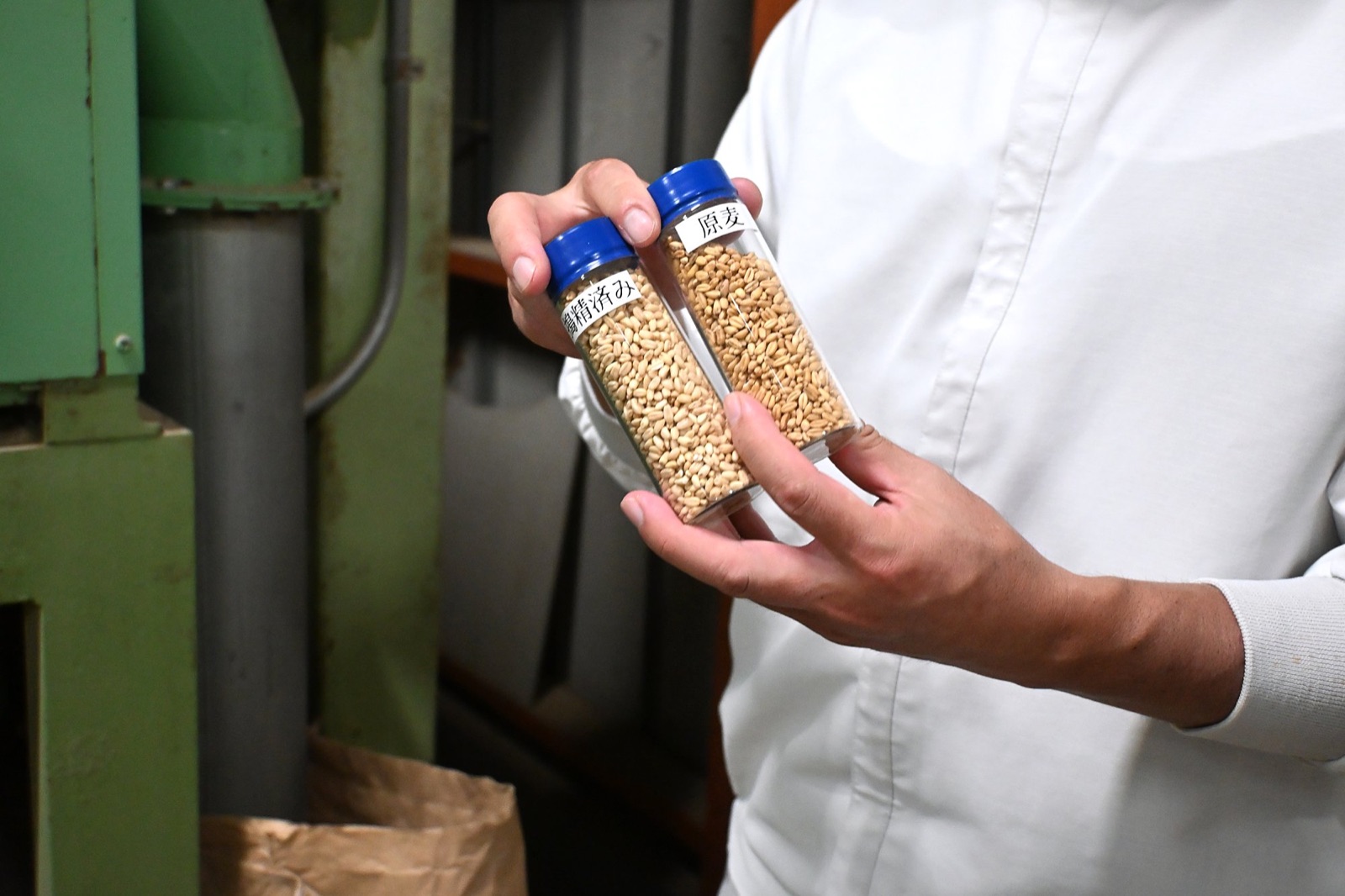
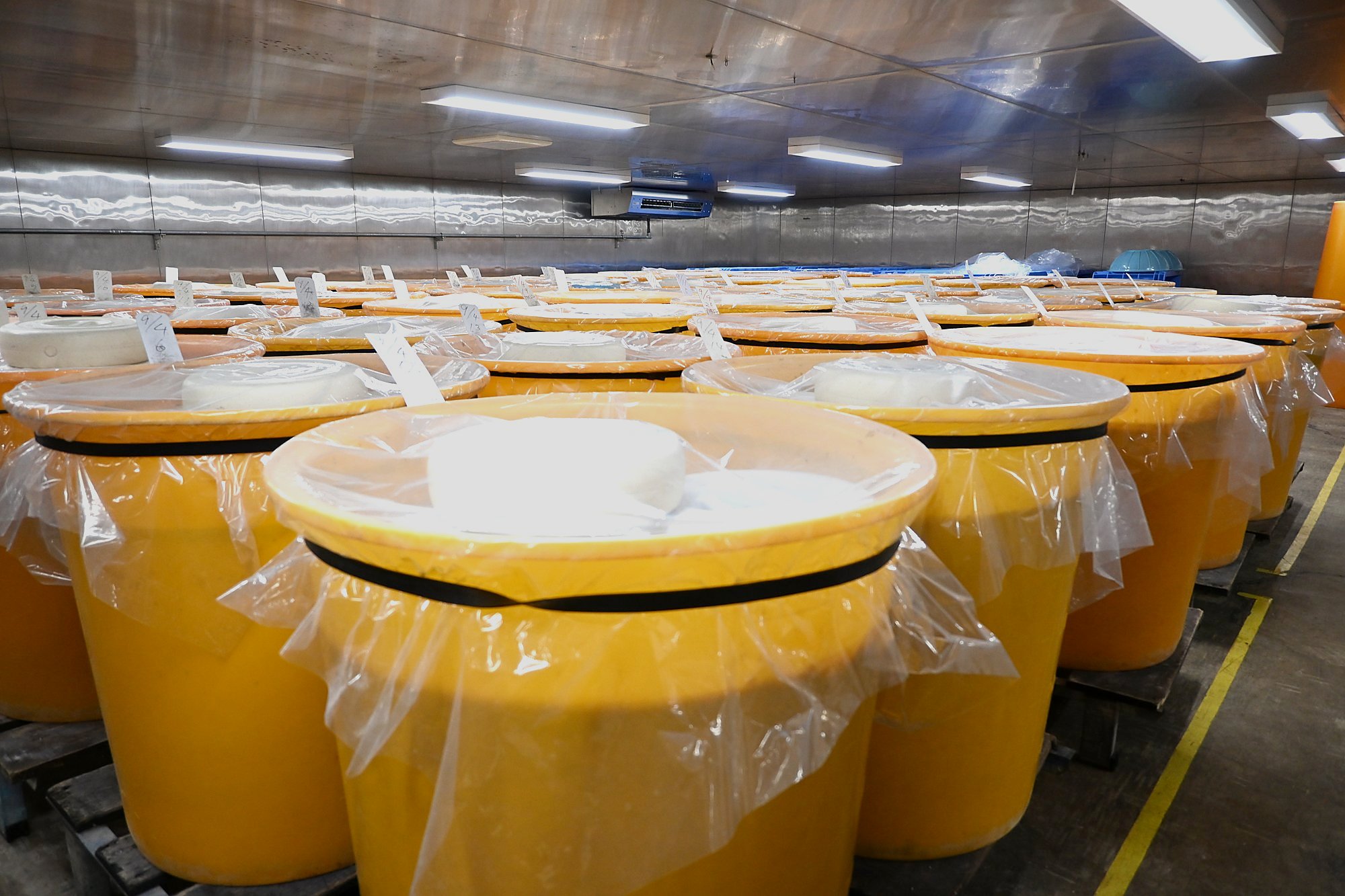
At Ogawaya Miso-ten, we do even the tosei (the step of removing the outer skin of the wheat) in-house. The wheat that has gone through tosei is soaked overnight in water and steamed, then inoculated with koji mold and made into koji over two days. After it has matured in the fermentation room, vegetables and starch syrup (mizuame) are mixed in, and it is rested further in a low-temperature aging room.
— Originally, what kind of people ate it?
I think it was originally food for people like ascetic monks. Today, the image is strongly of older people eating it with cucumber or rice.
Beyond cucumber: ways to eat kinzanji miso
— How do people who eat it regularly usually have it?
I think cucumber is the most common. Many people eat it together with vegetables.
— Besides cucumber and rice, is there a way you would recommend?
At a restaurant in our group, they served roast beef with kinzanji miso to dip it in, and it was delicious. You can also use it like a pickling bed for meat or fish. I left a dried squid (ichiyaboshi, "overnight-dried") in it for a day and then grilled it, and it was very good.
Spread on bread and combined with cheese, it tastes like teriyaki.
Kinzanji miso lined up in Shizuoka, and spreading nationwide
— Where else, outside Chiba, is kinzanji miso eaten?
What's strange is that it sells better in Shizuoka than in Chiba. In a supermarket in the Kanto region, the refrigerated case has one kinzanji miso from one company, if that. But in the refrigerated cases around Shizuoka, kinzanji miso from about four companies is lined up.
In Shizuoka, local companies get priority. Even if a Chiba maker brings a product, it is inevitably at a disadvantage. So we are thinking of trying a product in a tie-up with a wasabi maker in Shizuoka.
— Will you change the traditional flavor?
It isn't about adapting the taste to today. We will keep making the traditional kind, and since older people worry about blood pressure and salt, we plan to win back customers who have stopped buying with a version that has somewhat less salt.
— What do you want to put your effort into from here?
Until now we have focused on the Kanto region, plus Shizuoka. We have hardly supplied the west or the north at all. From this fiscal period, we will take kinzanji miso nationwide. On the factory side we will increase production capacity, and on the sales side we will increase our trading partners. We will also exhibit at trade shows, and we are thinking of a two-line approach: regular products and slightly more premium products.
— Which generation eats kinzanji miso most?
I think the main group is people in their 60s and 70s. But we have started to hear from people in their 40s and 50s who say, "I really love it." It turns out that people who eat it really do eat it.
— Where would you like people who don't know kinzanji miso to meet it?
School lunches.
If we don't really work hard, it will disappear. The people who eat it daily are mostly older people, to that extent.
"If we don't really work hard, it will disappear." That is how Mr. Hoshino and Mr. Ishikawa described kinzanji miso's position today. The people who eat it daily are mostly older, and in Kanto supermarkets the refrigerated case has one kinzanji miso from one company, if that.
Even so, most of what we heard in the interview was about products to come. A kinzanji miso with dashi, a lower-salt product, a tie-up with a Shizuoka wasabi maker, and a nationwide rollout starting this period. A miso that crossed by ship from Wakayama to Choshi and took root in Togane is now being taken to the west and north, where they have hardly supplied it until now.
First, try putting a spoonful on rice or cucumber. Once you are used to it, you can try the ways the two men mentioned, such as serving it with roast beef or leaving dried squid in it before grilling.
[Ogawaya Miso-ten Co., Ltd.] 1662-5 Konumada, Togane, Chiba Prefecture (千葉県東金市小沼田1662-5) Where to buy: Pickup at the factory (orders required 3 days in advance); stores and online shop of the group's "Fusa no Eki" (Rakuten Ichiba store) Interview: September 29, 2026
Frequently asked questions
"What is the difference between kinzanji miso and the miso used for miso soup?"
"Miso for soup is dissolved into a broth. Kinzanji miso is a *nameme-miso* (a \"lick miso\" eaten as it is) that you put on rice or vegetables. At Ogawaya Miso-ten, vegetables are mixed into a moromi made by combining wheat-and-soybean koji with salt water, and the flavor is then adjusted."
"How should I eat kinzanji miso?"
"The classic way is on cucumber or rice. In our interview, other ideas came up too: serving it alongside roast beef, marinating meat or fish in it before grilling, and spreading it on bread with cheese."
"Why is Wakayama's kinzanji miso made in Togane, Chiba?"
"We were told it began when people who made kinzanji miso came to Choshi, which was linked to Wakayama by sea. The similarity between Togane's climate and Wakayama's was also given as a reason koji making took root here."