When you merge your factories into one, what do you do with the wooden barrels you have used for so long? At Chiba Shoyu in Katori, Chiba Prefecture, the company moved the barrels from its factory in Asahi to its factory in Katori and kept brewing in them. "Shimousa Shoyu," made from domestically grown whole soybeans, wheat and salt, is brewed in those barrels. We asked president Kyosuke Iida (飯田恭介) how the barrels were kept, how the company answers requests from restaurants, and what it was like to make soy sauce in India.
A river that led to Edo's tables
When we asked why soy sauce making flourished in Chiba, the first thing Iida-san pointed to was how quickly it could be shipped to Edo, a huge market.
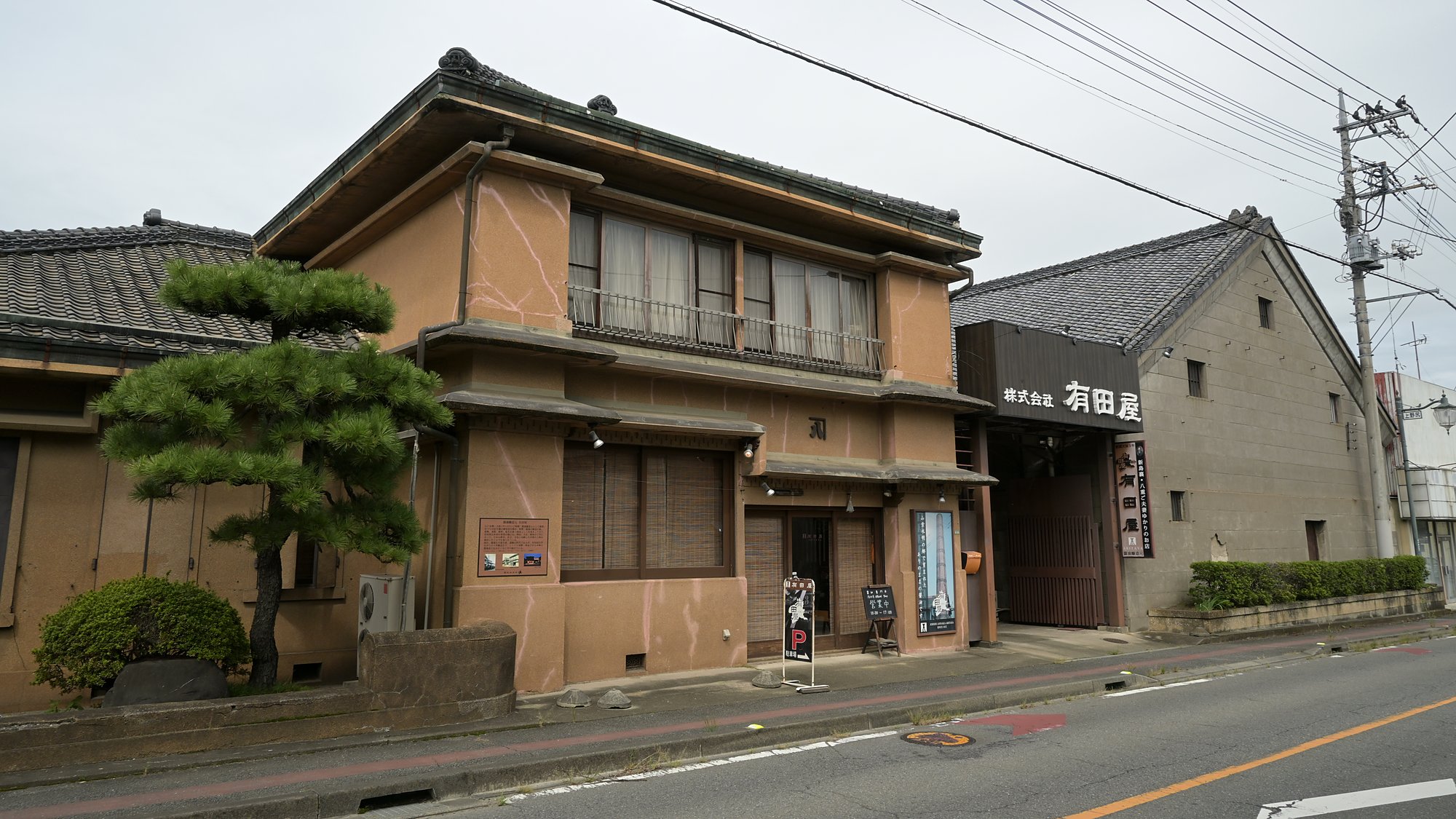
In those days soy sauce traveled by boat. In front of the company's old office in Omigawa runs the Kurobe River, and there used to be a landing where cargo was loaded. Soy sauce from the old factory went from there out to the Tone River and on to Edo.
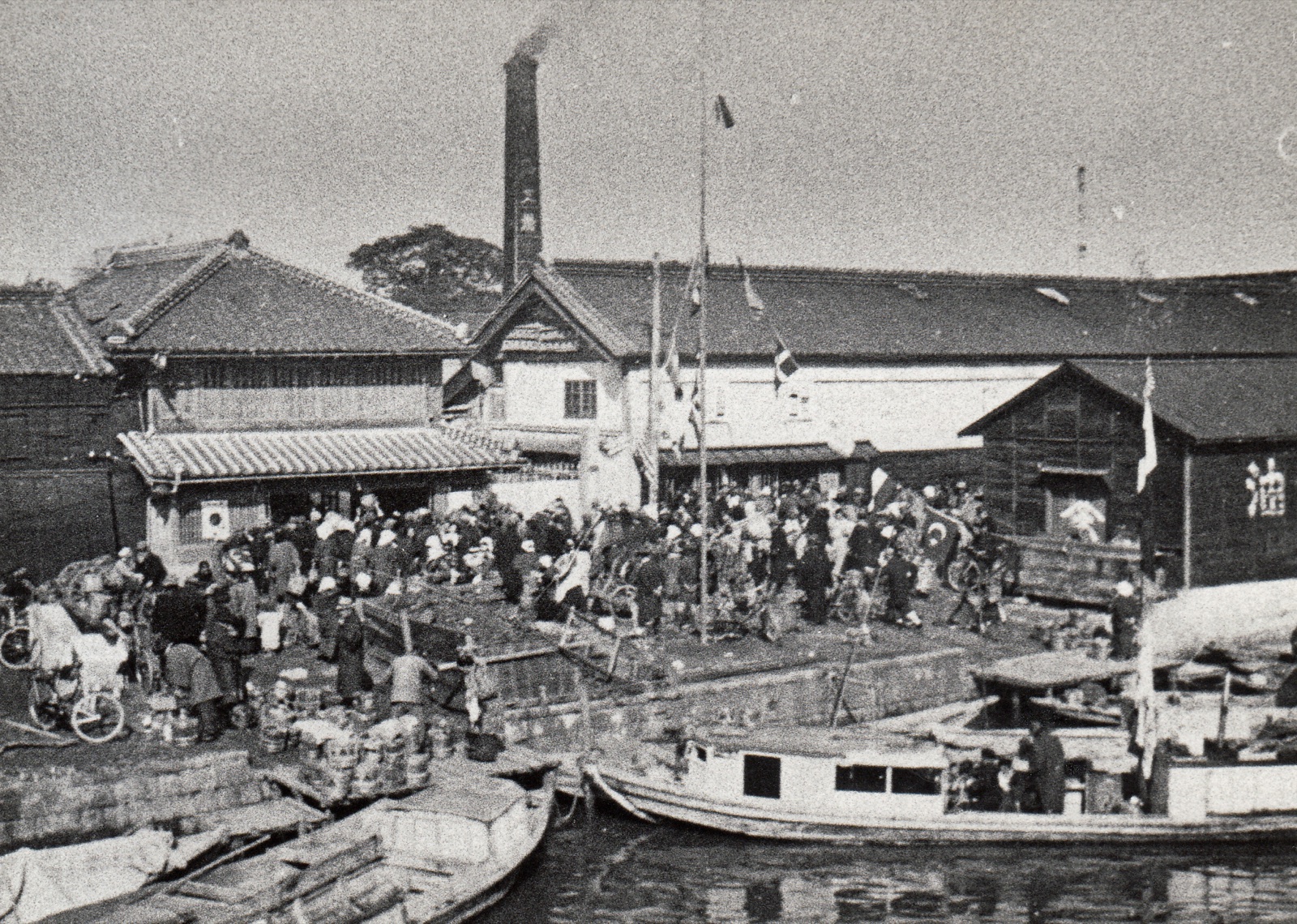
He also named the soybeans and wheat grown nearby, and the mild winters, as conditions that supported soy sauce making. Koji (the mold used for fermentation) likes a warm, humid environment.
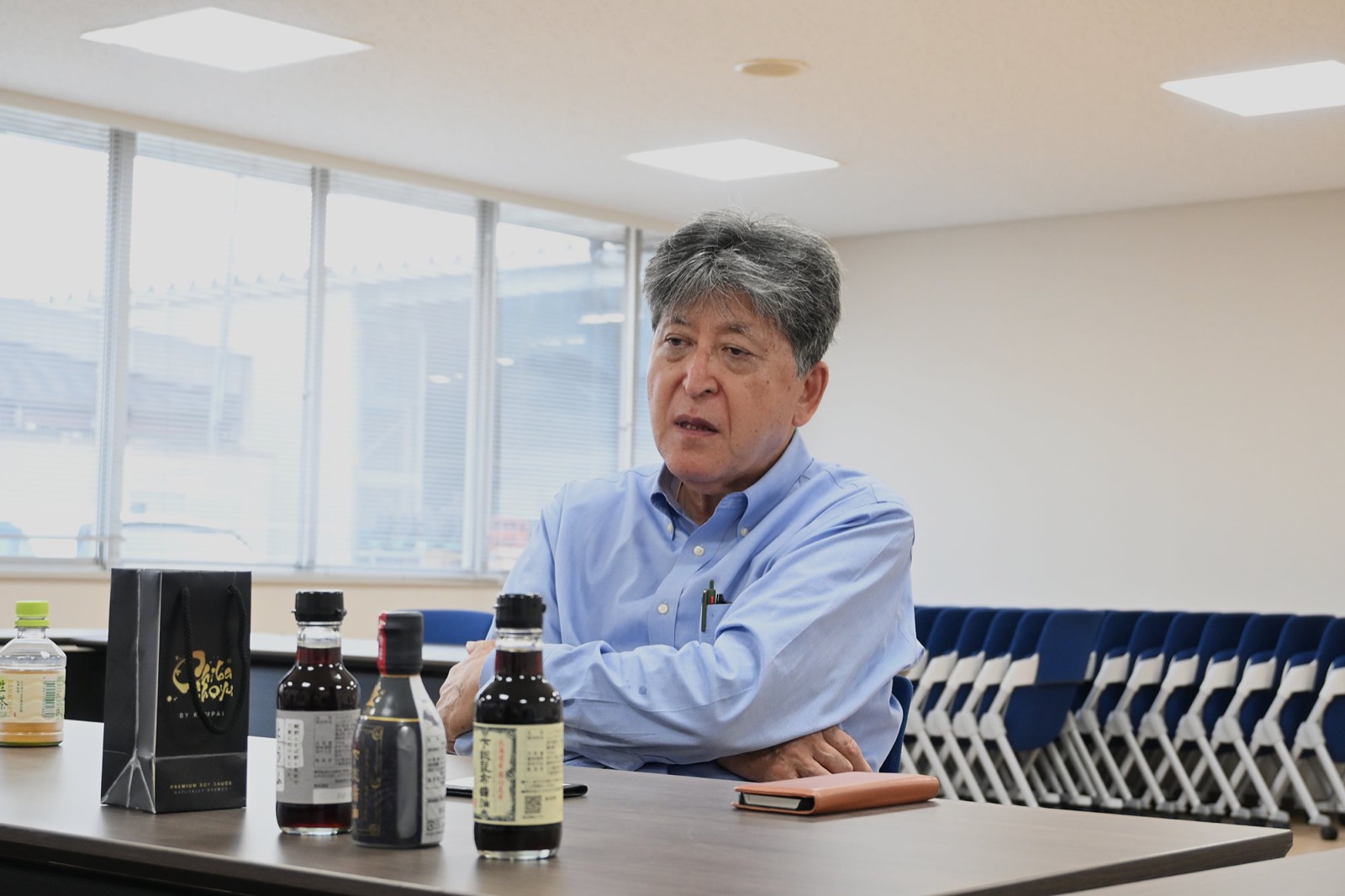
Chiba Shoyu has two predecessors: Omuraya in Omigawa and the Iida Honten in Asahi. According to the official company history, Omuraya Shoten was founded in 1854 (Kaei 7), and Iida Sajibei Shoten, the forerunner of Iida Honten, in 1864 (Genji 1), both in the Edo period. The two companies merged and Chiba Shoyu was born in 1964. Official company history
He said the two families were related by marriage, and that the times were also behind the merger. Japan had entered its period of high economic growth, and soy sauce too was expected to be mass-produced and mechanized. In 1971, after the merger, the company built a factory with what was then new equipment in the Omigawa industrial park.
Its customers did not change right away, though. Even after supermarkets began to appear, the core of its business was local restaurants and retailers. The company was slow to follow the changes in distribution, Iida-san looked back.
Merging the factories, and the barrels they moved to keep using
When we asked why they kept the barrels, Iida-san began with the story of the time the factories were merged.
The Asahi factory was small, and with wastewater treatment and other issues, it had become hard to keep running a factory in a built-up area. So the company had no choice but to consolidate into the head factory in Katori. The official history also records that in 2014 the Asahi factory was moved to the head office site in Katori.
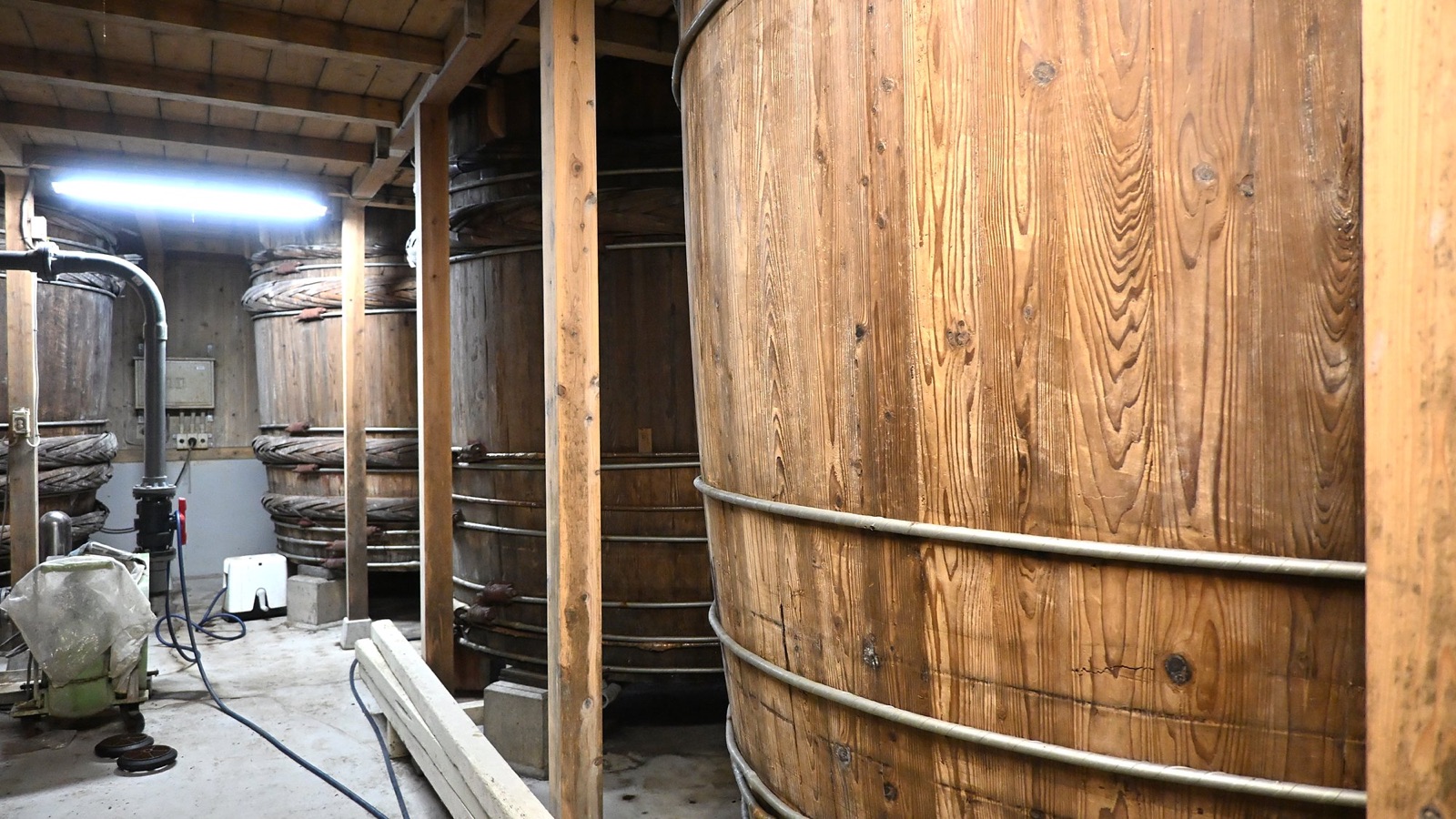
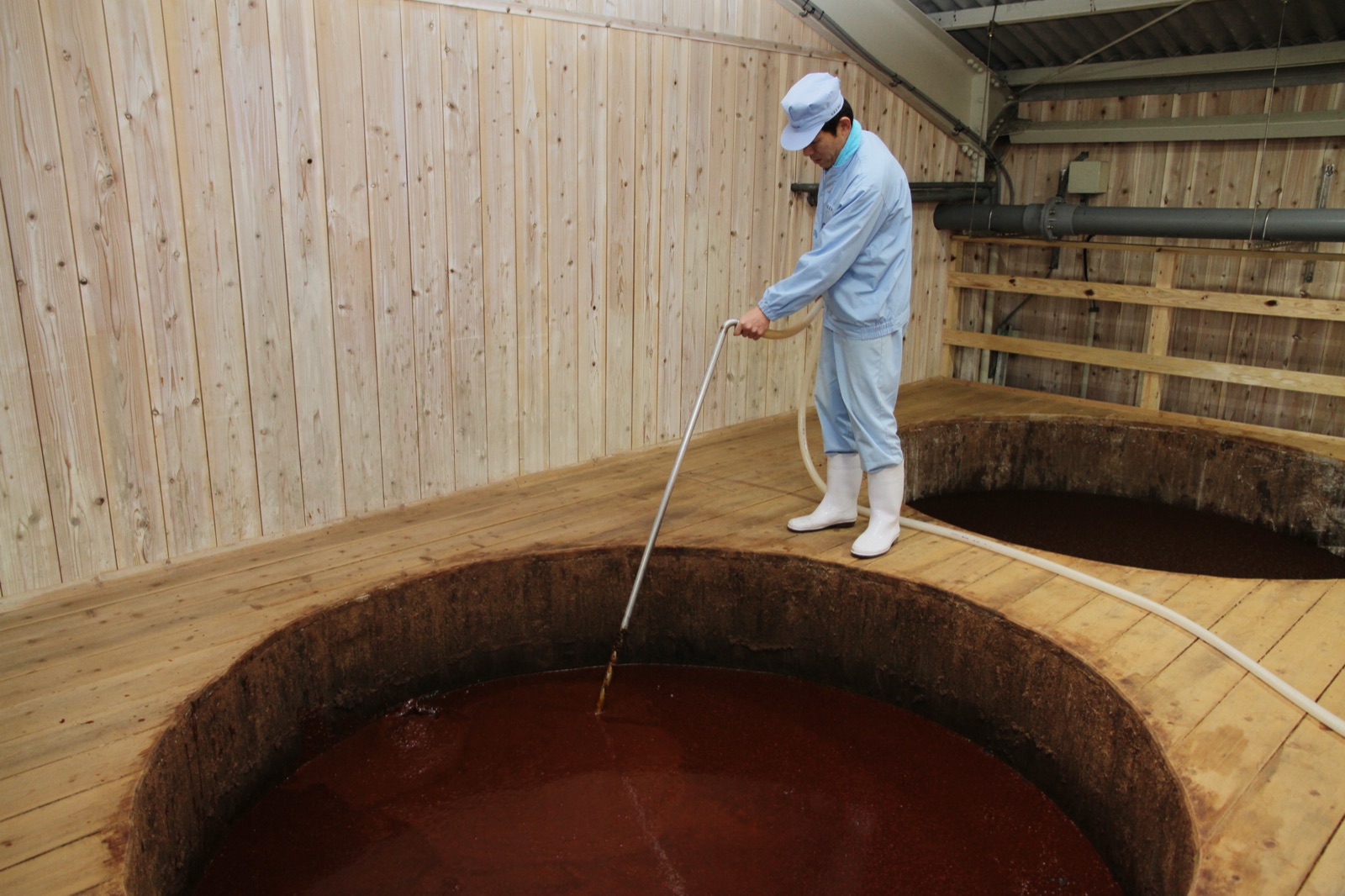
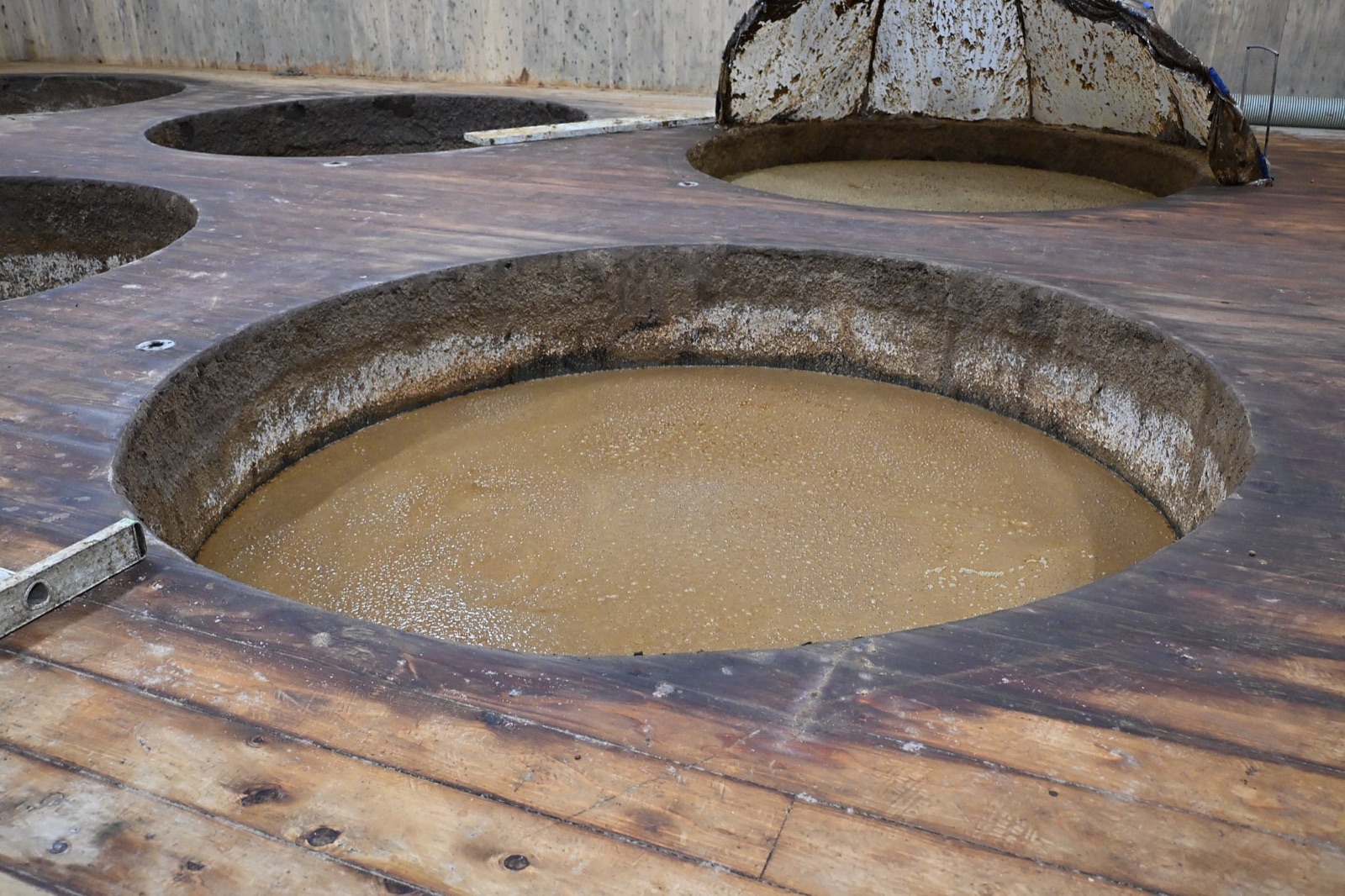
What they brought from Asahi to Katori, to keep using, was the wooden barrels. Visitors to the factory are amazed at the sight of the barrels lined up, and having watched that happen was one more reason to keep them. The merger was the trigger, but Iida-san said he is glad they kept them.
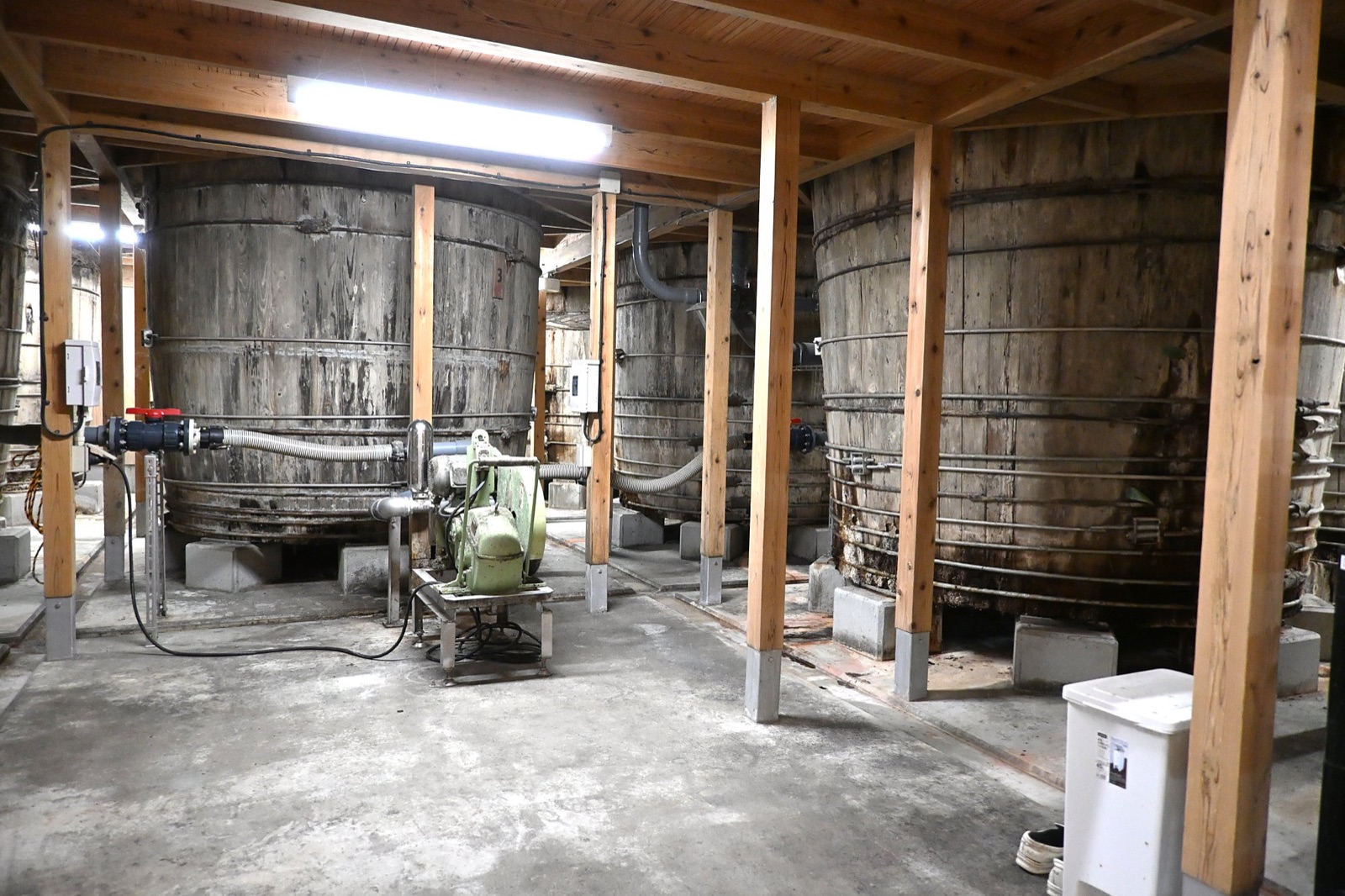
According to the official product page, one barrel measures about 10 meters around and holds 8,000 liters. Shimousa Shoyu product page
Even so, the soy sauce brewed in wooden barrels comes to about 150 kiloliters a year. The soy sauce made with machinery is about 7,500 kiloliters, a fiftyfold difference. Soy sauce sold as an ingredient to food manufacturers, where volume and price matter, is made by machine. Soy sauce that is known as handmade, even in small quantities, and chosen even at a slightly higher price, is brewed in the barrels. That division later led to Shimousa Shoyu.
To keep using wooden barrels, you also need people who can repair the tools.
The rings that bind the sides of a barrel are called taga (hoops). They used to be woven from bamboo, but almost no craftsmen are left who can weave bamboo hoops. The company's barrels were switched to steel hoops about 50 years ago. But the craftsmen who can handle steel hoops are also decreasing, and he said there are only one or two in all of Chiba Prefecture.
The company has not yet brought in any new barrels. Sooner or later the old barrels will have to be replaced with new ones, Iida-san said.
Shimousa Shoyu, brewed in wooden barrels
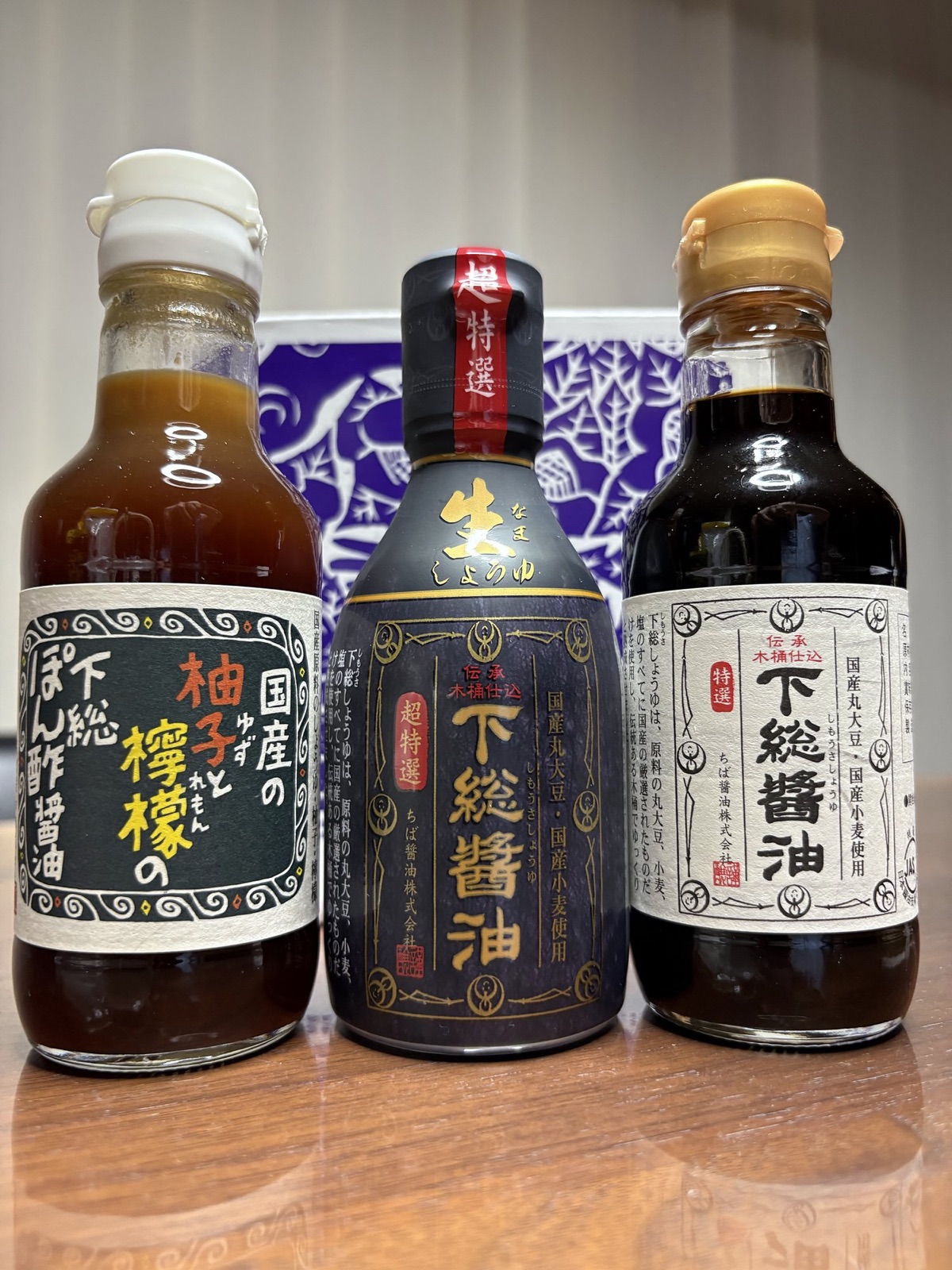
What is brewed in those barrels is Chiba Shoyu's flagship, "Shimousa Shoyu." It is made from domestically grown whole soybeans, wheat and salt. The official product page describes it as a "tokusen" (special selection) class soy sauce, with 10% more total nitrogen than the JAS special grade standard requires. Shimousa Shoyu product page
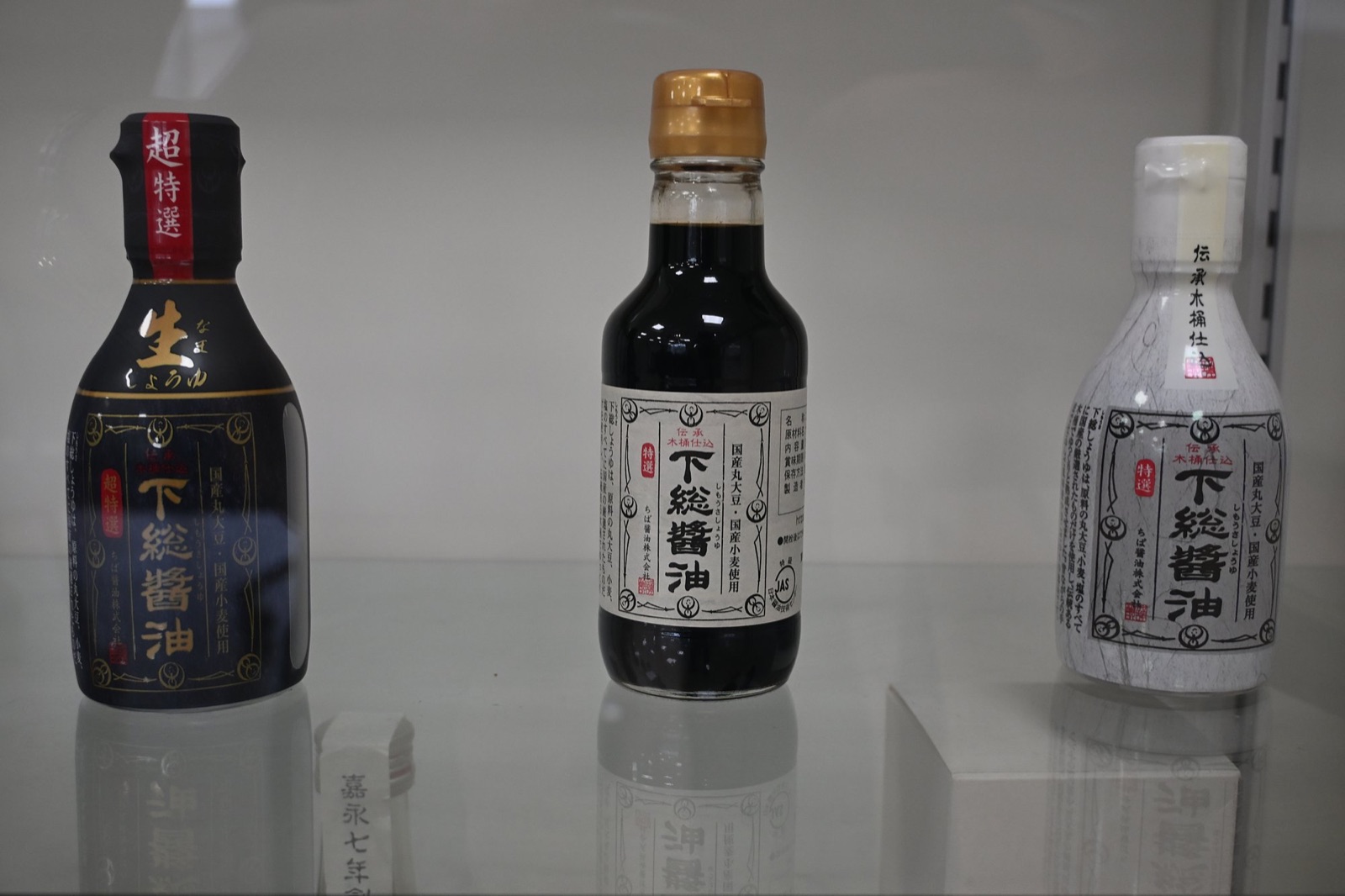
Under the JAS (Japanese Agricultural Standards), soy sauce quality is divided into special grade, upper grade and standard. He said Shimousa Shoyu was deliberately made to exceed the standard of the top class, the special grade.
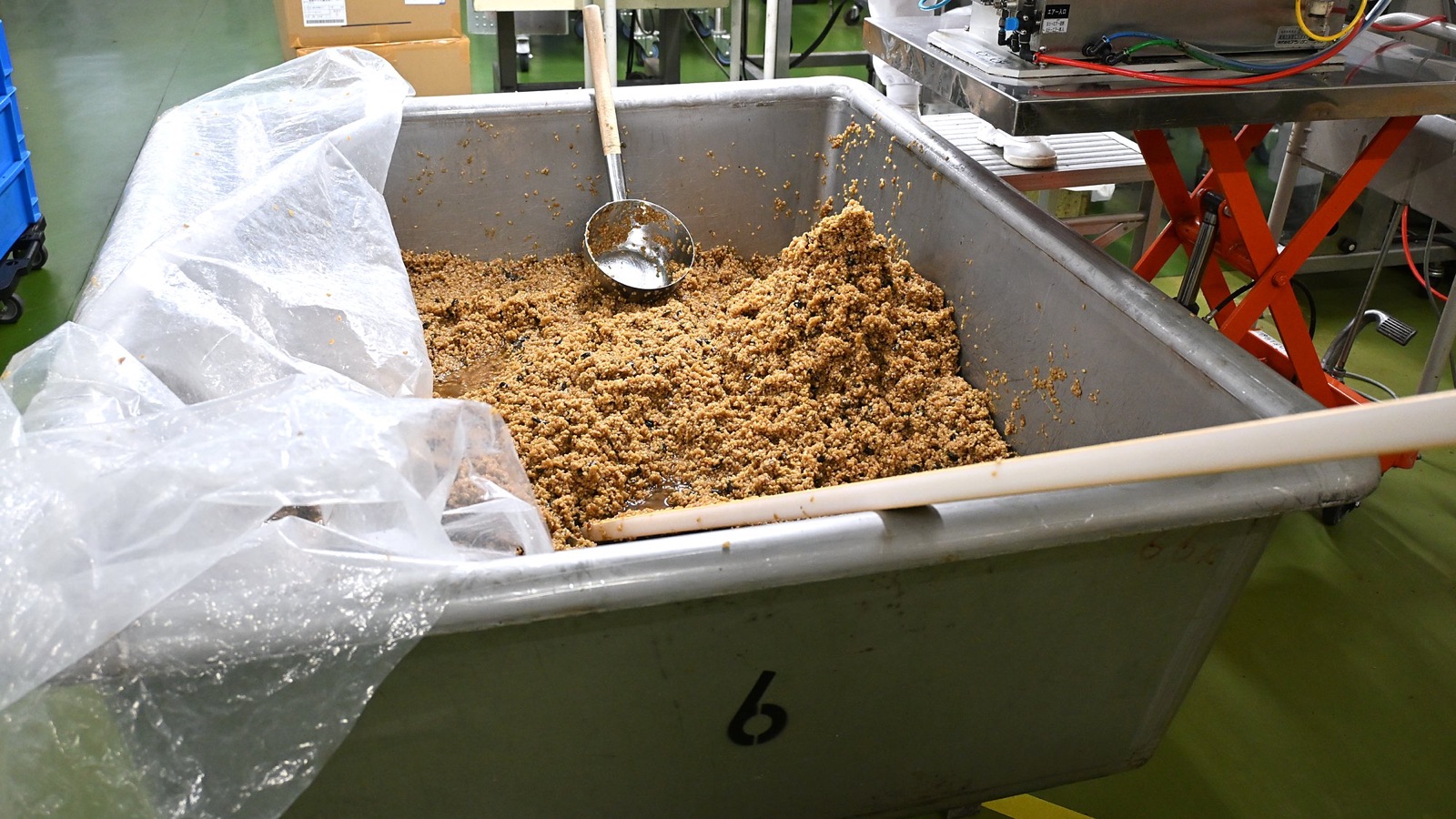
When we asked what decides quality, the first answer was making good koji. He went on to say that if the soybeans are steamed badly, or the koji turns out poorly, it will not become soy sauce at all. That work is carried by craftsmen who have done this job for a long time. The official product page also describes the process of making koji slowly in a kojimuro (koji room), keeping the temperature and humidity steady.
When the talk turned to the soy sauce he uses at home, what he cared about was how it changes after opening. After a bottle has been open for a while, soy sauce oxidizes and turns dark. He said he does not like soy sauce that has gone that way.
Shimousa Shoyu comes in bottles and also in a double-layer bottle that keeps it from oxidizing. In a home that uses a little each day, the difference in container can help you choose.
Sauces and tsuyu born from restaurant orders
Chiba Shoyu does not make only the soy sauce you set on the table. In fact, developing and manufacturing seasonings for businesses is its main line of work. It makes a wide range of sauces (tare) and tsuyu (broth-based sauces) to meet the requests of restaurants and food manufacturers.
He also told us about a kabayaki (grilled eel) sauce the company could not deliver in the past.
The company once made only sauces for specialty eel restaurants. Before long, more and more kabayaki was being processed and frozen overseas and sold in Japanese shops. He was asked to make the sauce for it, and once even traveled to China.
What was wanted was kabayaki that, frozen and set out on a store shelf, still looked glossy as if freshly grilled, and whose sauce did not drip off. At the time, the company's sauce was only soy sauce, mirin and sugar mixed and boiled down. It could not meet that order, he said.
Today it supplies sauces built on a soy sauce base and adjusted to the requests of ramen shops and others. Business-to-business work, where you meet the customer's request and they buy the result, has come a long way, Iida-san said.
Shipments overseas have grown in the same way. The company's products reach about 20 countries. It did not go out and sell them itself. Orders come through Japanese trading companies, asking whether it can make a teriyaki sauce, or a yakitori sauce.
When we asked about future challenges, Iida-san again returned to grasping the concrete requests that come from customers.
The brown rice black vinegar they put great effort into developing did not sell as well as they had hoped. On the other hand, a gyoza sauce requested by a ramen chain sells very well, even though it is just purchased vinegar, soy sauce and chili oil combined and put in a bottle. It is better to grasp what real customers want than to think it up in your head. That was what Iida-san kept coming back to.
Making soy sauce in India, with local ingredients
Chiba Shoyu has also worked on making soy sauce in India. As a JICA (Japan International Cooperation Agency) project, it tried to pass the techniques of koji fermentation and soy sauce brewing on to a local company. JICA project introduction
Making soy sauce overseas is not a first for the company. The official history records that in 1902 (Meiji 35), Iida Sajibei (飯田佐次兵衛) became the first Japanese to try producing soy sauce overseas, in Hawaii.
For the work in India, Iida-san named four or five engineers from inside the company. The site was New Delhi. About once every two months they stayed there and, using local ingredients, brewed soy sauce together with the local people.
When they brought the soy sauce back to Japan and analyzed it, the figures came out equivalent to Japan's special grade. When we asked whether it was thanks to the ingredients or the water, the answer was technique. He said it came from controlling temperature and room temperature, constantly checking how much heat the batch was giving off, and correcting it each time.
Still, making soy sauce and having people use it are different matters. In India, the people who use Japanese-style soy sauce are mostly high-end restaurants, teppanyaki and Chinese restaurants. To someone who does not know soy sauce, it looks like a black, salty liquid. That is how Iida-san described the way it is received there.
Iida-san himself worked at an apparel company before joining the family business. He was interested in product planning and marketing, and joined a company that made pants. When the yen weakened and the company set out to export, he was told that he was big and a university graduate, so surely he could speak English, and he went to the United States with product samples. After about three years there, he studied English in San Francisco and then returned to Chiba Shoyu.
When the factories were merged, Chiba Shoyu carried its wooden barrels from Asahi to Katori. The merger was the trigger, but the sight of visitors amazed at the place where the barrels stand became a reason to keep them.
The sauces for restaurants, and the teriyaki sauce and yakitori sauce for overseas, have all grown by answering what the other side asked for. When we asked about future challenges, Iida-san's talk went back to grasping customers' concrete requests.
The soy sauce brewed in wooden barrels is about 150 kiloliters a year, roughly one fiftieth of what is made by machine. In all of Chiba Prefecture there are only one or two craftsmen who can retighten the steel hoops, and no new barrels have been brought in yet.
When you choose Shimousa Shoyu, try remembering those barrels too.
[Chiba Shoyu Co., Ltd.] 1208 Kiuchi, Katori, Chiba Prefecture (千葉県香取市木内1208) Official site: https://www.chibashoyu.com/ Shimousa Shoyu product page: https://www.chibashoyu.com/shimousa/index.html Interview: September 25, 2026
Frequently asked questions
What goes into Shimousa Shoyu?
It is made from domestically grown whole soybeans, wheat and salt, and brewed in wooden barrels. The official product page describes it as a "tokusen" (special selection) class soy sauce, with 10% more total nitrogen than the JAS special grade standard requires.
How much soy sauce is brewed in wooden barrels?
About 150 kiloliters a year. That is roughly one fiftieth of the soy sauce the company makes with machinery, which is about 7,500 kiloliters.
Where can I buy Shimousa Shoyu?
It is sold at roadside stations (michi-no-eki) in Chiba Prefecture, at Fusa no Eki shops and elsewhere.
What kinds of containers does Shimousa Shoyu come in?
Besides bottles, there is a double-layer bottle that keeps the soy sauce from oxidizing. You can choose by how often and how much you use.