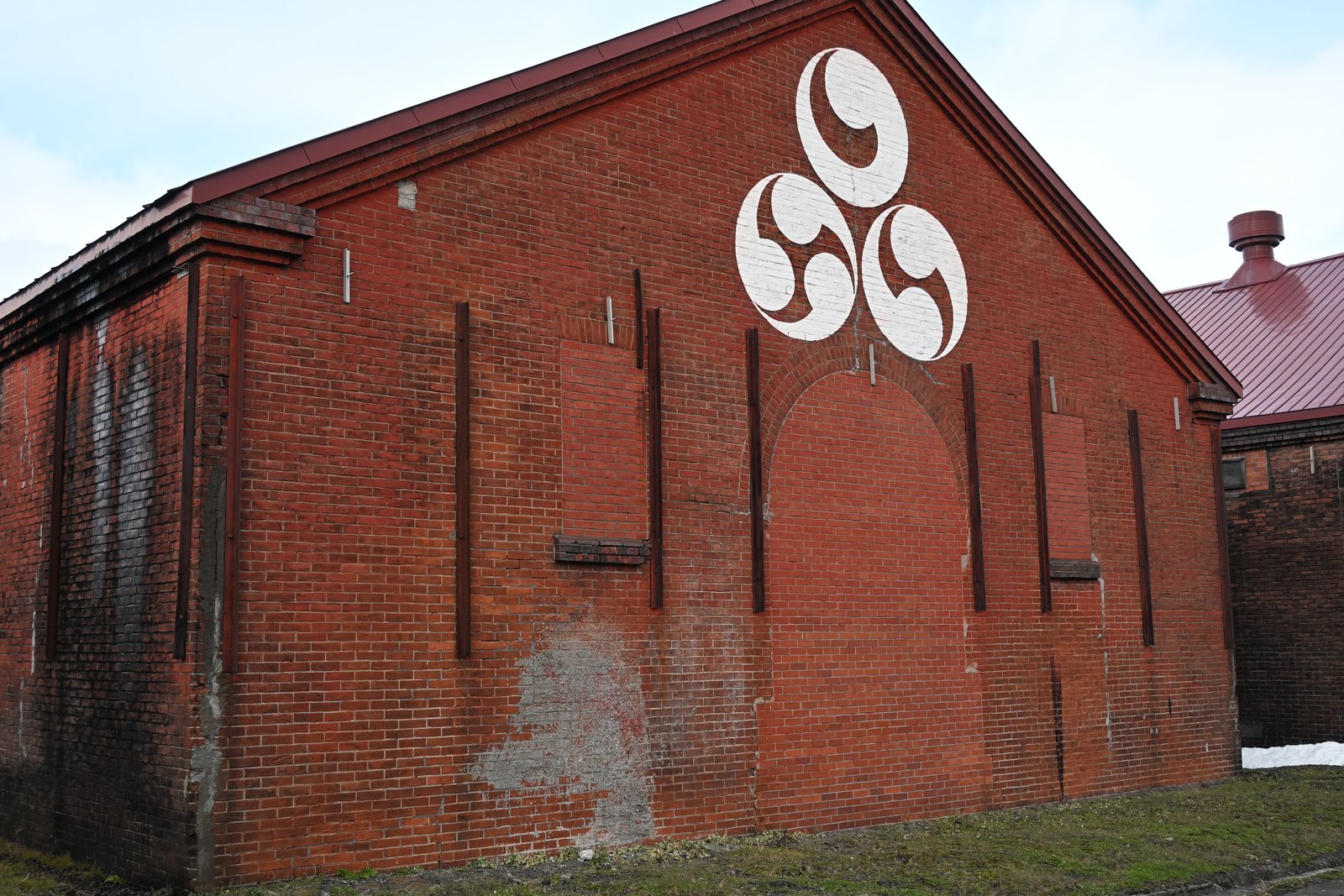
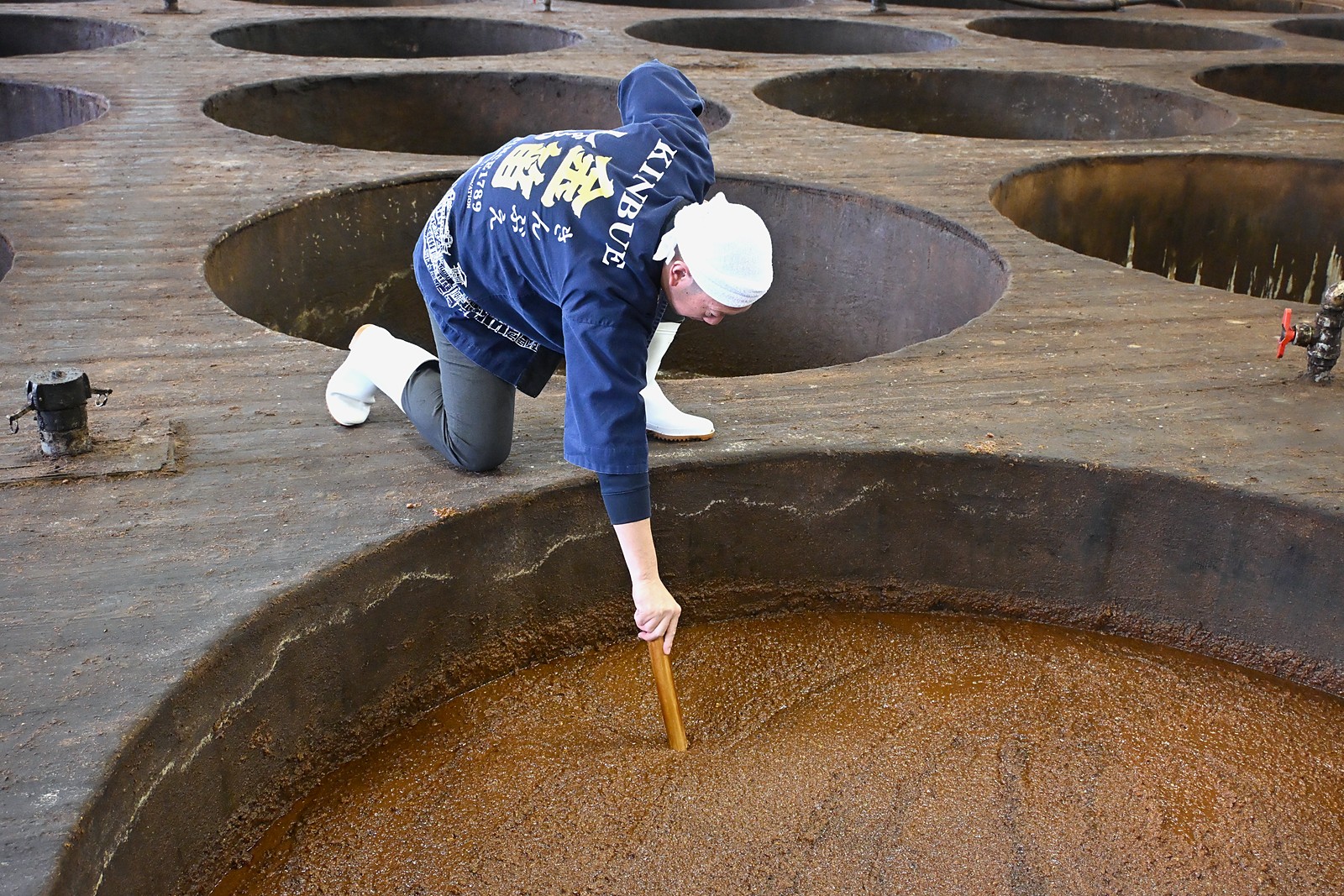
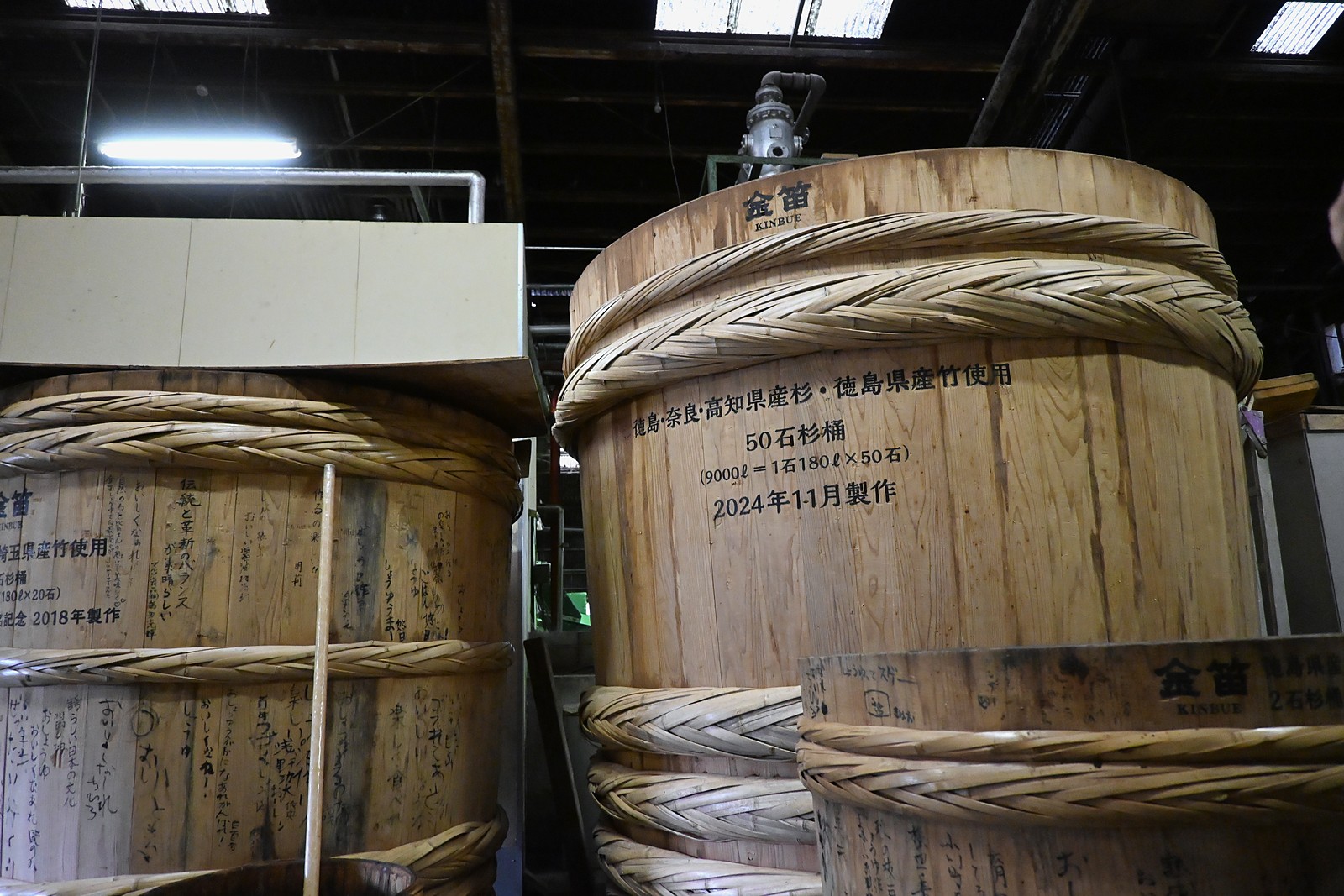
Fueki Shoyu in Kawajima, Saitama Prefecture, is a shoyu (soy sauce) brewery founded in Kansei 1 (1789), with the trade name "Kinbue" (金笛). It ages its shoyu for one to two years in large kioke (wooden barrels), made of cedar staves bound with bamboo hoops (taga). President and CEO Shoji Fueki (twelfth-generation Kichigoro Fueki) says that after he became president he was often told, "That's 200 years of tradition, isn't it?", and it made him think about what tradition really is. "I broke tradition, broke it, broke it, and what finally remained was the connection with the community," he says. The other thing that remained is the kioke handed down through the generations.
I visited the brewery in Kawajima on October 30, 2026. After a tour of the brewery, I asked him about everything from how he came across Kinbue while studying abroad, to the kioke, the ties with the community, and his thinking on price.
Kinbue, found by a roommate in a supermarket abroad
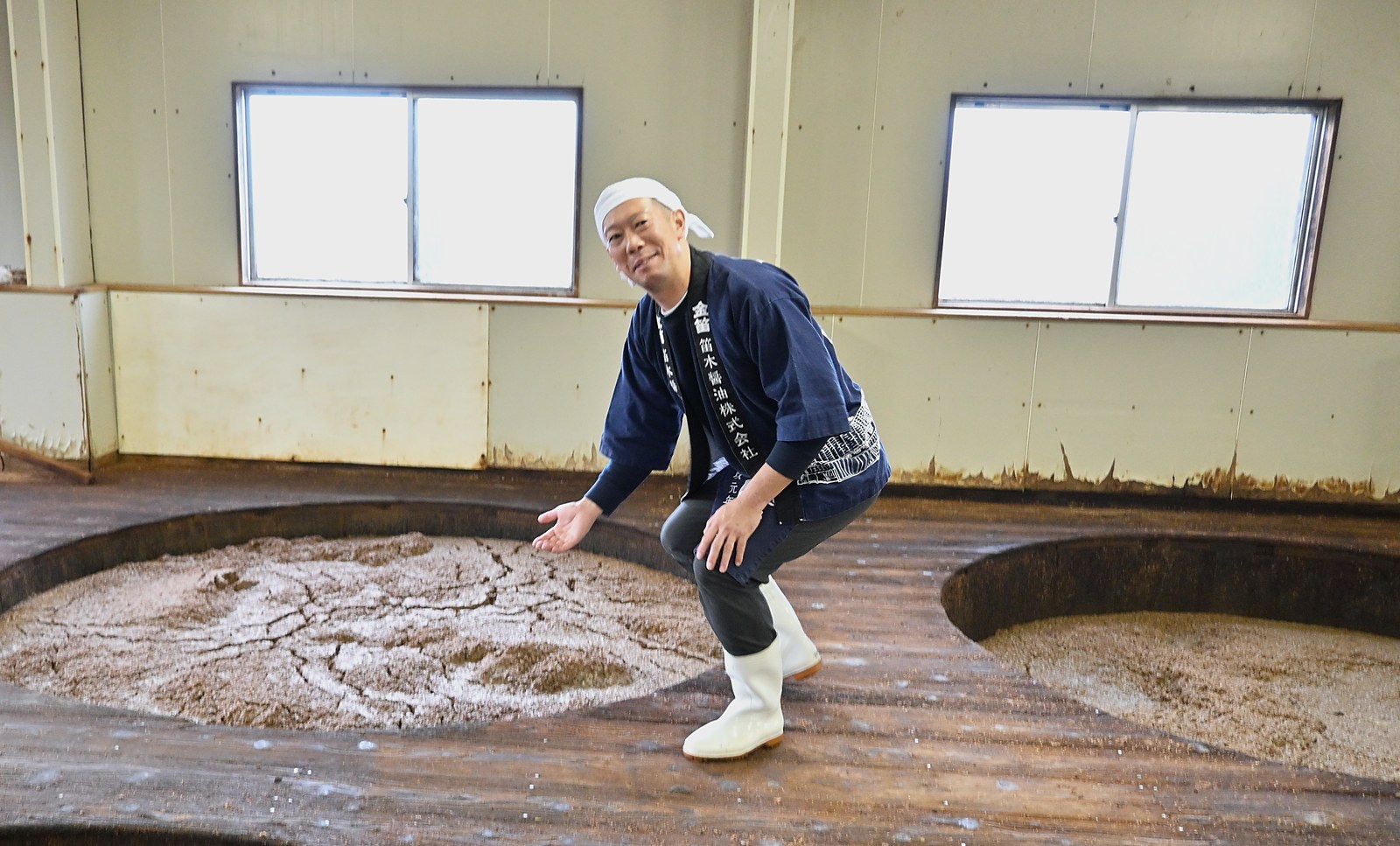
— Did you originally not plan to take over the shoyu brewery?
That's right. I had no intention of taking over at all. I wanted to work in an international organization like the United Nations, supporting developing countries.
— So you went to a university in the United States.
I studied for one year in the international relations program at George Washington University in Washington, D.C. I arranged the transfer myself, and I was on leave from Meiji University.
— How did you come across Kinbue while you were there?
During summer break, my roommate went home from the East Coast to the West Coast, and found our Kinbue shoyu at a supermarket there. He let me know: it says "Fueki" on it, is that your family? I didn't even know we were exporting to the United States.
— What did you do then?
I had lost my father when I was in high school, so I called my mother. I thought this might be my roots, and my mission. My roommate said the same, and I came back to Japan.
Taking on what his father left unfinished, as a "middle reliever"
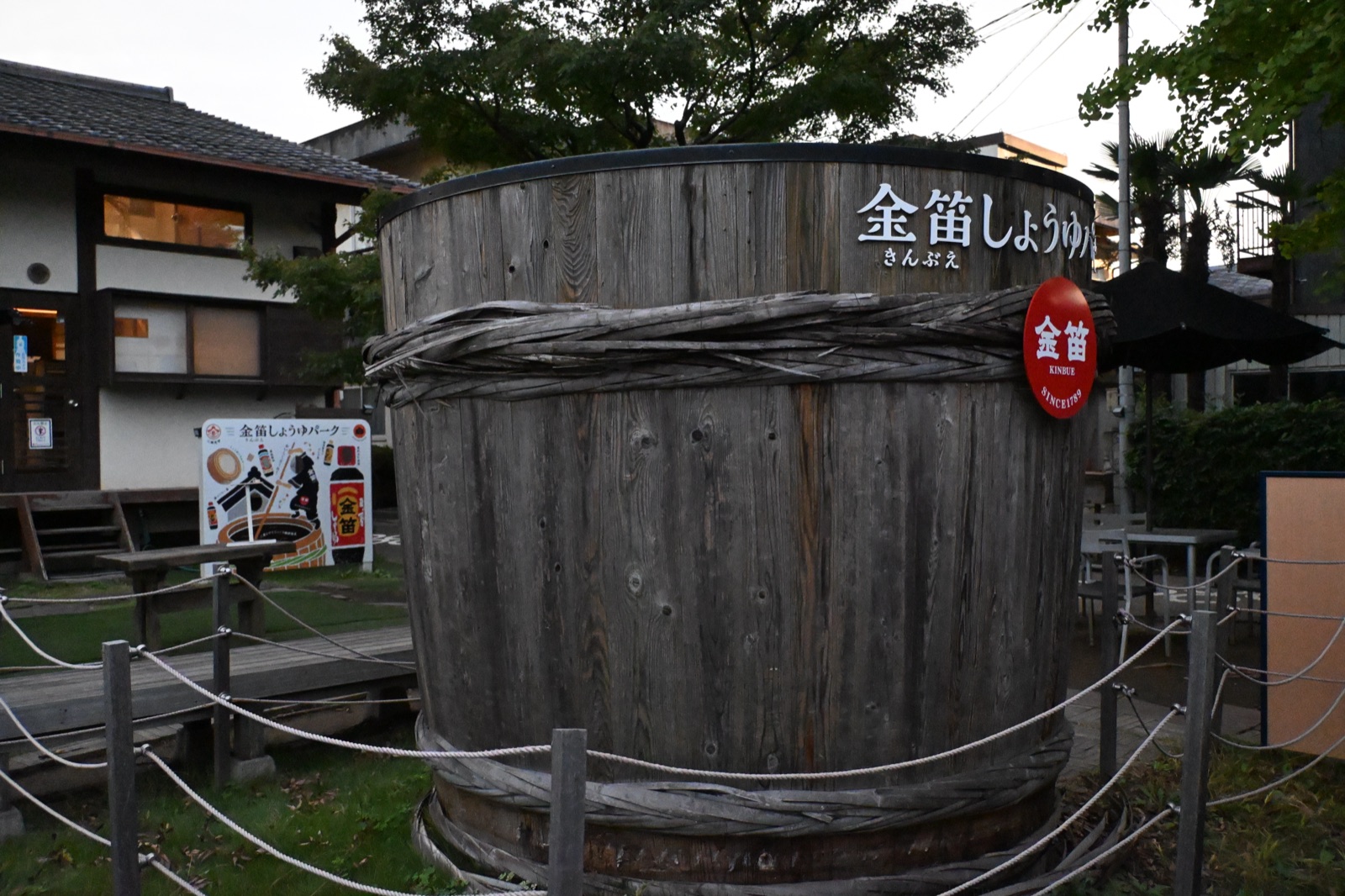
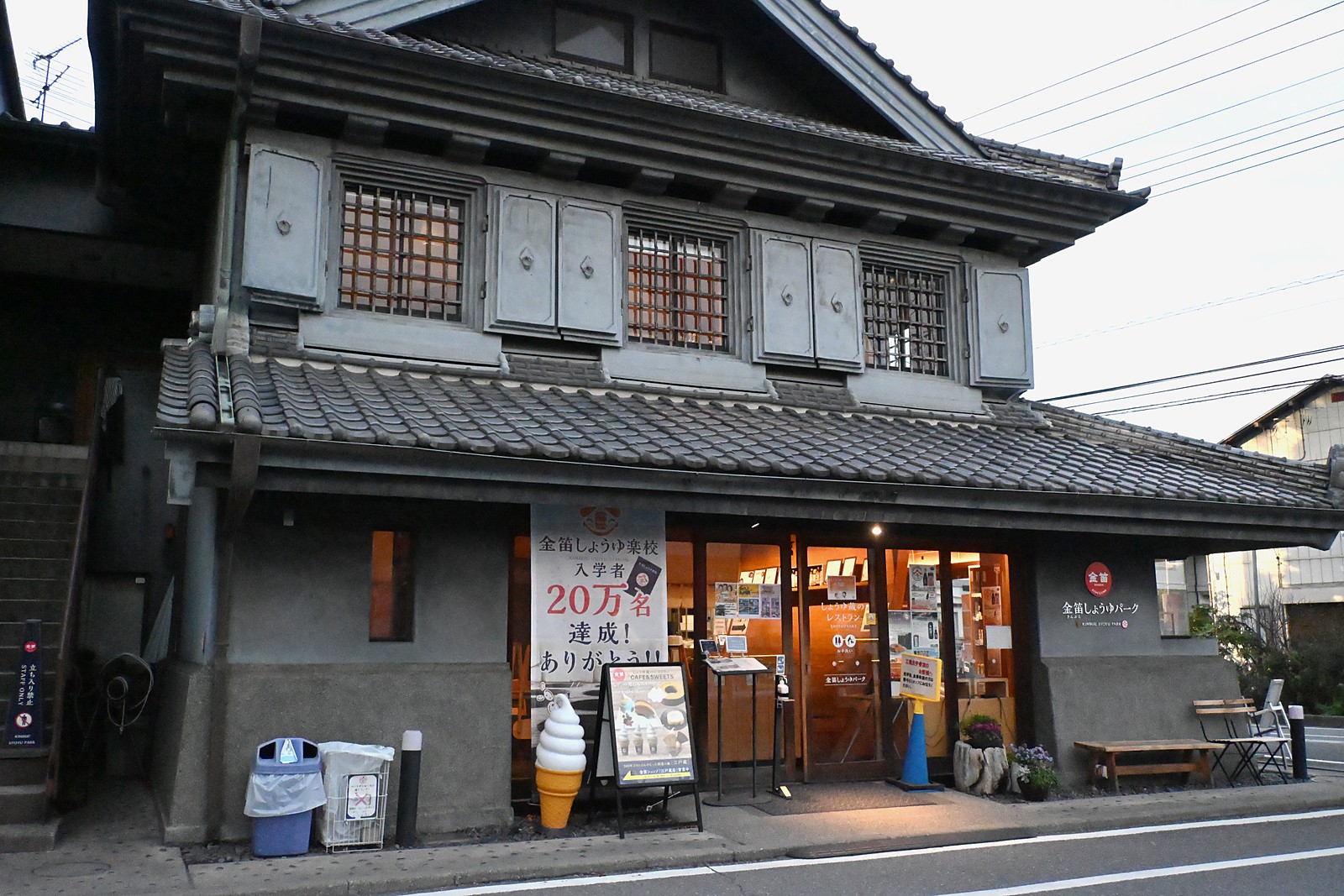
After returning to Japan, Mr. Fueki joined the family business and is now its president. Shoyu Park is a facility that Fueki Shoyu opened in 2019 on the grounds of its head office, with brewery tours, a restaurant and a shop.
— What was the idea behind Shoyu Park?
It was originally something my father wanted to do. According to industry statistics, shoyu shipments peaked in 1973. Today they are about half of that.
My father also thought that we shouldn't just sell what we make wholesale to wholesalers and supermarkets, but should convey its value ourselves and sell it. He had started an initiative of showing the brewing hall through glass walls, as a forerunner of what we would now call an open factory.
The shipment figures are based on statistics from the Shoyu Information Center (しょうゆ情報センター).
— How long was your father president?
After my grandfather died, he finally became president, and he died of illness the following year. I was in my third year of high school. He was president for only one year, and there was a lot he had left undone.
— How do you see your own role?
In baseball terms, I'm a middle reliever. There is no victory in my generation. My mission is to finish in my generation what the previous two generations left undone, and pass the relay sash (tasuki) to the next generation in the best possible form. Shoyu Park and the baumkuchen business are both things my father wanted to do, and I'm doing them now.
— What kind of visitors did you have in mind when you built the park?
I want to look through the eyes of the most demanding customer. It means being grateful to the customer in front of me, and being someone they're glad to see.
We can't limit our customers to people who are interested in shoyu. I want to reach families who just happen to drop by to kill time, with children aged 3 or 5, so we use illustrations in a manga-like style. It's very important to get people with no interest in shoyu at all to notice us.
Break tradition, and what remained: the community and the kioke
— Why do you think the company has lasted more than 200 years since its founding?
I'm more of a math person, a logical person. After I became president, people often said, "That's 200 years of tradition, isn't it?", and I thought about what tradition really is, in my own way. I broke tradition, broke it, broke it, and what finally remained was the connection with the community.
— What do you mean by the connection with the community?
Kawajima is a town surrounded by rivers. Clean water was abundant, and there were many farmers around growing wheat and soybeans. The shoyu we made could be carried to Tokyo by river. That's why we're here today.
— Besides the community, was there anything else that remained?
The kioke. This is something I realized afterward, but when I asked myself what is the backbone of my company, what remained was the connection with the community and the kioke handed down to us.
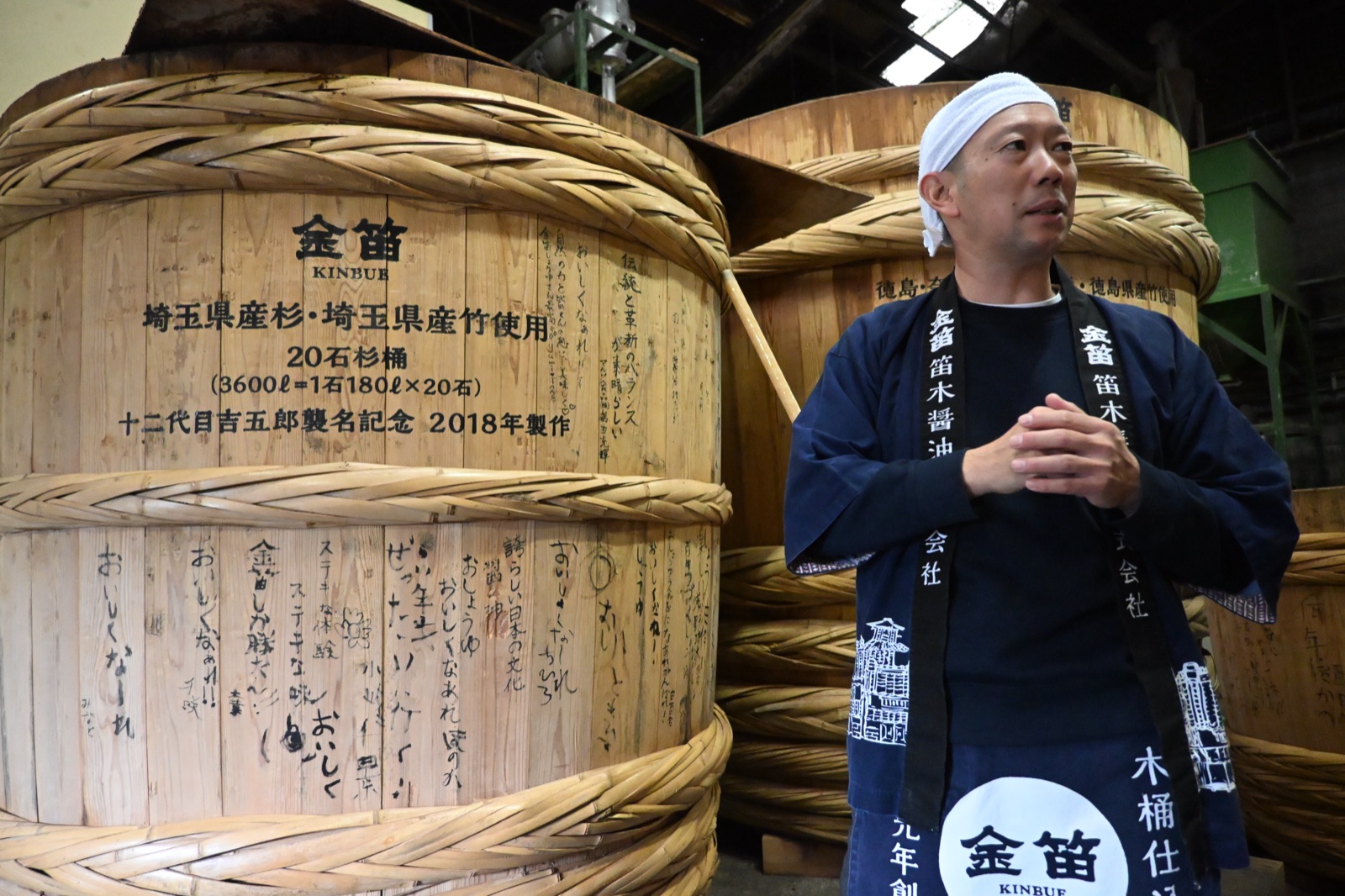
— What draws you to the kioke?
A barrel in a brewery of a given area holds all kinds of microorganisms, and a complex flavor of its own comes out of them. In a sense, it has a one-of-a-kind value. No matter how far e-commerce develops, I believe a single barrel in a small brewery has a story and a value of its own. That is something the big manufacturers can't do, and I think it leads to differentiation.
He became the twelfth Kichigoro when he could make a shoyu he was satisfied with
The head of the Fueki family takes the name "Kichigoro" by succession, generation after generation. Mr. Fueki is the twelfth.
— I heard that you take the name when you can make a shoyu you are satisfied with. What does being satisfied mean?
I can't be satisfied with something I can't check with my own eyes. For ingredients, we ask farmers to grow Saitama-grown soybeans and wheat under contract farming (an arrangement where we agree on terms with farmers and have them grow the crop for us). I chose both the barrels and the ingredients by looking at them myself, and actually brewed with them. I took the name once the taste and the people around me were satisfied too.
— Do you feel the shoyu you make is your own work?
Yes. We're not making industrialized, mass-produced shoyu. It is distributed as far as Hokkaido and Okinawa, but we place great importance on the spirit of craftsmanship. Like kabuki, in a sense, it is a work.
He sent a 20-koku kioke to Tanigawa Jozo in Noto
— You also sent a kioke to Tanigawa Jozo, a shoyu brewery in Noto. What led to that?
Both we and Mr. Tanigawa ask the same kioke craftsman in Tokushima. In the Noto earthquake, ten of Mr. Tanigawa's barrels were ruined, and that craftsman headed there right away. We of course donated money, but we decided to offer support the way shoyu makers would, and delivered a 20-koku (3,600-liter) barrel.
I didn't send it thinking to turn it into a story. Mr. Tanigawa said let's do it, and I wanted to do it too, that's all. It was just a connection between people.
The gift of this barrel was announced by Fueki Shoyu in October 2026.
"Tokowaka," renewing in order to continue
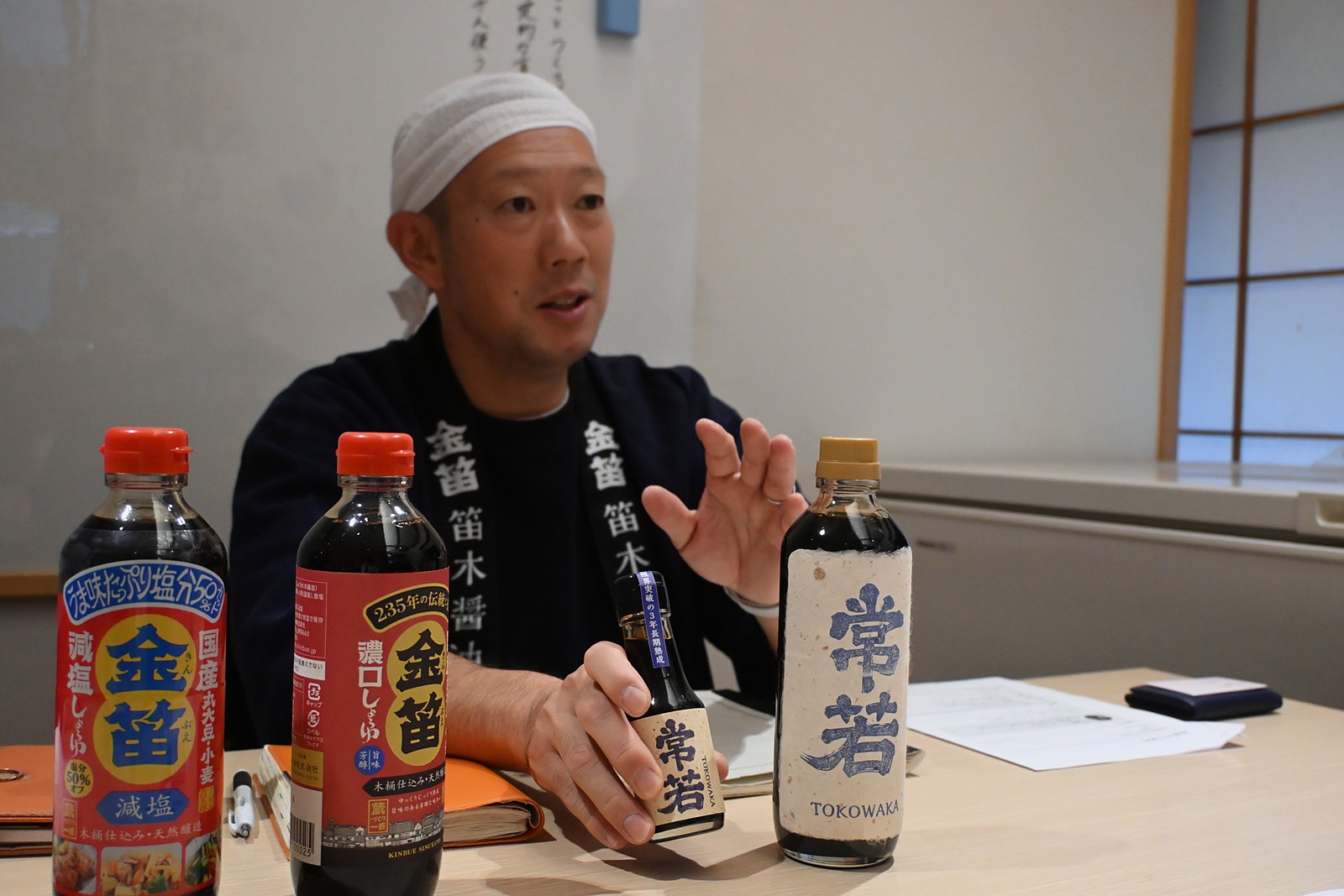
— What does "Tokowaka" mean?
It's also the name of a product, and it's written with characters meaning "always young." Ise Jingu renews its buildings every 20 years in the Shikinen Sengu. Normally, a building lasts 50 or 100 years. Yet they deliberately renew it every 20 years to pass down the building techniques and the spirit. If you rebuild only once in 100 years, everyone forgets. Things that last a long time are constantly reviewed and renewed. Ours is a company where that spirit has been handed down.
— What specifically do you do?
The basics of brewing in kioke don't change. On top of that, we review things anew: we try three-year aging and learn from the changes, and we sometimes try five-year aging, which we don't normally do.
— Are there other reasons the company has lasted?
Employees. Today, two thirds are women. There were many times we were close to going under. Every time, it was the employees who held on at the end.
Also, I think we would have gone under if we had only made shoyu. We expanded from shoyu to mentsuyu and dressings. Now we have udon restaurants, with a third shop, and baumkuchen too. It has been a continuity of tradition and innovation, always expanding the possibilities of shoyu.
Selling a 1,000-yen bottle of shoyu for 1,000 yen
In an industry whose shipments have halved, how will he do business from here? Mr. Fueki began with a story set 13 years from now.
— What kind of business do you want to build from now on?
I'm 46. The 250th anniversary of our founding is in 13 years, in 2039, when I'll be 59. At 59, I want to pass the relay sash to my children's generation. I don't really think about expanding. I want to hand it over without leaving a negative legacy.
— What do you value most in keeping the company going?
A company has to make a profit, and we have to raise our employees' pay. But if you sell a 1,000-yen product for 500 or 100 yen, in a sense you can sell as many as you like, right? I don't want to do that in my generation. I want to sell a 1,000-yen product that took two or three years to make for 1,000 yen. I want to properly build the path for that business.
— What do you think about price competition?
I really dislike price competition. For the big manufacturers, it may be fine as a strategy. But if that goes on, manufacturers go under. So I want to change the game away from price competition.
I want to change Japan's shoyu industry from the ground up. For breweries to become healthy, it's important to build a business model that properly sells a 1,000-yen product for 1,000 yen.
— What kind of people would you like to use it?
I don't think I have the right to choose customers. But I want people to use it for a long time. If people just pick it up at the supermarket, a long-lasting relationship rarely forms. I want to reach customers who made the effort to come all the way here, to whom we carefully explained how we make shoyu, and who sympathized and became fans.
According to Mr. Fueki, you can mainly find Kinbue at supermarkets and natural food stores around Japan. At Kinbue Shoyu Park in Kawajima, you can tour the brewery and choose Kinbue at the shop. On the shelf, the "kioke-brewed, naturally brewed" (木桶仕込み・天然醸造) mark on the bottle is the thing to look for.
【Fueki Shoyu Co., Ltd. (笛木醤油株式会社) / Kinbue Shoyu Park】 Address: 654 Kamiiso, Kawajima Town, Hiki District, Saitama Prefecture (head office at 660 Kamiiso) Hours: Shop 10:00 a.m. to 5:00 p.m. / Shoyu brewery restaurant 11:00 a.m. to 5:00 p.m. (last order 2:00 p.m. on weekdays, 3:00 p.m. on weekends and holidays) Closed: None (temporary closures and changes in hours occur. Please check the official website or social media.) Official website: https://www.kinbue.jp/ Kinbue Shoyu Park: https://kinbue-park.jp/ Online shop: https://shop.kinbue.jp/
Frequently asked questions
When and how did Fueki Shoyu begin?
The first-generation owner, Ichizaemon, began making shoyu in Kawajima in Kansei 1 (1789), in the late Edo period. The trade name is "Kinbue," and president Shoji Fueki (twelfth-generation Kichigoro Fueki) leads the company today.
What does "Tokowaka" mean?
According to Mr. Fueki, it is written with characters meaning "always young," and expresses the idea that things that last a long time are constantly reviewed and renewed. The example he gives is the Shikinen Sengu of Ise Jingu, where the buildings are renewed every 20 years. Fueki Shoyu keeps its basic practice of brewing in kioke, while also trying new things such as three-year aging.
Where can I buy Fueki Shoyu's shoyu?
According to Mr. Fueki, the main places are supermarkets and natural food stores across Japan. The shop at Kinbue Shoyu Park in Kawajima is open from 10 a.m. to 5 p.m., with no regular closing days.