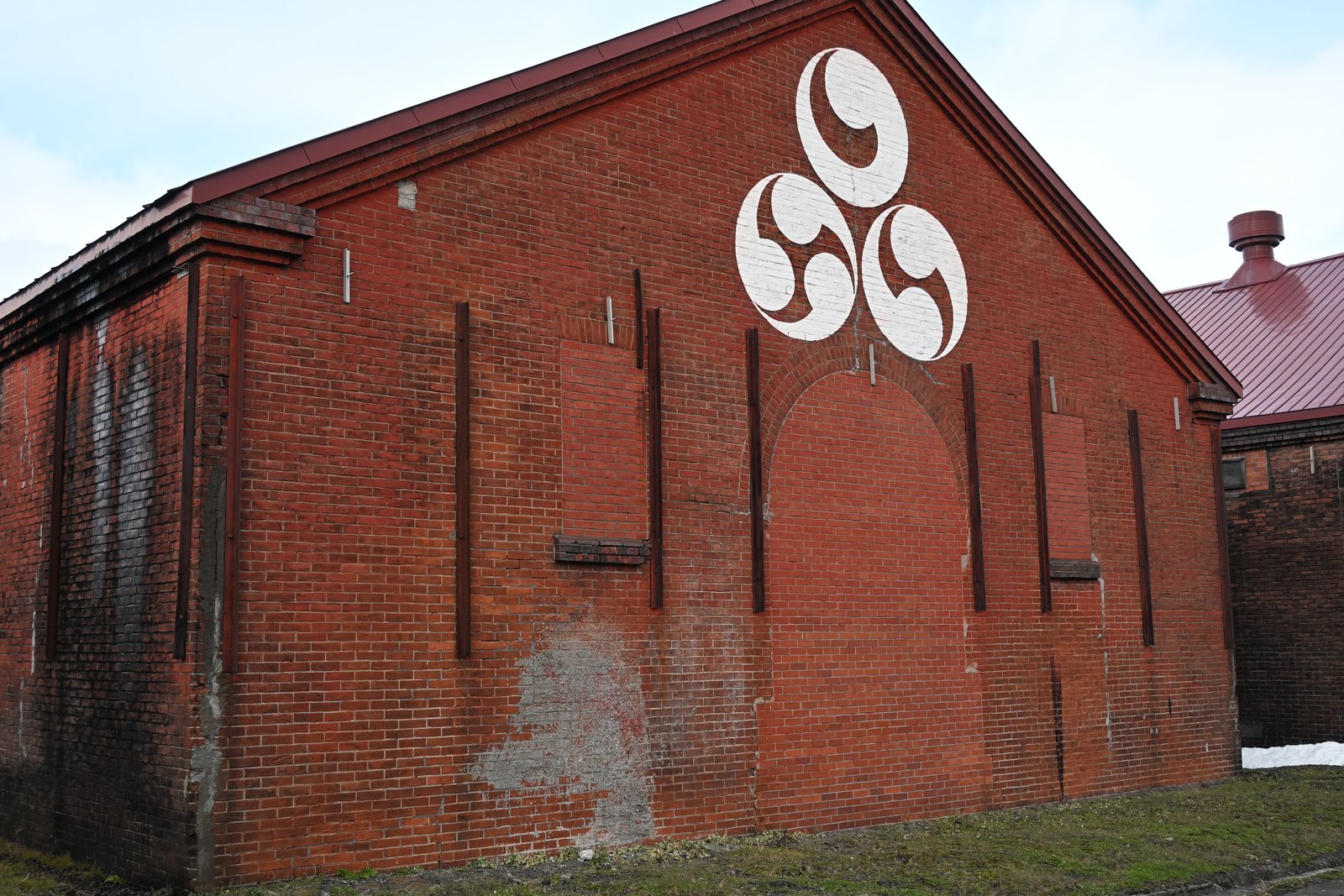
Shoyu with the same taste every time you buy it lines the shelves. Fukuyama Jyozo, in Naebo, Higashi Ward, Sapporo, makes shoyu (soy sauce) and miso under the Tomoe brand, and it began as a kaisen donya, a shipping wholesaler based in Fukui. It started making shoyu in Sapporo in 1891, and it still uses the red-brick fermentation building it put up in 1918 (Taisho 7), warming it with steam pipes in winter. What does it do to keep the taste the same all year round in Sapporo, where winters are freezing? We asked Inomata Miharu (猪股美晴), who is in charge of public relations, and Shimono Taiko (霜野太虹) of Hokkaido Shoyu, the company that runs Fukuyama Jyozo's shoyu factory.
Why a Fukui shipping wholesaler started a shoyu brewery in Sapporo
— What business were you in before making shoyu?
We began as a shipping wholesaler in Fukui. A shipping wholesaler buys and sells goods from different regions, carrying them by ship. Our ships were what are called Kitamae-sen, and they sailed around Japan with the wind in their sails.
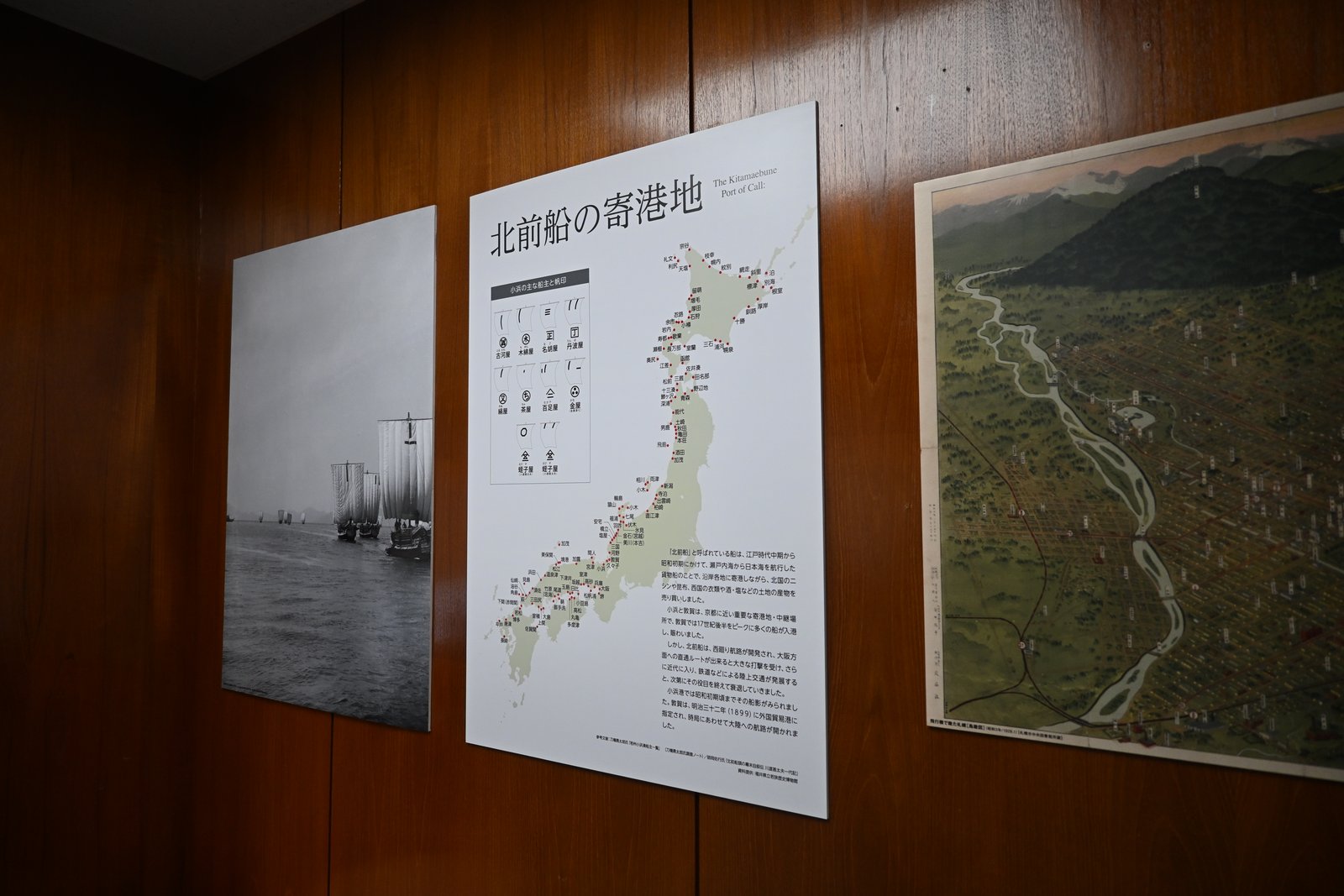
— Why did you decide to start making shoyu in Hokkaido?
Hokkaido has plenty of produce from both the mountains and the sea, and it was a producing region for soybeans, the raw material of shoyu. That was the deciding factor. We decided to come ashore from the sea, and in 1891 (Meiji 24) we started brewing shoyu near what is now JR Sapporo Station. Our name at the time was "Yamato Fukuyama Shoten."
— Where was the know-how for making shoyu in Hokkaido at the time?
Many people had come from Honshu to settle the land, and shoyu and miso were in use, but there was no know-how or place to make them, so they were brought in from Honshu. At first, brewing was done at a government-run factory, and when it was transferred from the government to private hands, we put up our hand. That is how we started. The second president went to study in the brewing department of the Osaka Higher Technical School (the predecessor of today's Faculty of Engineering at Osaka University), at the leading edge of brewing science in Japan.
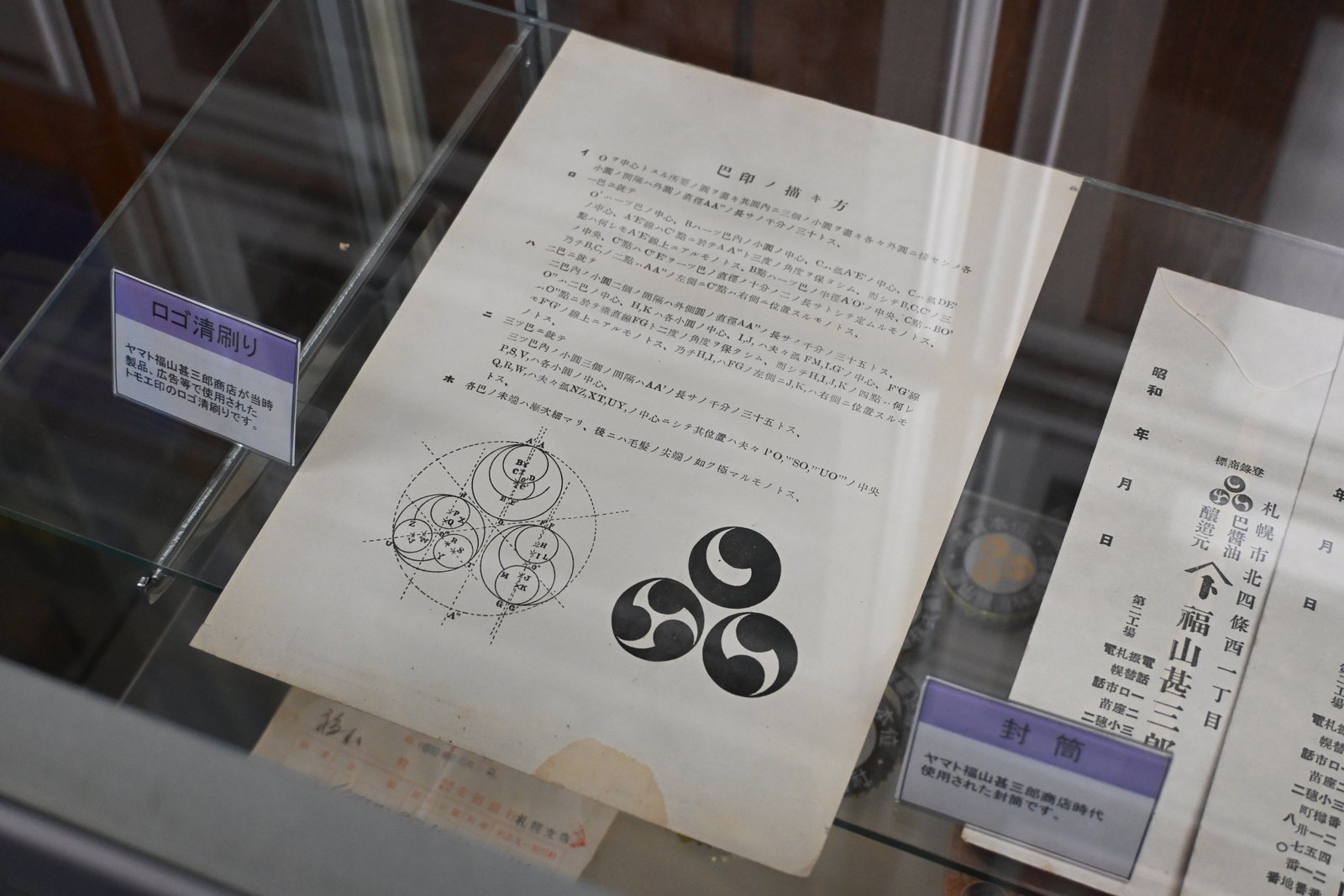
— Does the tomoe mark in "Tomoe" have an origin too?
It was originally a mark used at the port and shrines in Hakodate, we are told. We have heard that it had the meaning of warding off evil and the meaning that things do not change (immutability). The swirls of the tomoe originally turned to the left, but it was thought that business should rise to the right, so the mark was changed to face right, and that became the form it has today.
Still in use: a red-brick fermentation building from 1918, warmed by steam pipes
— Why did you build the factory in Naebo?
There are two reasons. One is water. The factory at the original site could no longer keep up as production grew, so in Taisho 7 we built a second factory in Naebo. The Toyohira River flows nearby, and good water is plentiful. We also dig down about 60 meters and pump up groundwater. The other reason is logistics. A JR terminal is right in front of the company, so receiving materials and shipping out were both easy.
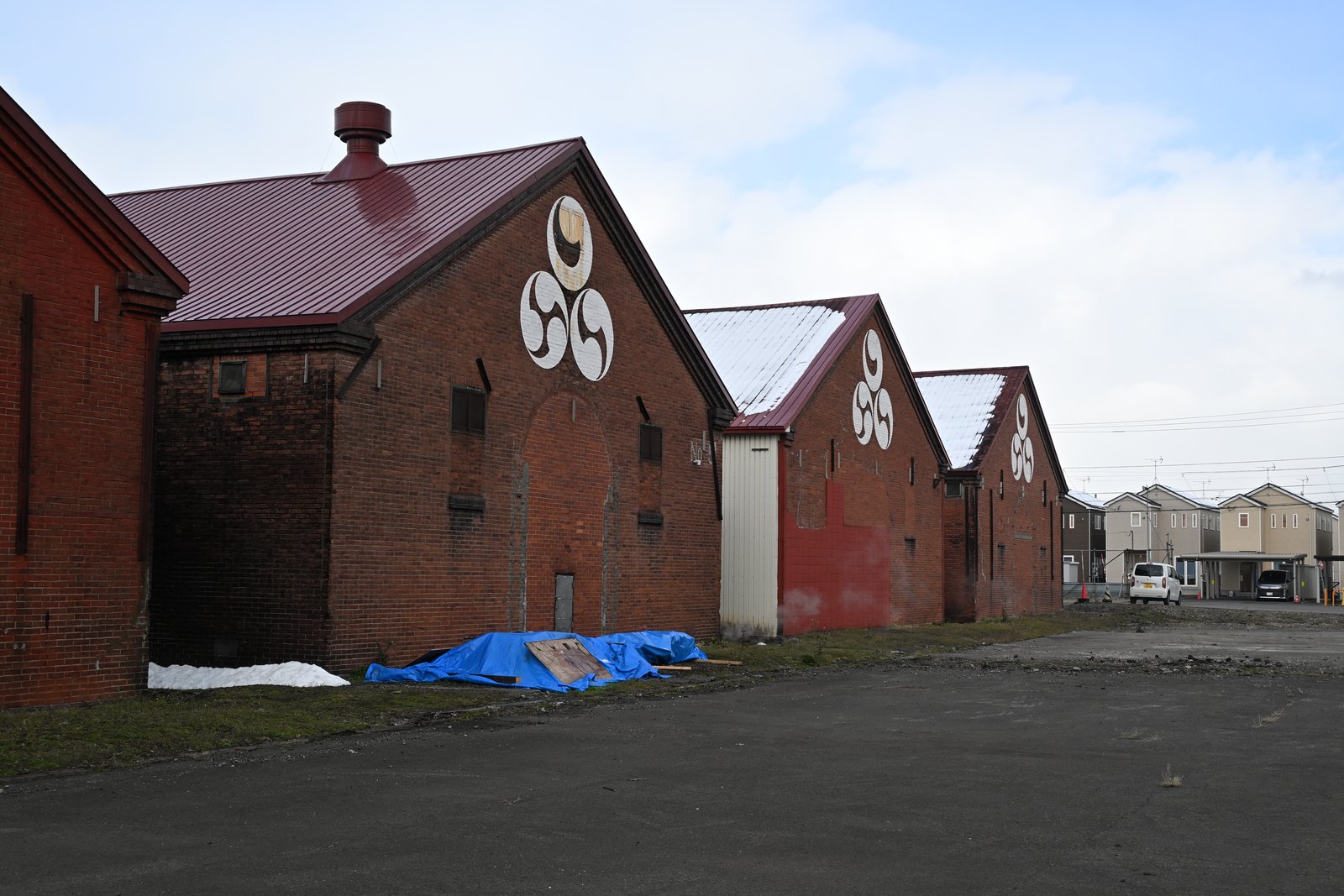
— Why do you still use that building from Taisho 7?
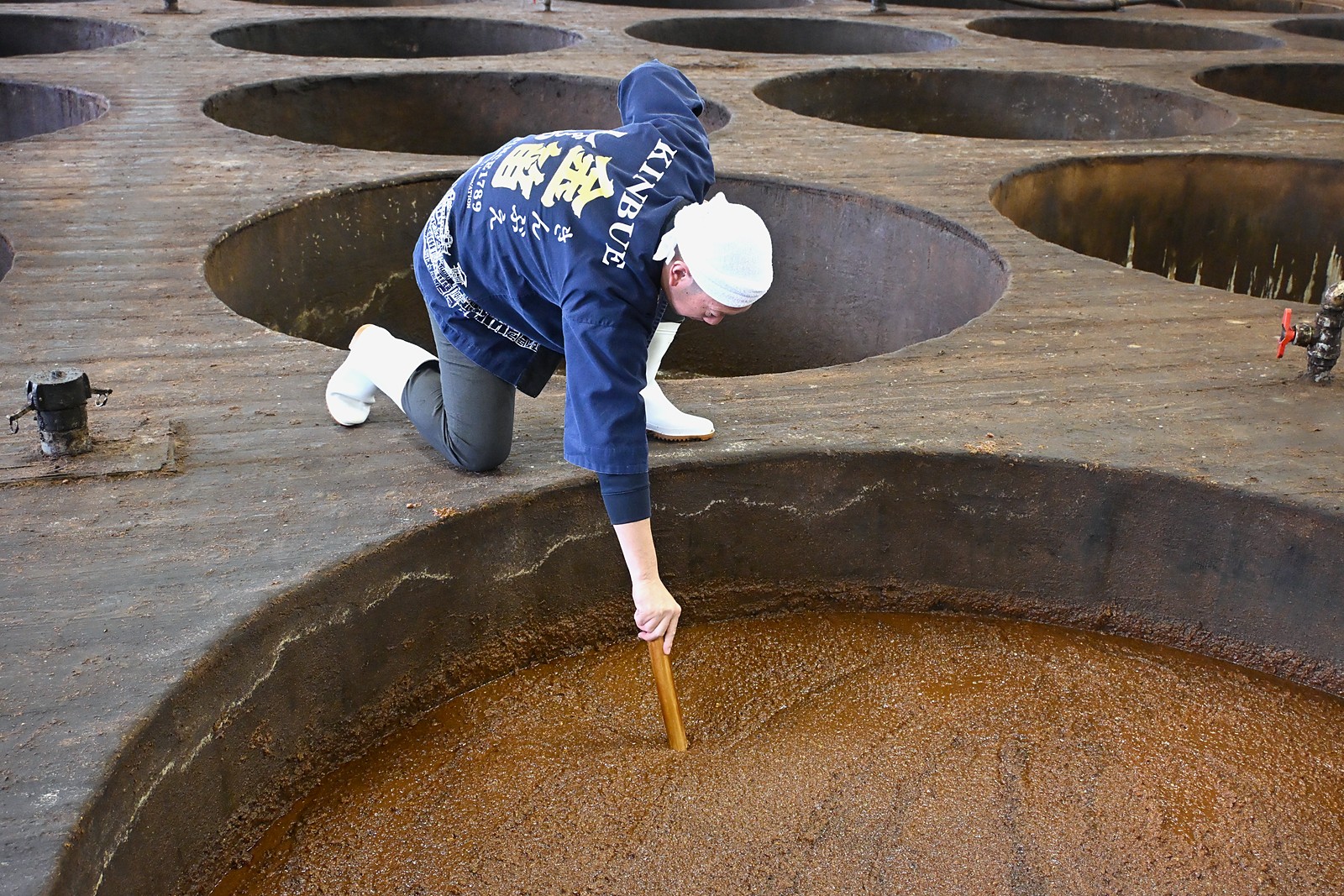
So that we can brew shoyu even in winter. Red brick is not easily affected by the outside air. The fermentation building has two floors: steam pipes run along the first floor, and the fermentation tanks stand on the second. In winter we warm it with the heat of the steam to ferment, so we can brew all year round. Equipping a new building with the same facilities would cost a great deal, so we repair this one and keep using it.
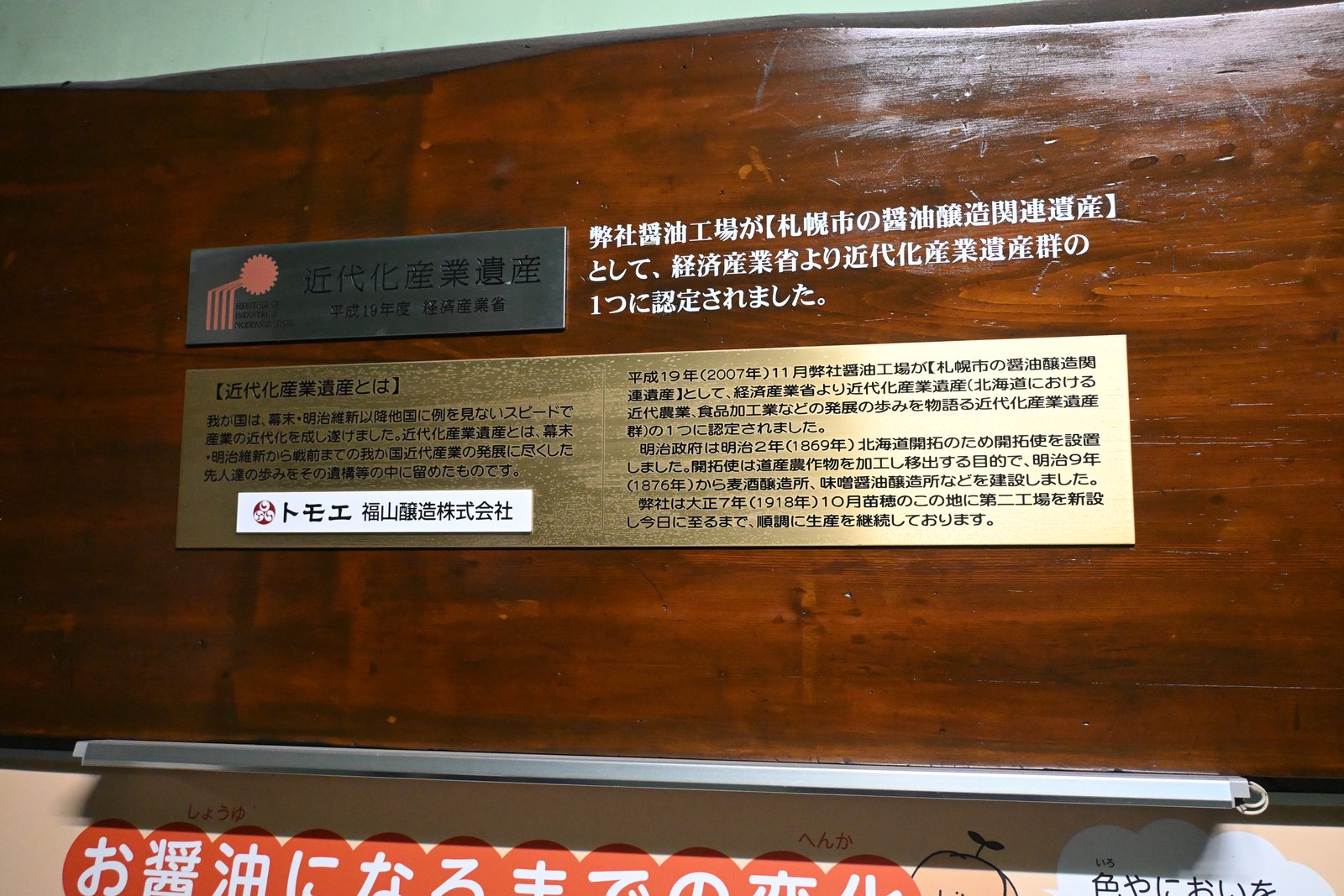
The Naebo shoyu factory was recognized as a Hokkaido Isan (Hokkaido Heritage) site in 2004 and as a Kindaika Sangyo Isan (Heritage of Industrial Modernization) site in 2007.
— Has the way you make it changed since the old days?
The method is almost the same as it was. Details such as managing temperature with a system have changed, but the basic flow follows tradition, and we still use some of the equipment we have used since then.
Koji strains, pressing and pasteurization: the handwork behind the same taste in winter and summer
— What is the hardest part of making shoyu in Hokkaido?
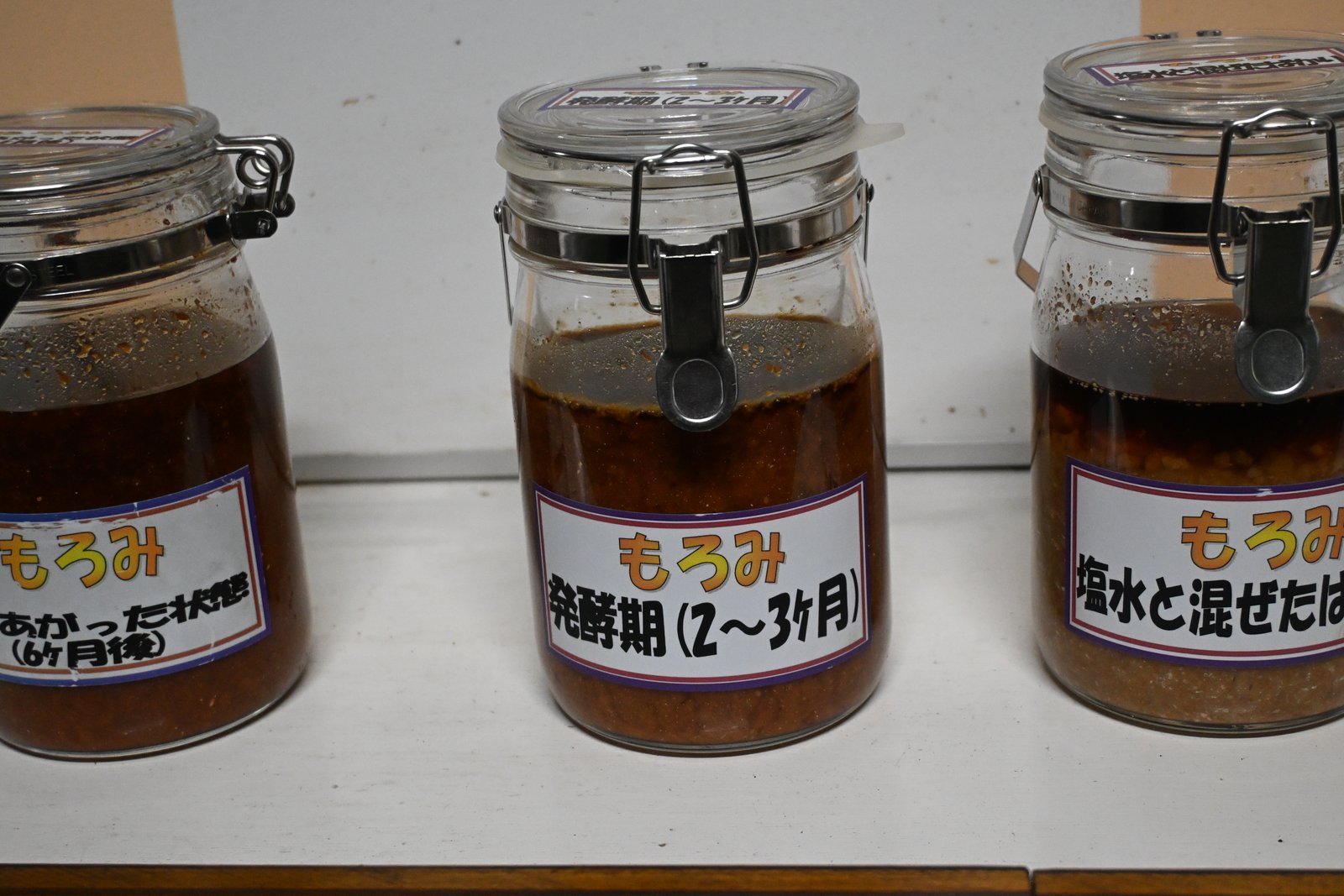
The temperature difference with the outside air is unavoidable, so managing temperature is the hardest part. There is a saying in shoyu making: "first koji, second kai-ire, third hiire." Kai-ire is stirring the "moromi" (the fermenting mash), which is koji mixed with salt water. Hiire is the final step of heating, which sets the color and aroma. Air temperature affects every one of them.
— The first, koji: how do you change it between winter and summer?
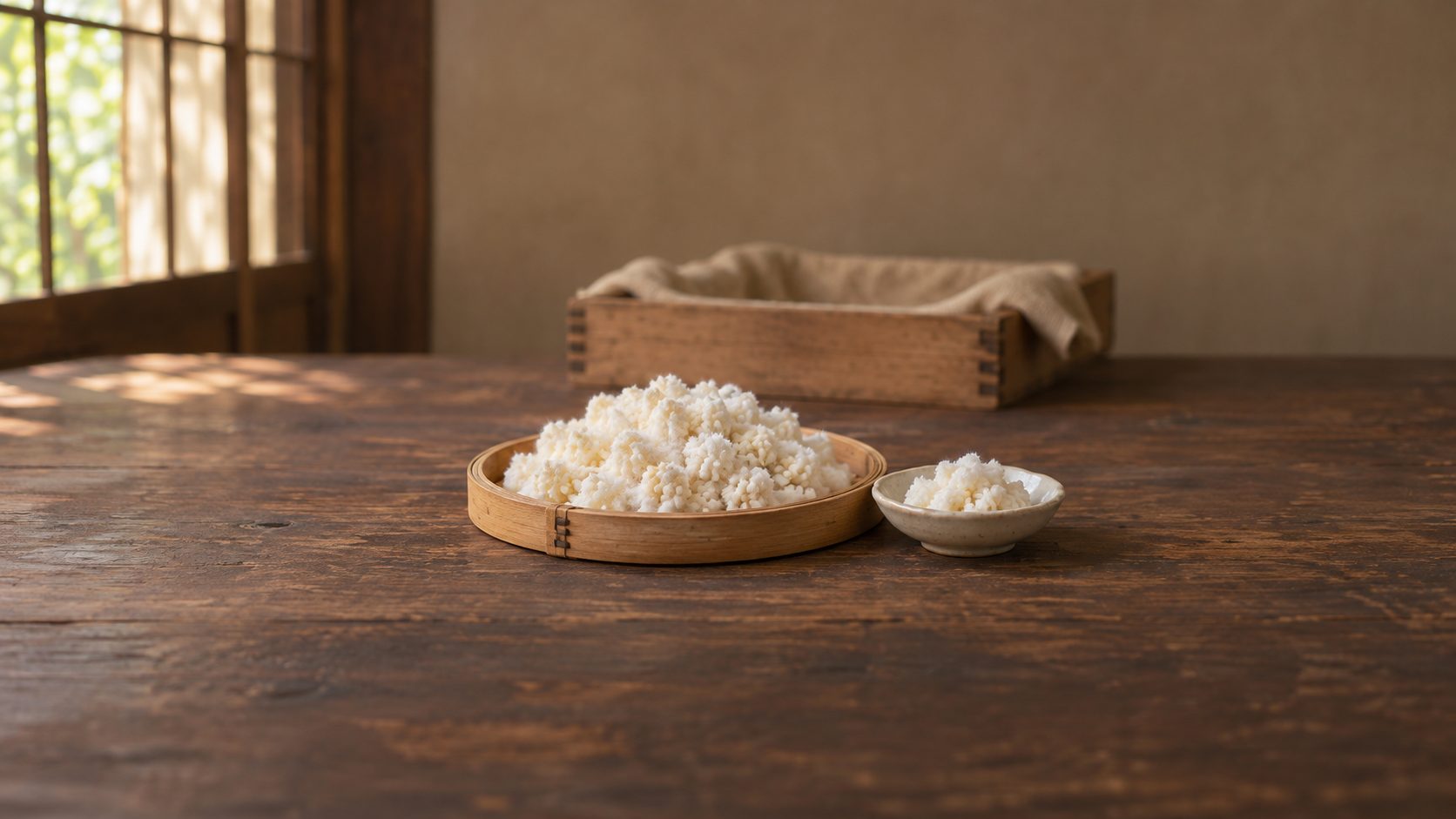
Koji is steamed soybeans and wheat on which koji mold has been grown, and it is the base of shoyu's flavor.
In winter the outside air is cold and the koji mold does not grow easily. So we keep several strains of koji mold and change the proportions of seed koji (the mold that starts the koji making) for winter and summer. In summer we use a koji that does not generate much heat. In winter we use a koji that generates a lot of heat.
— Which steps do you do by hand?
Pressing is the step in which the fermented moromi is wrapped in cloth and squeezed. But the condition of the moromi is completely different depending on the season and how far fermentation has gone. It can be cold, hard or soft. So the person pressing adjusts by feel how much moromi goes into the cloth: more today, less today.
So that we can press with stable quality in the end, this step is done by hand, and it is hard to mechanize.
— What is the last step, pasteurization (hiire)?
It is the final step that sets the color and aroma of the shoyu. How the color develops changes with the temperature that day. We cool the shoyu or leave it as it is to adjust the color, and this is also managed by hand.
— Has the brewing season changed since the old days?
In the past, as with sake, we brewed once a year in the coldest season and made our products from that. Now we have to ship products all year round. Whether it is made in winter or summer, it has to come out at the same quality.
Fermentation is the work of living organisms, microbes. Even when you make it the same way, the result can differ from the next tank. With vegetables, there are years when the harvest is good. Seasonings cannot work like that. They always have to come out with a uniform taste.
A brewery warmed by steam, koji strains used by season, and pressing and pasteurization adjusted by feel. This is the care Fukuyama Jyozo takes to give the same taste in winter and summer.
Domin no Shoyu Hokkaido Marudaizu: made only from Hokkaido soybeans, wheat and salt
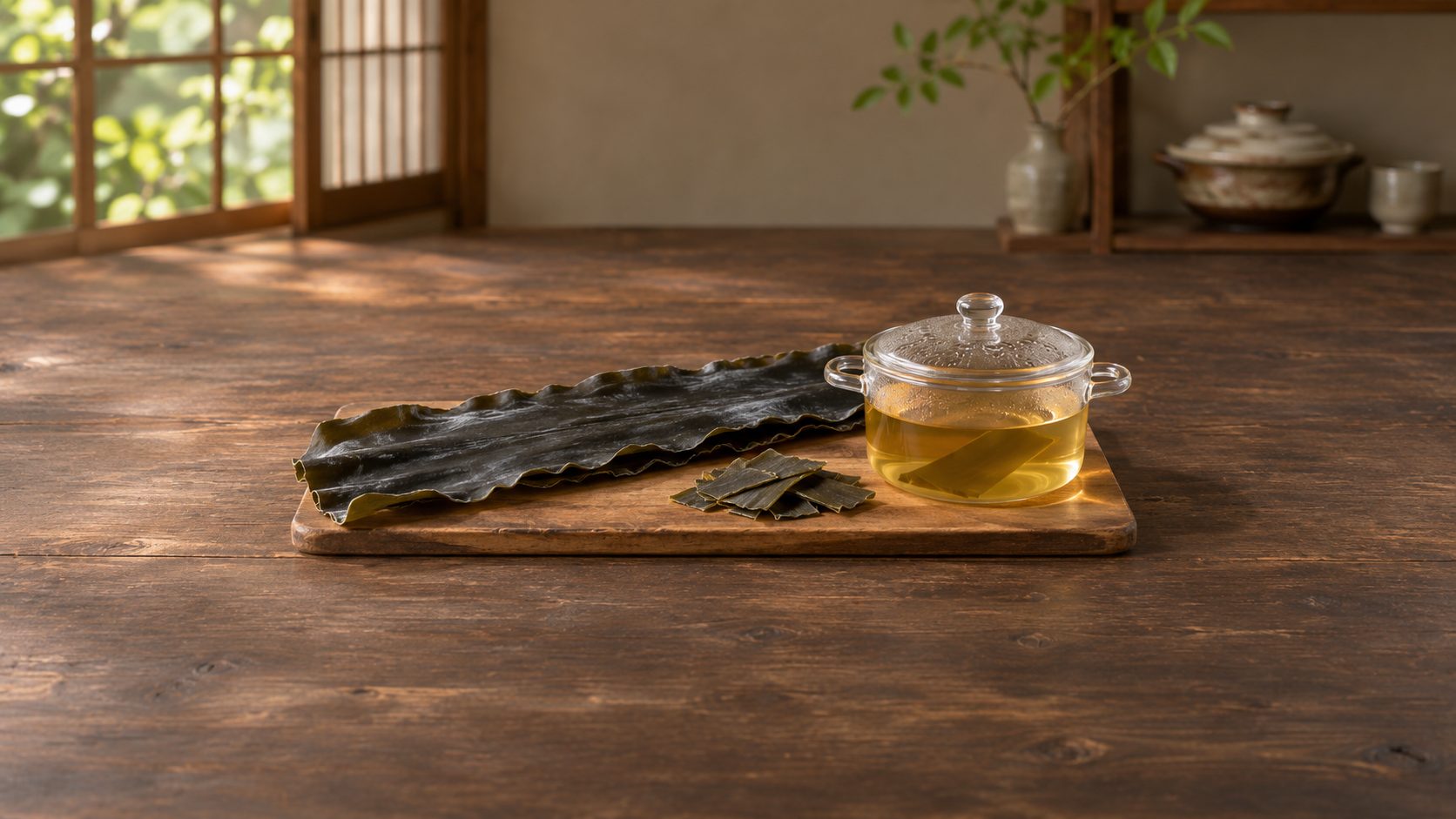
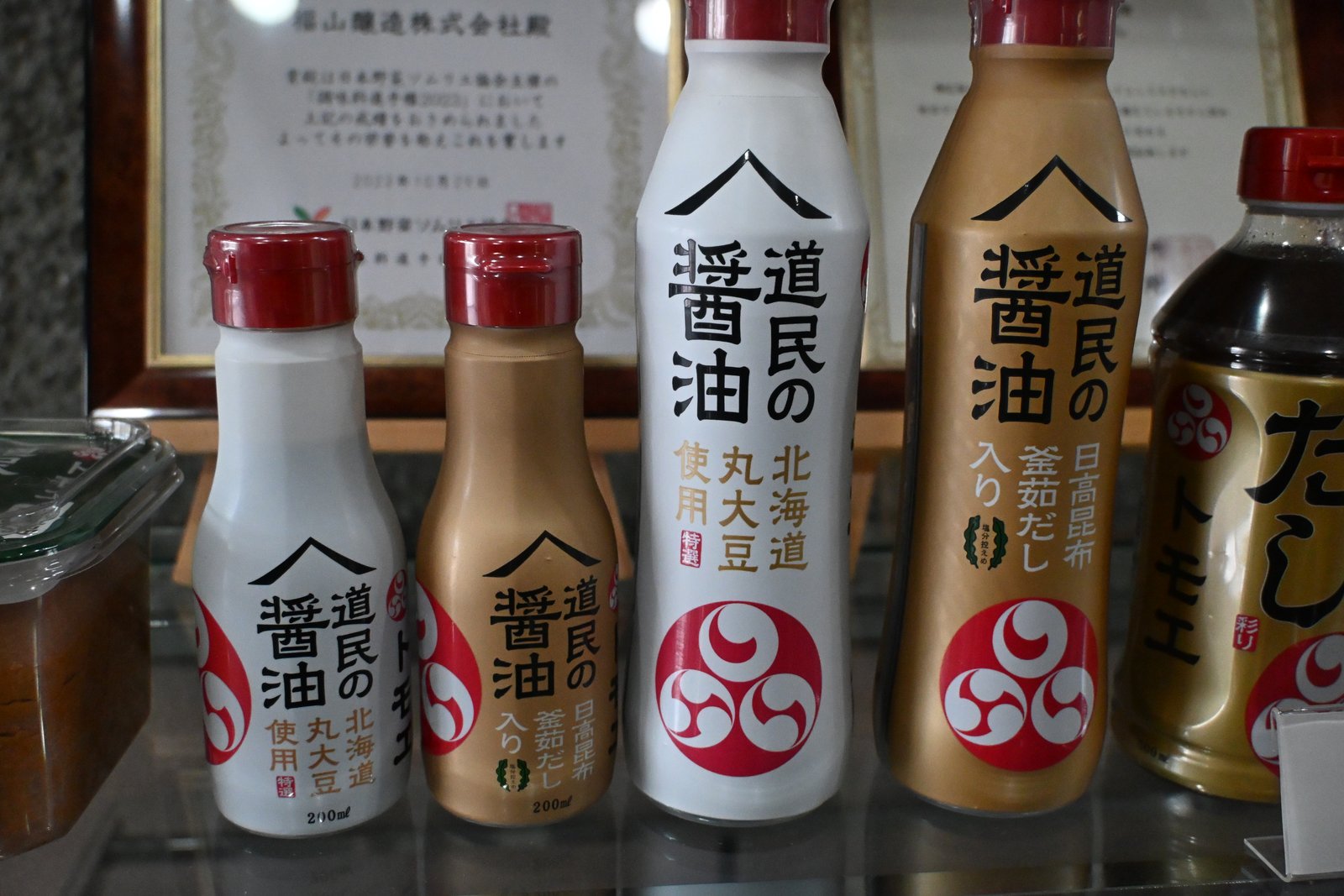
Domin no Shoyu and Domin no Miso are a product series from Tomoe; the shoyu was launched in 2015 and the miso in 2016. The shoyu comes in "Hokkaido Marudaizu" and "with Hidaka kombu kettle-boiled dashi."
— What did you want to put into Domin no Shoyu and Domin no Miso?
The concept of both is to use Hokkaido-grown ingredients and make them in Hokkaido. Beyond that, we aimed for the taste that people in Hokkaido look for. Hokkaido has excellent ingredients, and there is demand for them from all over Japan. We wanted to make seasonings to go with those ingredients, and that was the thinking when we developed them.
— Which product do customers comment on most?
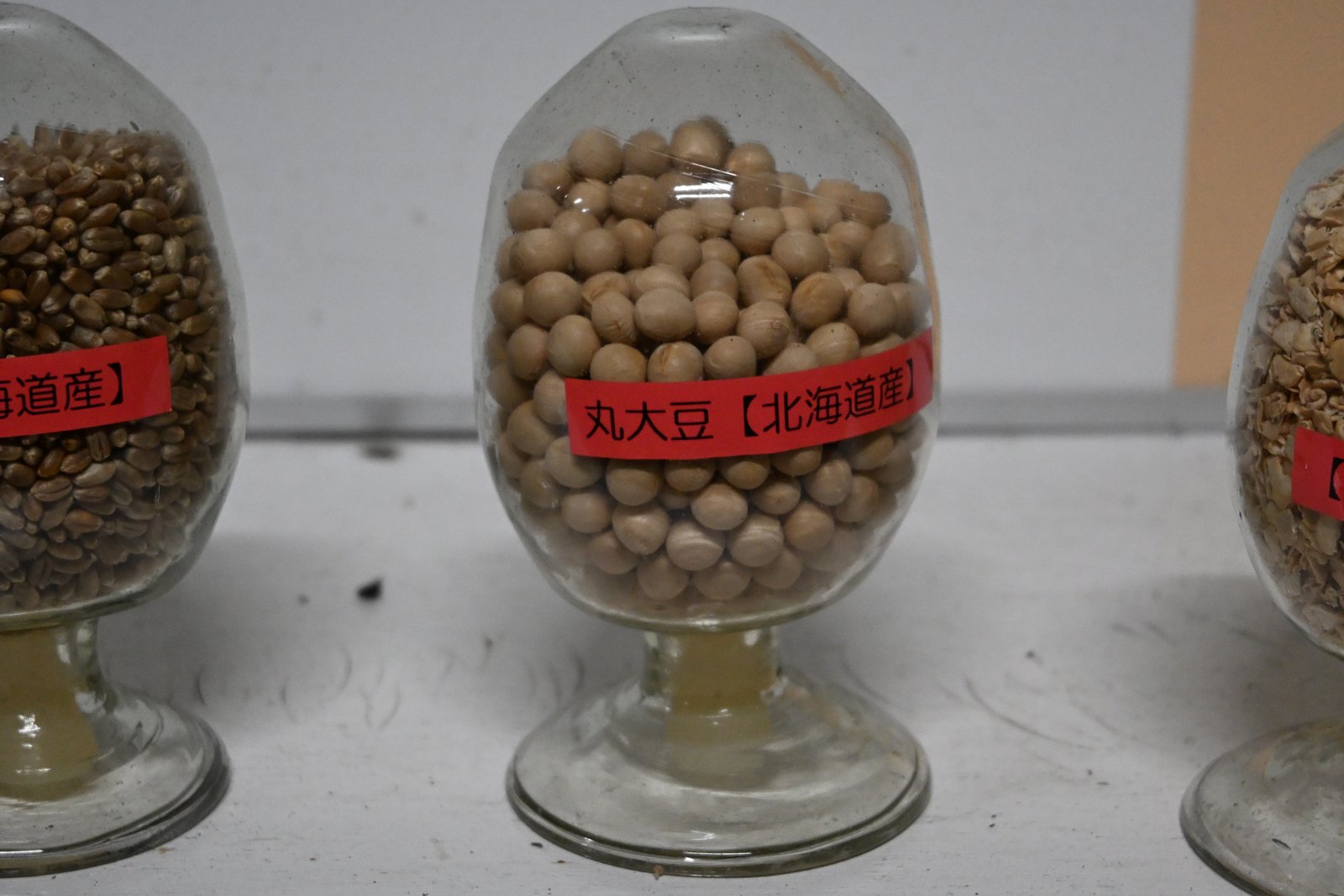
Domin no Shoyu "Hokkaido Marudaizu." It has only three ingredients: soybeans, wheat and salt. The label says "Tokusen" (special grade), which means a shoyu of a grade with high umami. Ordinary shoyu sometimes has alcohol (shusei) added to stop fermentation, but we do not add any to this one.
We had deliberately not made a big point of that. Even so, some customers choose it after reading the ingredient list on the back of the label, and we get comments about the ingredients by phone as well.
— What was hard on the production side?
Keeping the quality the same all year without adding alcohol is difficult. During fermentation and aging, alcohol fermentation occurs inside, and that alcohol supports the quality. But the amount goes up and down with the season.
On top of that, in heat sterilization we heat to about 100 degrees and put it into the tank at 80 degrees, and alcohol evaporates in that temperature range. So we reviewed how we manage temperature and the shape of the tanks, so that as little as possible evaporates.
In fact, when the product first went on sale we could not control it well, and there was a period when we added alcohol. Through repeated trial and error the quality became stable, and we were able to stop adding alcohol around the tenth year after launch.
According to Inomata, there were even voices inside the company asking, "Is it really all right not to add alcohol?" It is a product that was made to sell as it is today after hard work to stabilize its quality.
Yamato Fukuyama Shoten, a koji brand, and a shoyu for every day
— Why did you use the name of your founding days as a brand name in 2020?
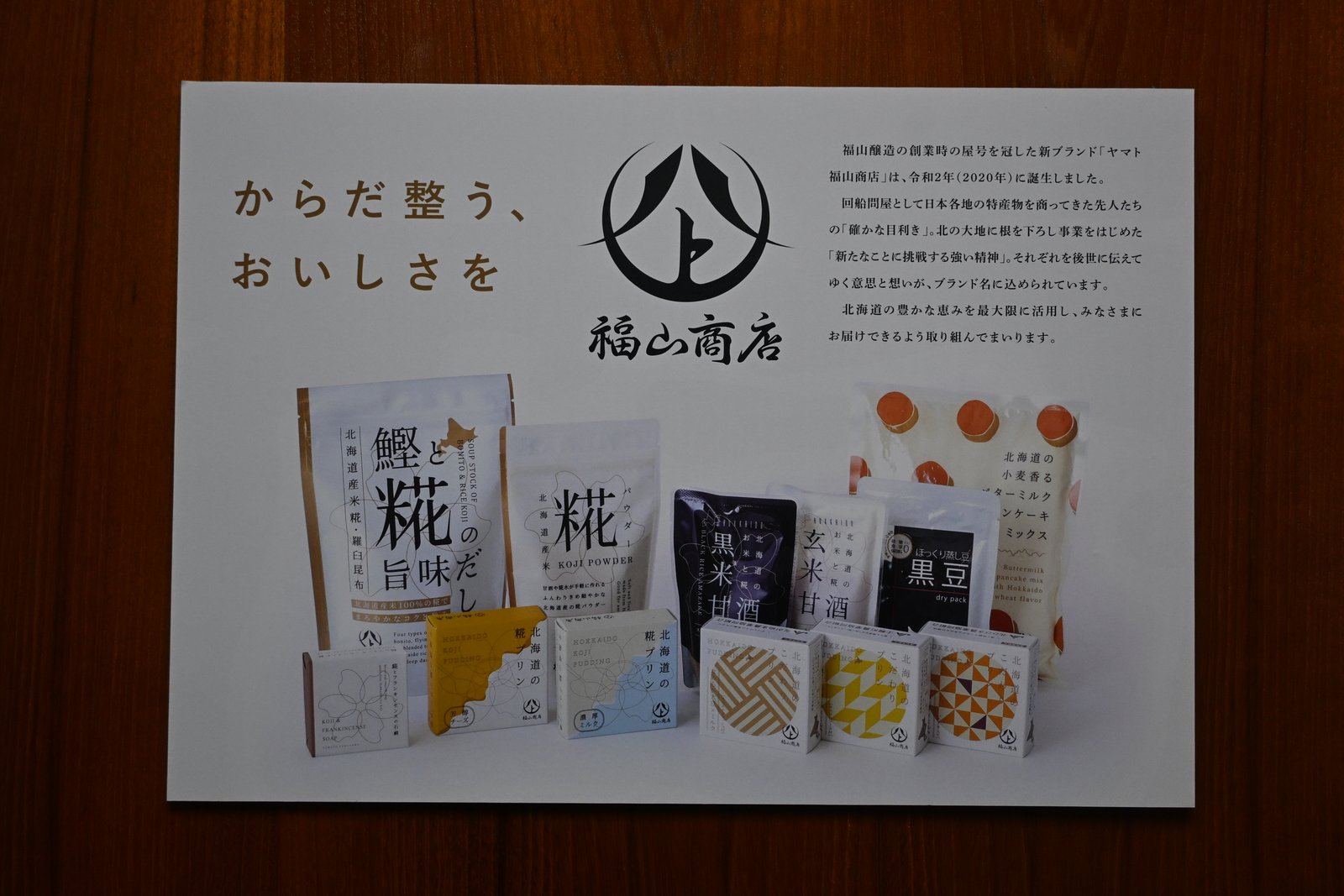
We named a new koji brand "Yamato Fukuyama Shoten," our name at founding, in April 2020. It was ahead of our 130th anniversary in 2021. We had been making miso and shoyu, and what the two have in common is koji. We thought that with koji we could make use of the experience and knowledge we have built up. The concept is "Karada totonou, oishisa o" (deliciousness that puts the body in order).
At first, it was koji ground into a very fine powder, in a form people can take at the everyday table. Now there is even coffee koji, made by treating coffee beans as koji, and pudding made with koji.
— Finally, what kind of people would you like to use it?
It is a basic seasoning, so we would like as many people as possible, whether particular about food or not, to try it once. Not in any special way: for dipping, for pouring, for seasoning a dish, in everyday use, and through that we hope people come to see what is good about our products. We are particular about how it is made, but not about how it is used. We hope people will use it widely, in whatever way they like.
At the head office in Naebo there is a direct-sales shop that sells shoyu and miso by weight from 100 g.
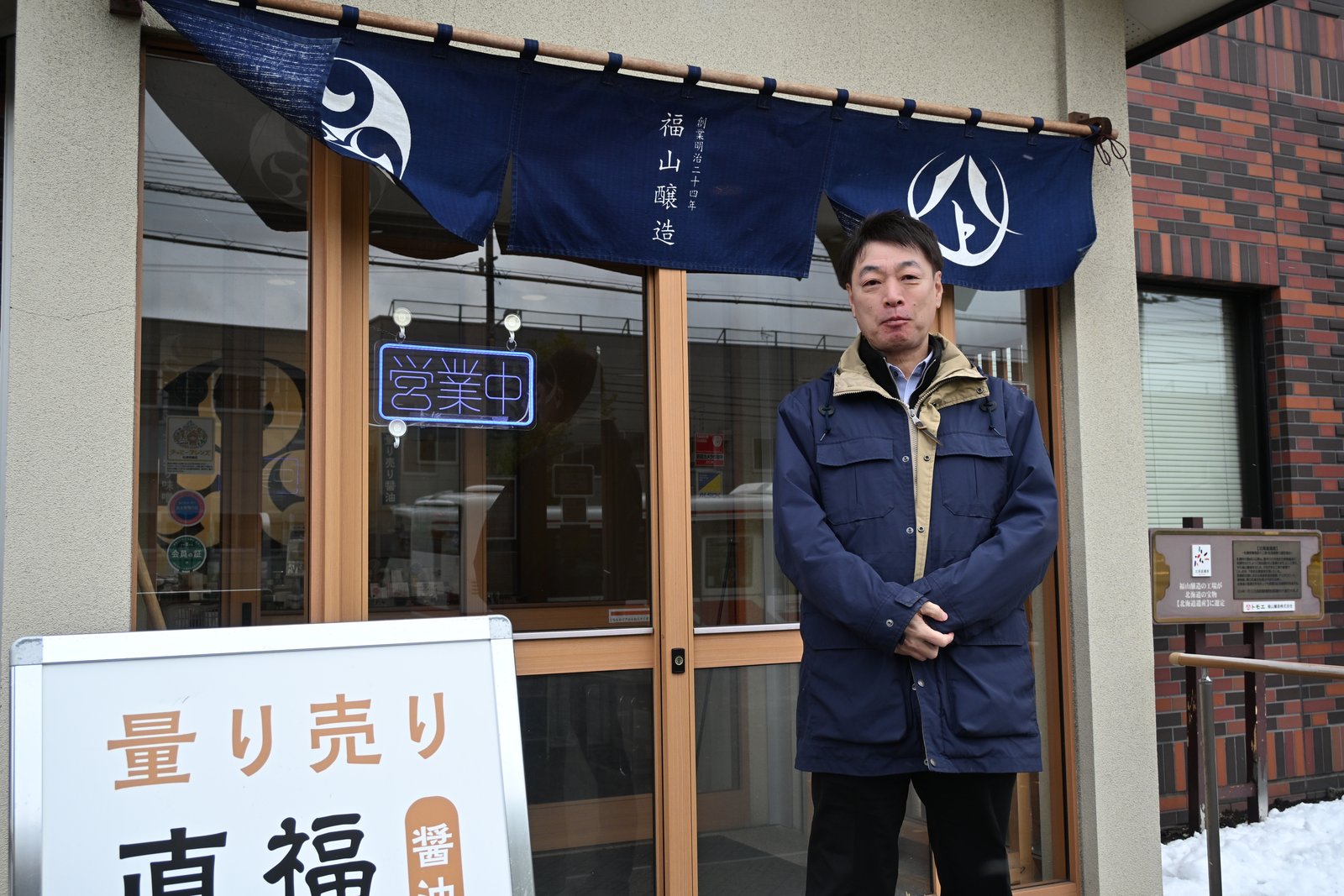
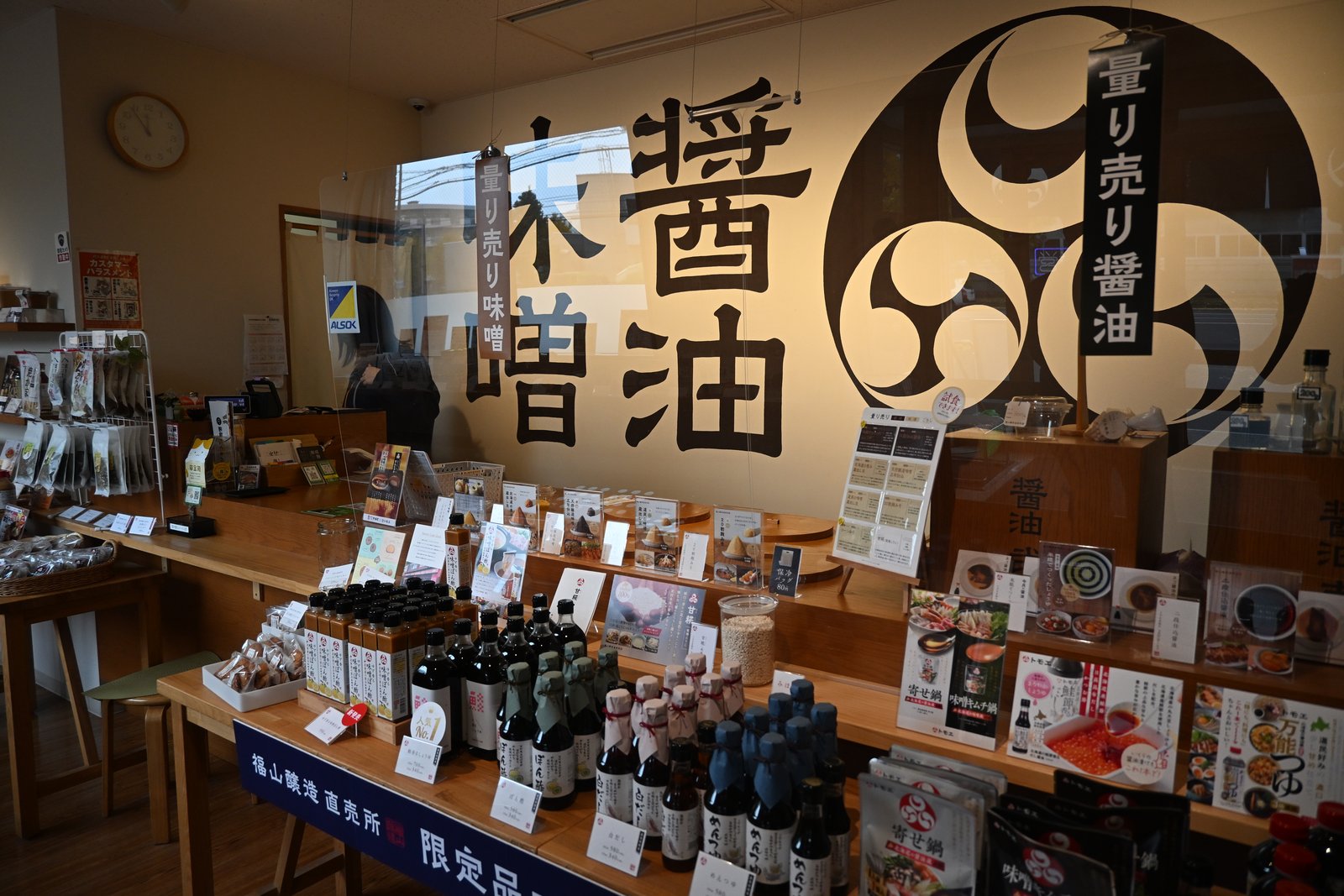
To start, try Domin no Shoyu Hokkaido Marudaizu in place of your usual shoyu. Fukuyama Jyozo says to use it for dipping, for pouring and for seasoning, and you can taste, in your daily meals, a flavor made only from soybeans, wheat and salt.

Featured in this article
Tomoe Domin no Shoyu Hokkaido Marudaizu (トモエ 道民の醤油 北海道丸大豆)
Fukuyama Jyozo Co., Ltd. (Sapporo, Hokkaido) / 450ml
PRContains an Amazon Associates link. Check price and availability on the Amazon product page.
【Fukuyama Jyozo Co., Ltd. (Tomoe / Yamato Fukuyama Shoten)】 Address: 2-4-1 Naebo-cho, Higashi Ward, Sapporo, Hokkaido Official website: https://www.tomoechan.jp/ Online shop: https://shop.tomoechan.jp/ Direct-sales shop: 10:00-16:00 (closed on weekends, public holidays, the Obon holidays and the New Year holidays). Shoyu and miso are sold by weight from 100 g, and you can taste before you buy Factory tours: by reservation (Monday to Friday, about 60 minutes, free of charge). Reservations: 0120-120-280 Domin no Shoyu Hokkaido Marudaizu: 450 ml, suggested retail price 460 yen (excluding tax); 200 ml, 340 yen (excluding tax) (official website, checked on November 16, 2026) Instagram: https://www.instagram.com/fukuyama_jyozo/
Frequently asked questions
What does "first koji, second kai-ire, third hiire" mean?
It is a saying that lists the most important steps in making shoyu, in order. They are making the koji, kai-ire (stirring the moromi with a paddle) and hiire (pasteurization, the final step of heating that sets the color and aroma). The paddle, called kai-bo, is said to be named after a boat's oar.
What are the ingredients of Domin no Shoyu Hokkaido Marudaizu?
Soybeans (from Hokkaido), wheat (from Hokkaido) and salt. These three are listed on the product page of Fukuyama Jyozo's official website (checked on November 16, 2026). The label also reads "Tokusen" (special grade).
Where can I buy Fukuyama Jyozo's shoyu? Can I see the factory?
The direct-sales shop at the head office in Naebo (10:00-16:00, closed on weekends, public holidays, the Obon holidays and the New Year holidays) sells shoyu and fresh miso by weight from 100 g, and you can taste before you buy. There is also an official online shop. Tours of the shoyu brewery are by reservation only (Monday to Friday, about 60 minutes, free of charge); reservations are taken at 0120-120-280. All of this is based on the official website, so please check by phone for the latest availability.