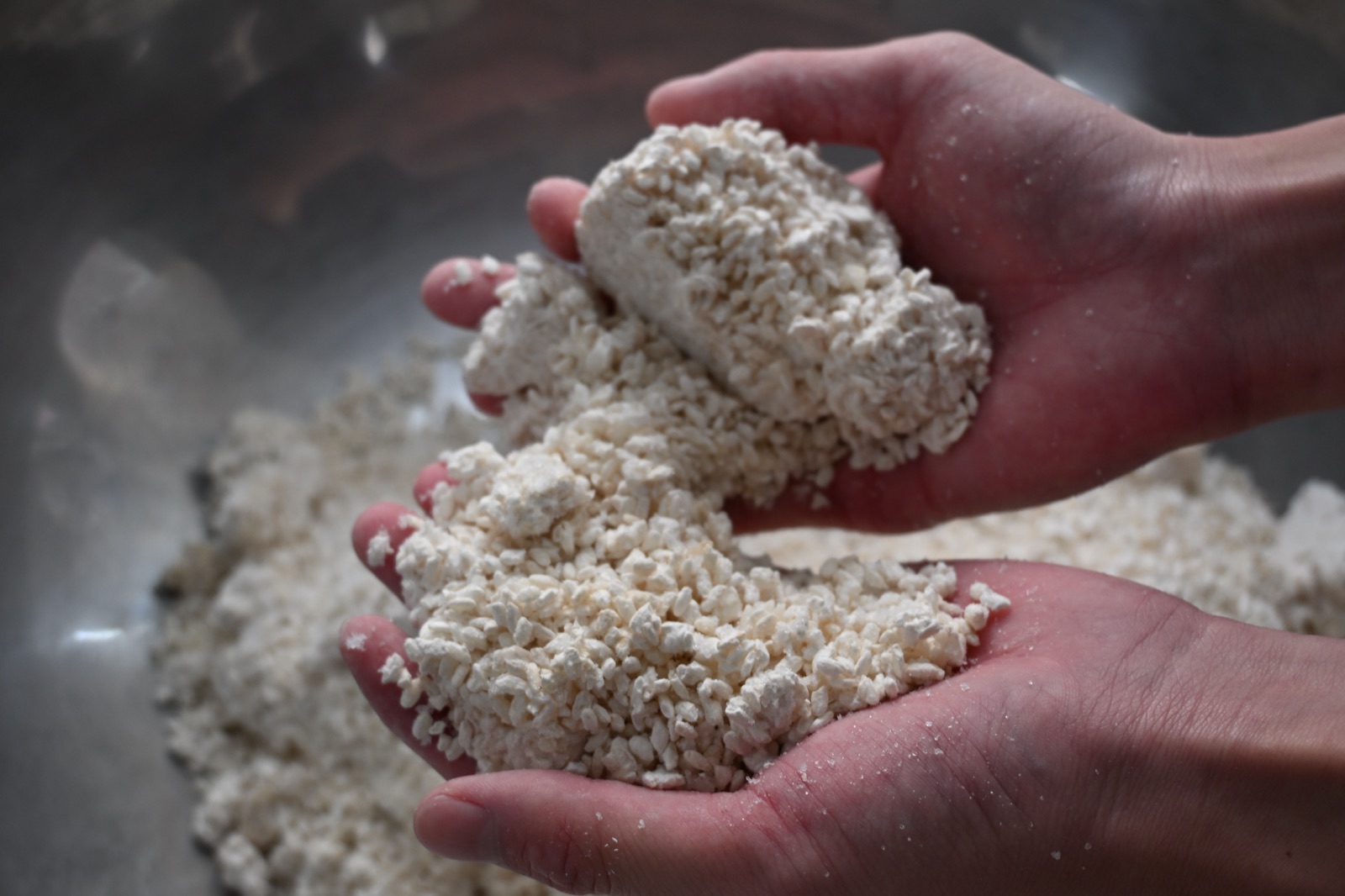
Sakurai Koji-ten (櫻井麹店) is a koji maker founded in 1760, about a 7-minute walk from Kemigawa Station on the Keisei Chiba Line, in Kemigawa-cho, Hanamigawa Ward, Chiba City.
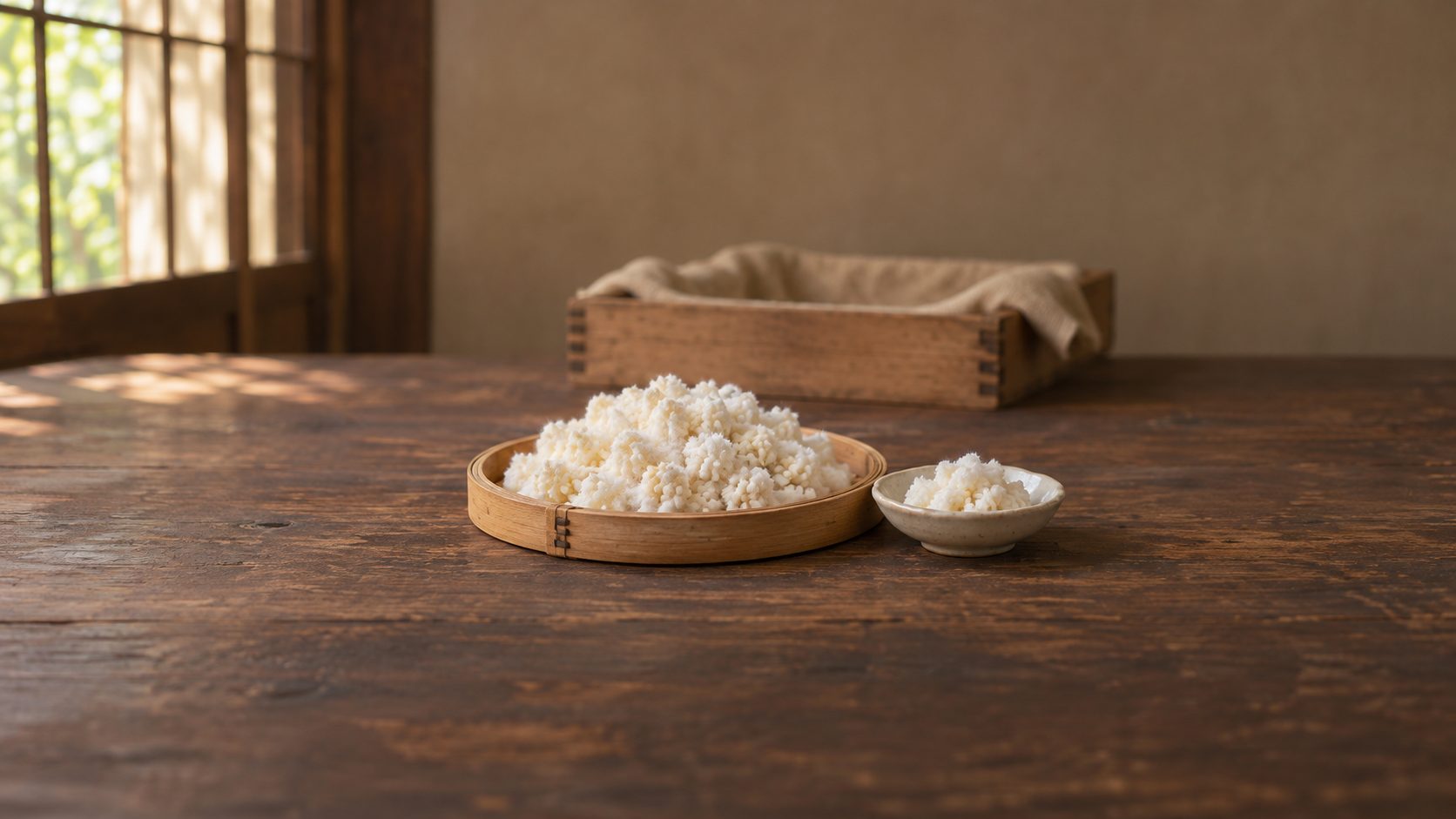
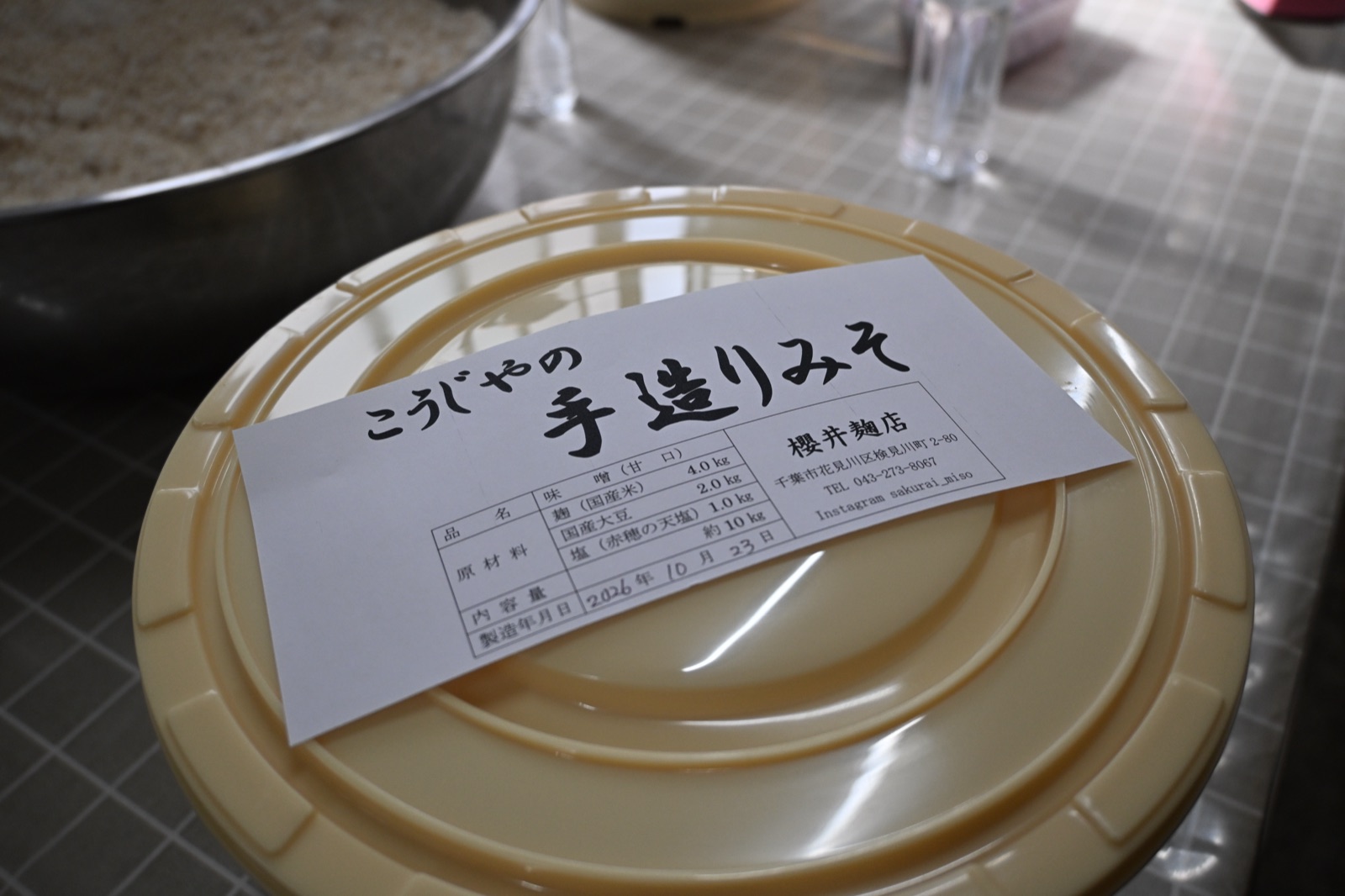
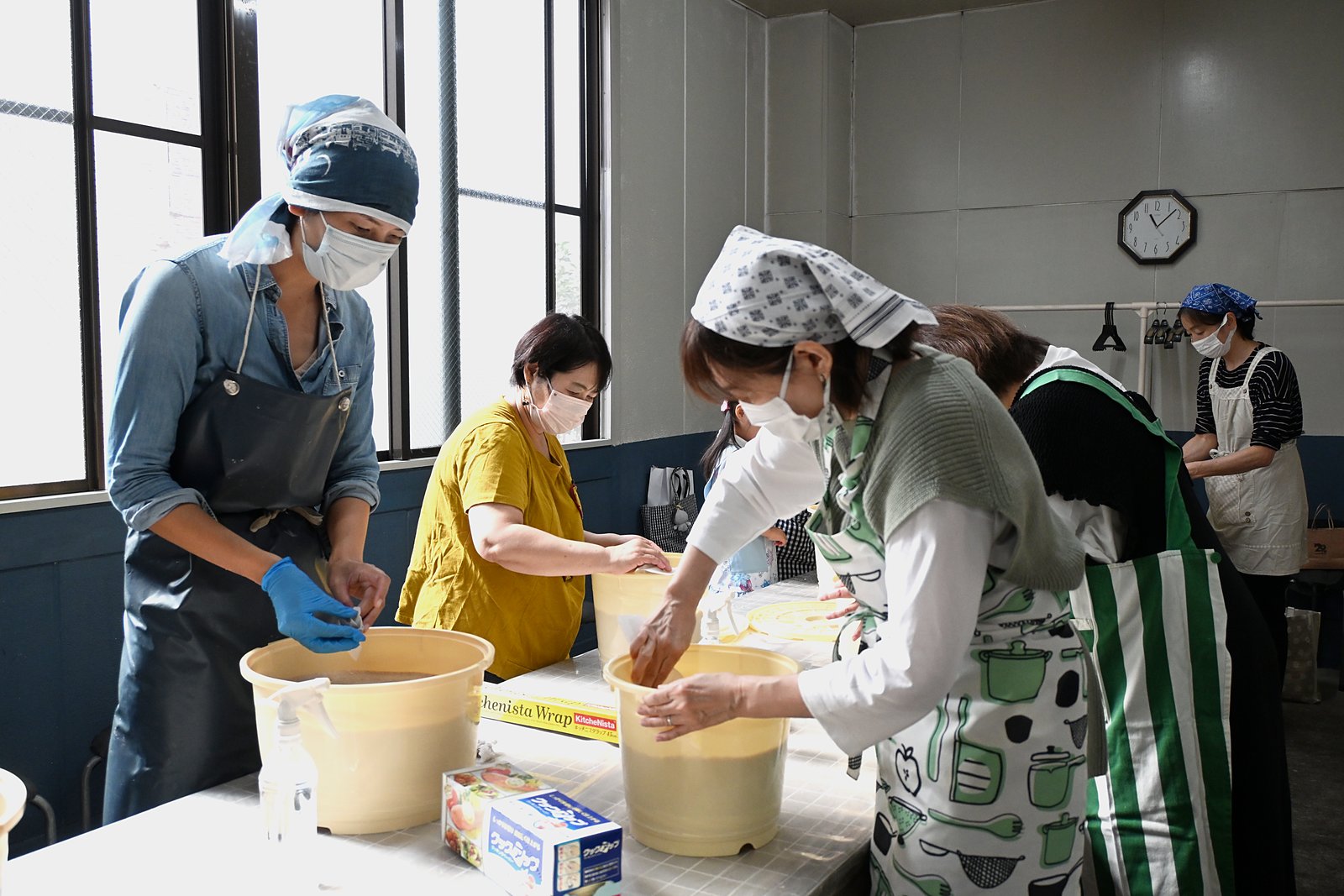
Koji is steamed rice or barley that has been inoculated with koji mold (Aspergillus oryzae) and left to ferment, and it is the base of miso and other foods. Most Japanese fermented seasonings, miso and shoyu among them, are made with this koji. From October to the end of April, the shop holds a miso-making workshop: you mix koji, soybeans and salt, pack the miso into a barrel, and take it home.
The shop has kept going in its own town, protecting the flavor and techniques handed down through the generations. What does it leave unchanged, and what does it try? On October 23, 2026, after the miso-making workshop, I put that question to Takasu (高須), who makes the koji.
A shop passed from relative to relative
— How did you come to work in the family business?
After university I worked at an IT company. My uncle became ill, and my mother asked me, "Could you help out?" It hadn't crossed my mind, but my mother had done so much for me in my life, so I said yes.
Winter is the busy season, so the whole family used to gather here to help, and afterward we would all eat together. That was part of our culture, even when I was a child. It was a place I had known since I was small, so I had no hesitation about coming back. I returned in 2018, and this is my ninth year.
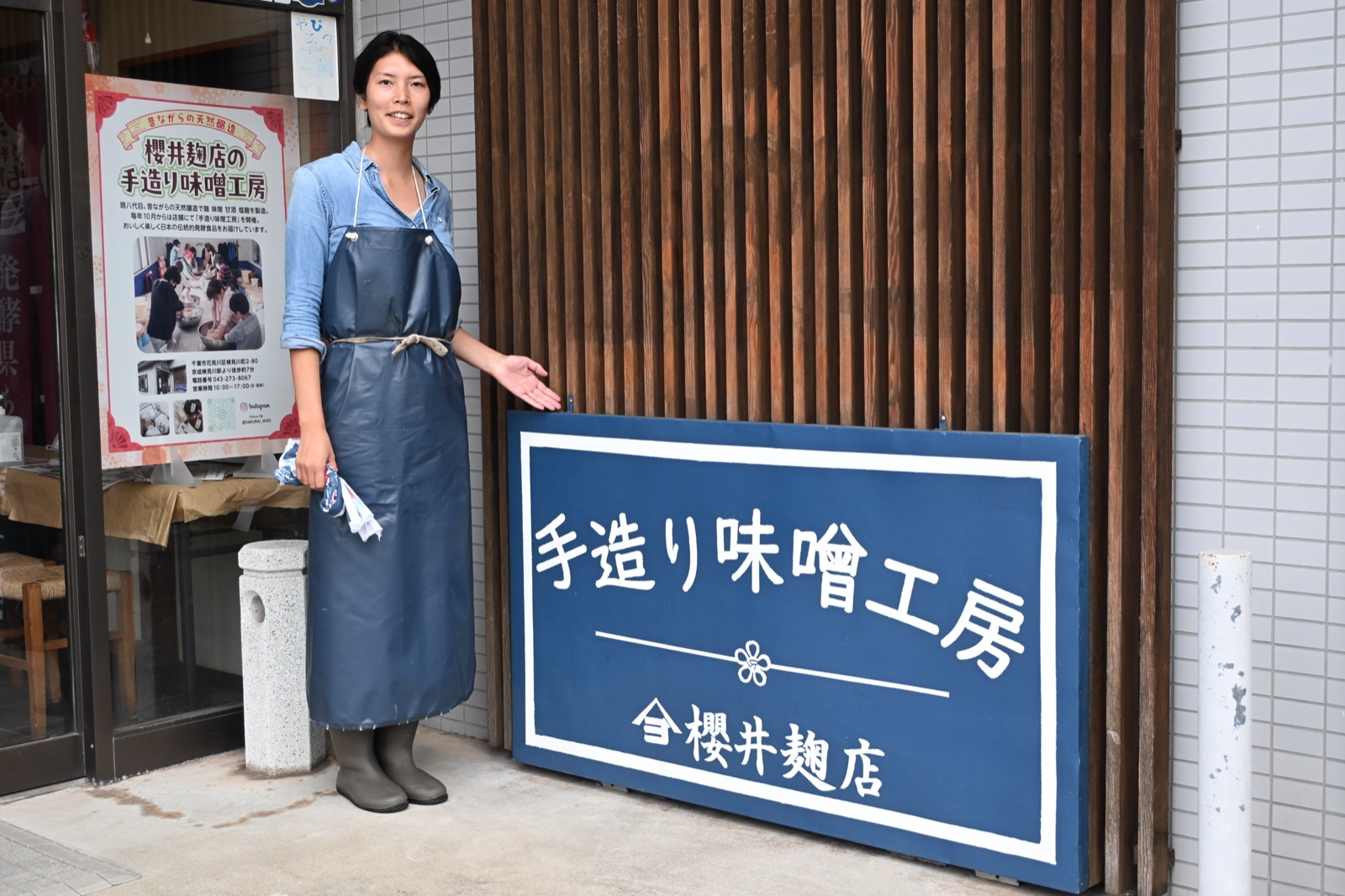
Takasu learned how to make koji by working alongside their uncle.
Founded in 1760, and the question of who takes over
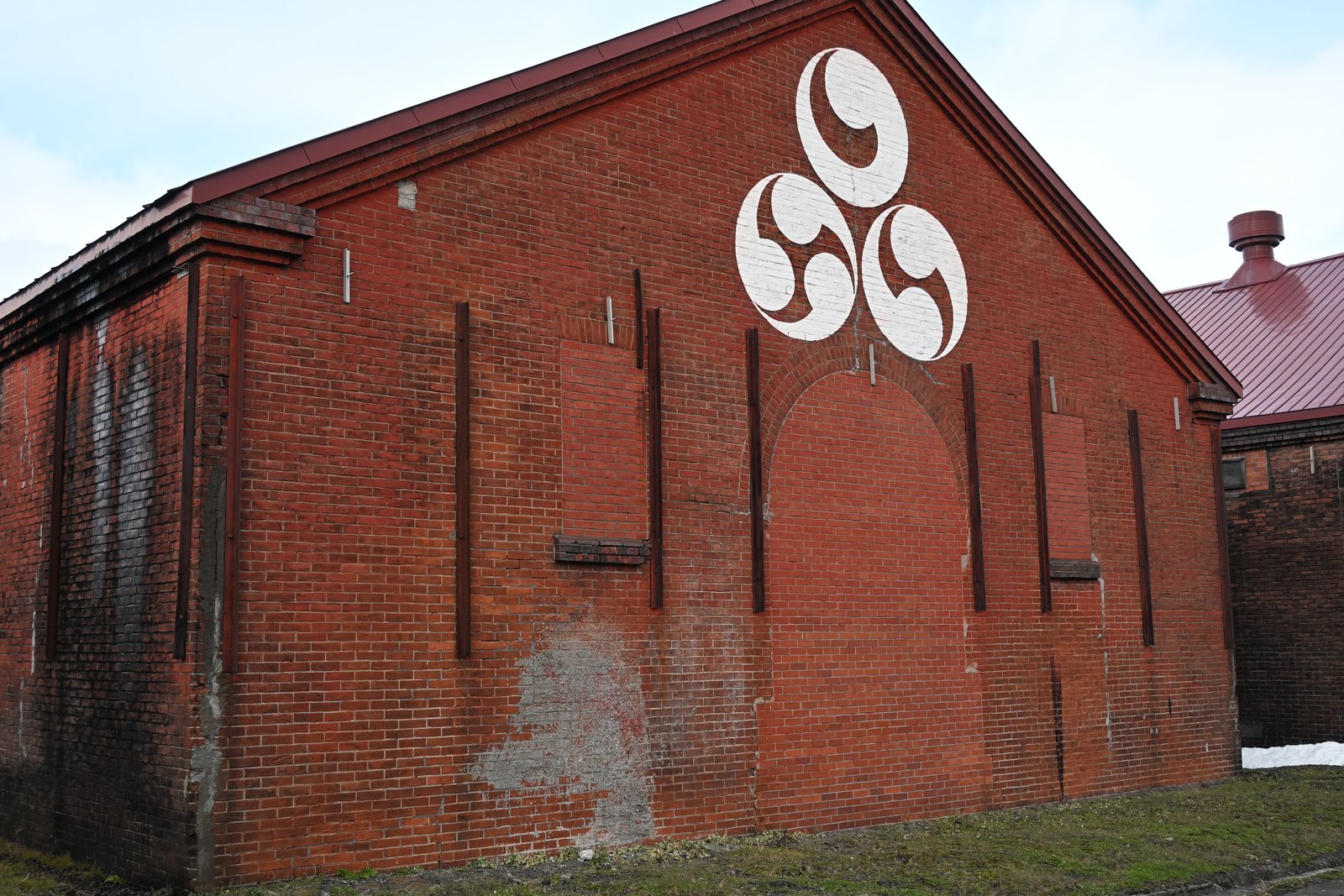
Sakurai Koji-ten faces the approach to Kemigawa Shrine.
— Can you tell me about the founding in 1760?
Even the 1760 date is more of a "they say so" thing. It has become a legend, really. There is something like a family tree that says who ran the shop in which generation, but I don't know why it started.
It seems there was a time when there was no one to take over and the shop nearly went under. When that happened, a relative took over, and then the next relative after that. It hasn't been passed down only through the Sakurai bloodline.
Takasu, who works at the shop now, is one of those relatives.
About the miso-making workshop
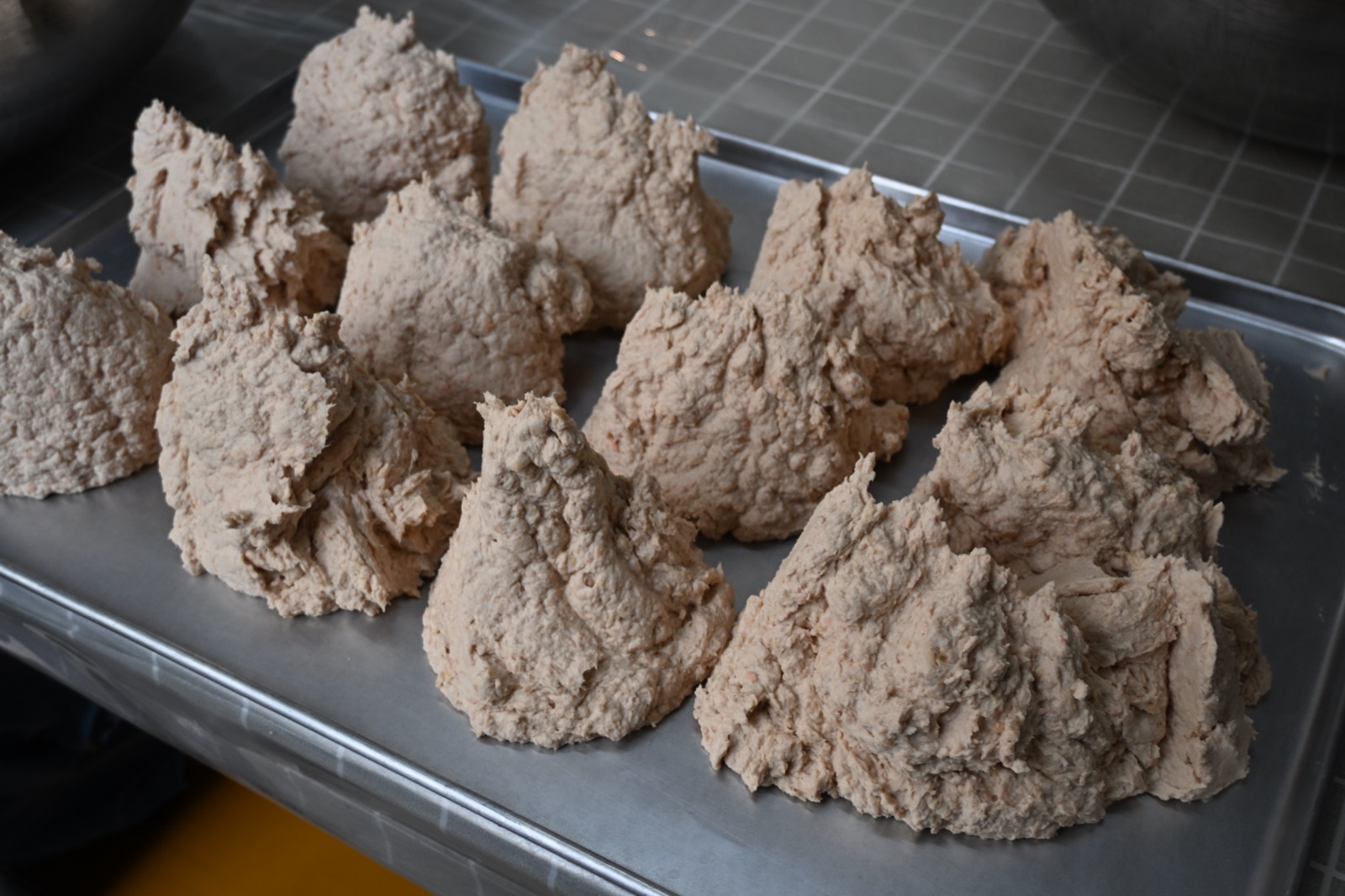
Miso has three ingredients: koji, soybeans and salt.
— Where do the soybeans used in the workshop come from?
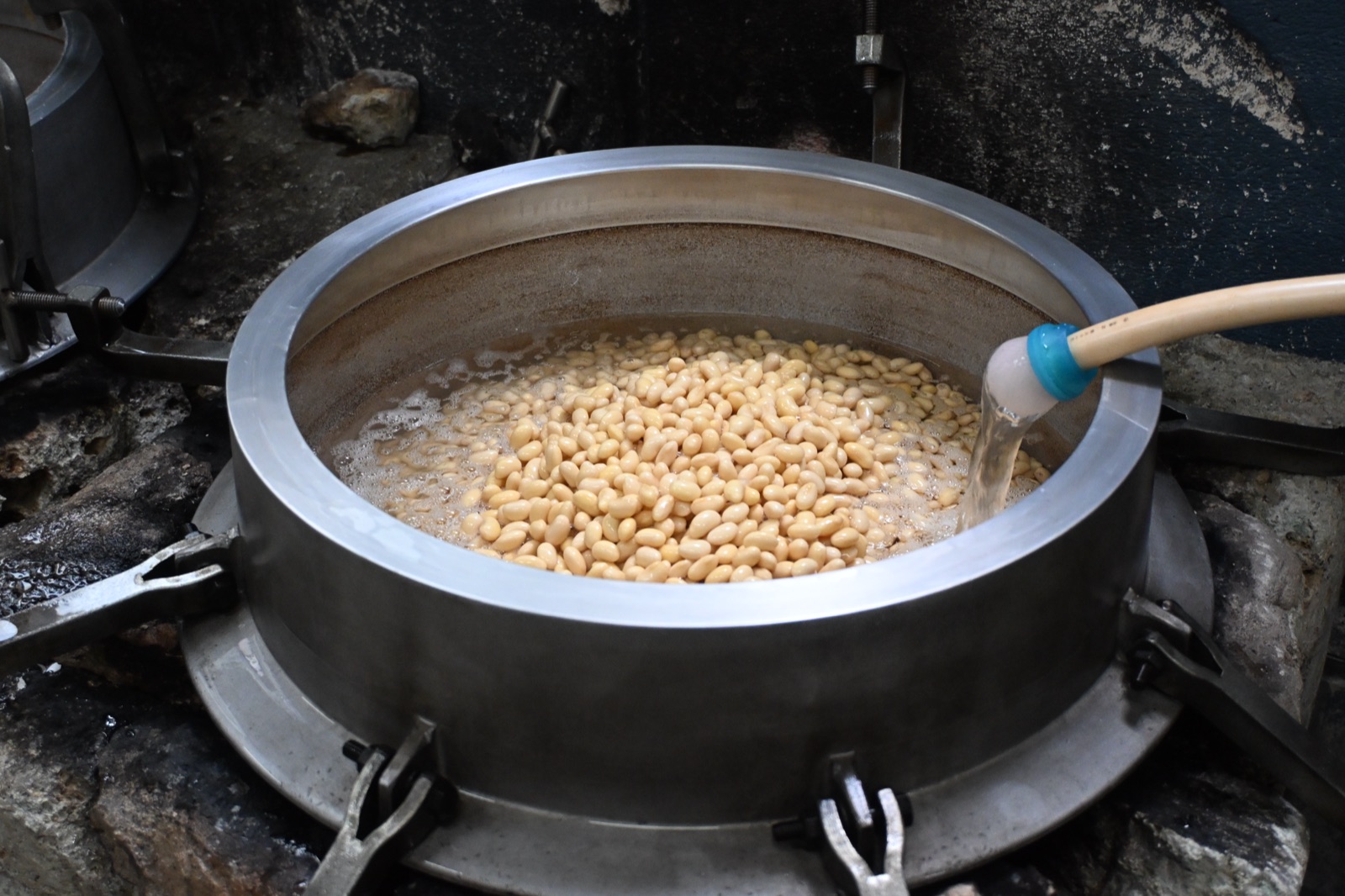
They are from Okayama. We have used Okayama soybeans ever since my grandfather's generation, when the workshop began. That flavor has become the taste of our customers' homes, so if we changed it, everyone would be thrown off. That's why we've kept it the same all along.
The beans are large and sweet. When participants taste a soybean on its own, they are surprised: "The bean itself is this sweet!"
— What was hard when you first started making koji?
My uncle was a craftsman, and he could tell "this is the right temperature" by feel. I didn't have that, so I decided to take the temperature as a number. I keep records of what result I get with this temperature and this humidity.
— What do you look at to decide whether koji is good?
I had been looking at koji since I was small, so it was familiar to me. But what shape grows well, and what makes good koji, is something I found out for myself after I joined.
— Have you changed anything in how the miso is made?
Lately, because of the heat, many customers tell us there is a lot of tamari (the liquid that collects) in the miso they made. So I adjust how much of the cooking liquid, the water the soybeans were boiled in, goes in at the time of mixing.
— Did you grow up on this miso yourself?
Since I was small, this is the only miso I ate. But when I was a university student living with friends, I bought miso at a supermarket, and I thought, the aroma really is different. I realized that the miso I ate every day was actually a luxury.
The people who keep coming
— What kind of people come?
Some come from far away, but 70 percent are from Chiba. The oldest is 92. Some say, "My grandfather came here." If they make miso and it turns out well, they come back. In some families, it goes from grandmother to daughter to granddaughter. Miso making is something everyone can do together, from babies and children to the elderly.
— How do new people hear about you?
Most of all, word of mouth. People taste miso a friend shared with them, and it was good, so they come to make it or to buy it. Some people have found us on Instagram.
Passing the baton to the next generation
— What do you hope to do from here?
Somehow, I want to keep going for a long time. I don't know what will happen to me, so I can't promise that we will definitely continue, but right now I am here and the family connection is still going. I hope it will carry on into the next generation.
When we hand the baton to the next person, I want to have a few more customers than we have now, so that whoever is working hard then doesn't struggle. That is why I want to bring in younger people. I would like people in their 30s and 40s to keep coming for a long time.
To reach younger people, the shop also holds travelling miso-making workshops at outside shopping malls, shares news on Instagram, and takes a stall at local markets (marché). It keeps its miso-making and koji-making methods the same, so as not to spoil the nostalgic taste customers know, while taking on new challenges.
On the day I visited, a mother came in with her four-year-old daughter.
— Is there anything you would like to try?
Personally, I would like people from overseas to visit.
When Takasu asked Tokuda, a relative who works at the shop, the same question, the answer was "keeping things as they are." "Keeping things as they are is important, isn't it?" they said to each other, nodding.
To protect the flavor that was handed down, and to pass it on to the next generation, they work hard every day. That is how I felt as I listened to Takasu.
The miso workshop, and what you can buy
The miso-making workshop runs from October to the end of April, and reservations are required. For details such as fees and quantities, please check the official website.
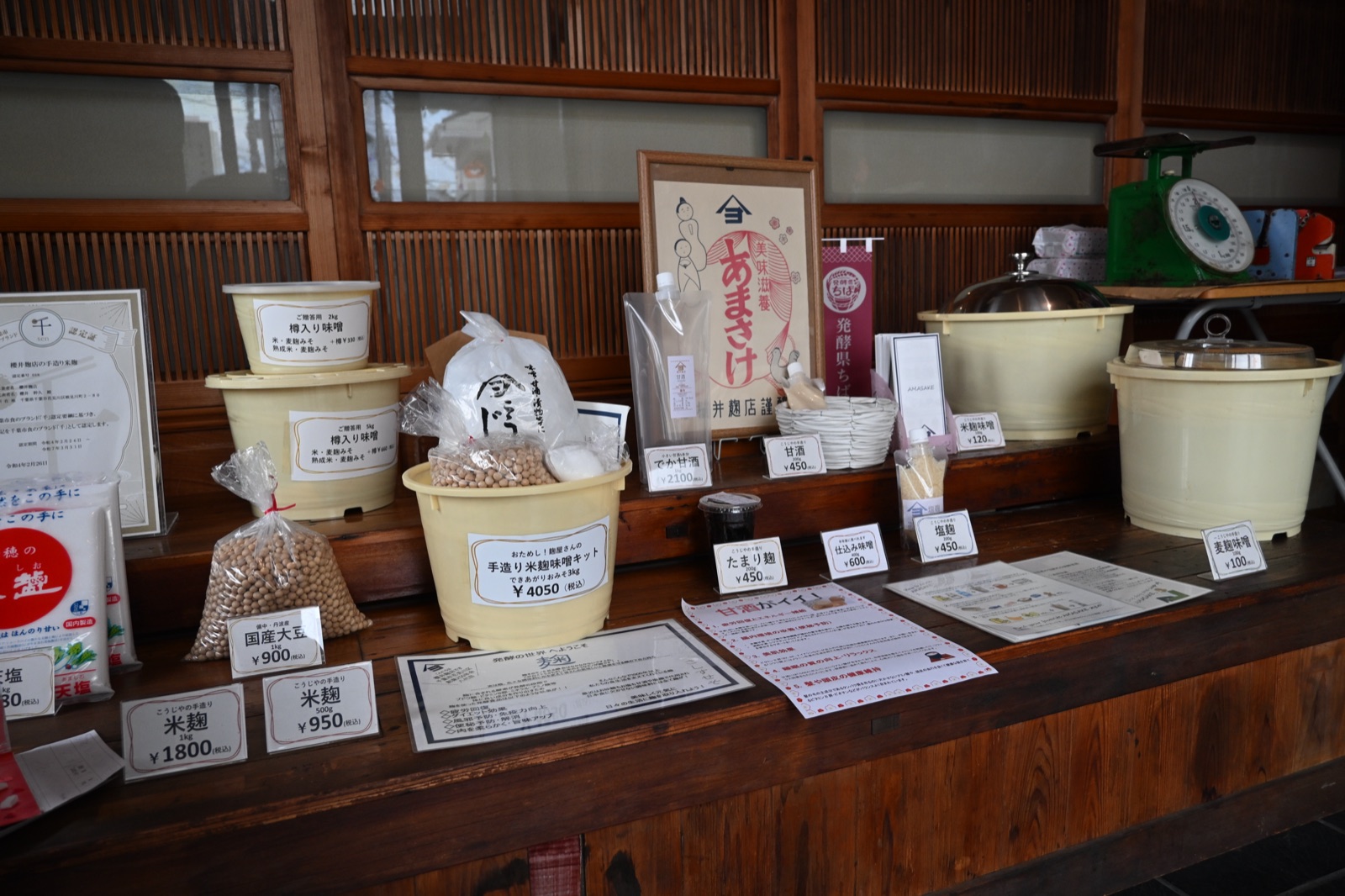
The shop sells rice koji from October to April and barley koji from December to the end of April. Miso, amazake and shio-koji are available year-round. There is also an online shop.
【Sakurai Koji-ten】 Address: 2-80 Kemigawa-cho, Hanamigawa Ward, Chiba City, Chiba Prefecture Official website: https://sakura-jp.info Online shop: https://sakuraikoji.thebase.in Instagram: https://www.instagram.com/sakurai_miso/
Frequently asked questions
Since when has Sakurai Koji-ten been in business?
It was founded in 1760. The shop is in Kemigawa-cho, Hanamigawa Ward, Chiba City, facing the approach to Kemigawa Shrine.
When can I join the miso-making workshop?
The miso-making workshop (Tezukuri Miso Kobo) runs from October to the end of April, and reservations are required.