

Start with these 2
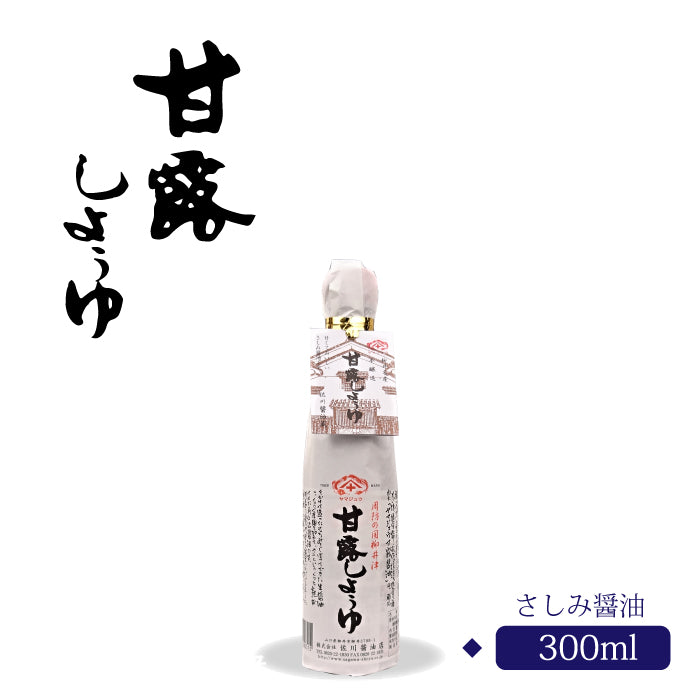
For Yanai's kanro shoyu (soy sauce), finished raw shoyu is put back into the moromi (the fermenting mash) and brewed a second time. That extra round darkens the color and brings out a syrupy sweetness and a heavy umami. The method is also known as saishikomi (brewed twice, with shoyu instead of brine).
It has a narrow range of uses. Sashimi, chilled tofu: things where a few drops decide the taste. A shoyu made on the assumption that you will not use much of it has survived as a seasoning for specific jobs.
- Saishikomi: brewing a second time using raw shoyu
- A shoyu you use by the drop, not by the spoonful
Why Yamaguchi's soy sauce is called kanro
Kanro shoyu, carried on mainly around Yanai, is made by sai-jikomi (re-brewing): finished raw shoyu is used again in the next mash in place of salt water. It takes twice the ingredients and twice the time, and the result is thick and dark, with umami compounds said to run well above those of ordinary koikuchi. The salt is said to be lower than koikuchi, which lets a full sweetness and umami from the fermentation come forward; the lord of the Iwakuni domain is said to have tasted it and murmured "kanro, kanro" (nectar, nectar).
Unlike the sweet shoyu of Kyushu, nothing is added to the mash to sweeten it. The sweetness is the umami that rises from doubling the koji and the time. It shows best in dishes finished with a few drops: sashimi, chilled tofu, rice with raw egg. It is built on the assumption that you will not use much, and poured like koikuchi it turns cloying.
Yanai's kanro shoyu and the fugu cuisine of Shimonoseki
As for how kanro shoyu, the soy sauce that represents Yamaguchi, began: it is said that in the Tenmei era (1781-89) a Yanai brewer named Takada Denbei presented a new shoyu to Lord Kikkawa of the Iwakuni domain, and that the lord tasted it and murmured "kanro, kanro," which is held to be the origin of the name. Since then, in Yanai, the town of white-walled storehouses, re-brewed shoyu has been called kanro shoyu and carried on as a seasoning meant to settle a dish in a few drops.
At the other end of the prefecture, Shimonoseki is known as the town of fugu. It is said that Ito Hirobumi's public sanctioning of eating fugu in the Meiji period was one of the turning points in Shimonoseki's growth as the center of fugu cuisine. Out of that food culture came seasonings such as fuku gyosho, a fish sauce brewed from fugu with salt and koji. Yanai on the Inland Sea side and Shimonoseki on the Hibiki Sea side are two places where separate brewing cultures grew up.
Local dishes and their seasonings
- Kawara soba (瓦そば)
- A local dish said to have originated at Kawatana Onsen in Shimonoseki. Green tea soba is laid on a heated roof tile and topped with shredded egg crepe, seasoned beef, chopped scallion, lemon and momiji oroshi, then dipped in warmed noodle broth. It is said to have been inspired by an account of Satsuma soldiers grilling wild greens and meat on roof tiles during the Satsuma Rebellion. A shoyu-based broth carries soba toasted fragrant on the tile.
- Fugu dishes (てっさ・てっちり)
- The fugu cuisine that represents Shimonoseki. Tessa is sashimi sliced thin enough to see the pattern of the plate through it; tecchiri is the same fish in a chiri hotpot. The standard is ponzu with momiji oroshi and aromatics, and the vinegar, citrus and shoyu are kept restrained so the umami of the lean flesh comes through.
- Iwakuni zushi (岩国寿司)
- A pressed sushi from Iwakuni, the town known for the Kintaikyo bridge. Vinegared rice and toppings such as vinegar-cured fish, shredded egg crepe, lotus root and shiitake are layered many times in a wooden frame and pressed under a weight. It is said to have been served at festivals and celebrations, and it is one of the sushi that represent Yamaguchi.
- Kencho (けんちょう)
- A home dish found throughout the prefecture, in which daikon, carrot and tofu are stir-fried first, then simmered through with shoyu, mirin and dashi. It is made as a winter standby; frying before simmering keeps the pieces from breaking up, and the next day the flavor has soaked in further.
Makers in Yamaguchi
- Sagawa Shoyu TenFounded in 1830
A brewery in Yanai that continues to make kanro shoyu. It carries on the line of the re-brewed shoyu said to have been presented to the lord of the Iwakuni domain in the Tenmei era and praised as "kanro, kanro," and still holds to that method, using groundwater of the Kotoishi mountain system drawn from 70 meters down and 30-koku cedar vats. The brewery is also open as a museum, receiving travelers who come to see the white-walled streets. - Yamaka ShoyuFounded in 1872
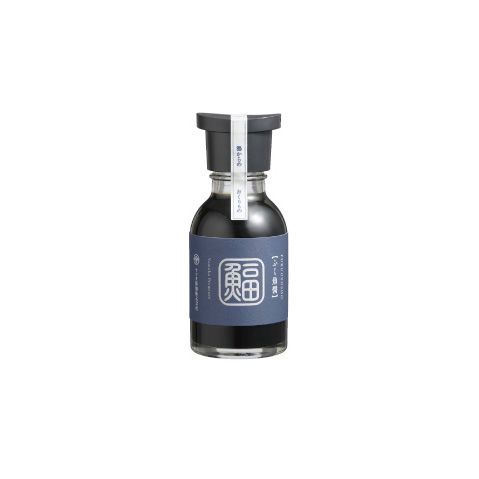
A brewery in Yasuoka, Shimonoseki, that brews fuku gyosho. Domestic torafugu is mashed with koji and salt and fermented over a long stretch. It has almost none of the distinctive smell fish sauce tends to carry; a clear aroma and umami come forward instead, making it a seasoning particular to Shimonoseki, the town of fugu.
Nearby prefectures


