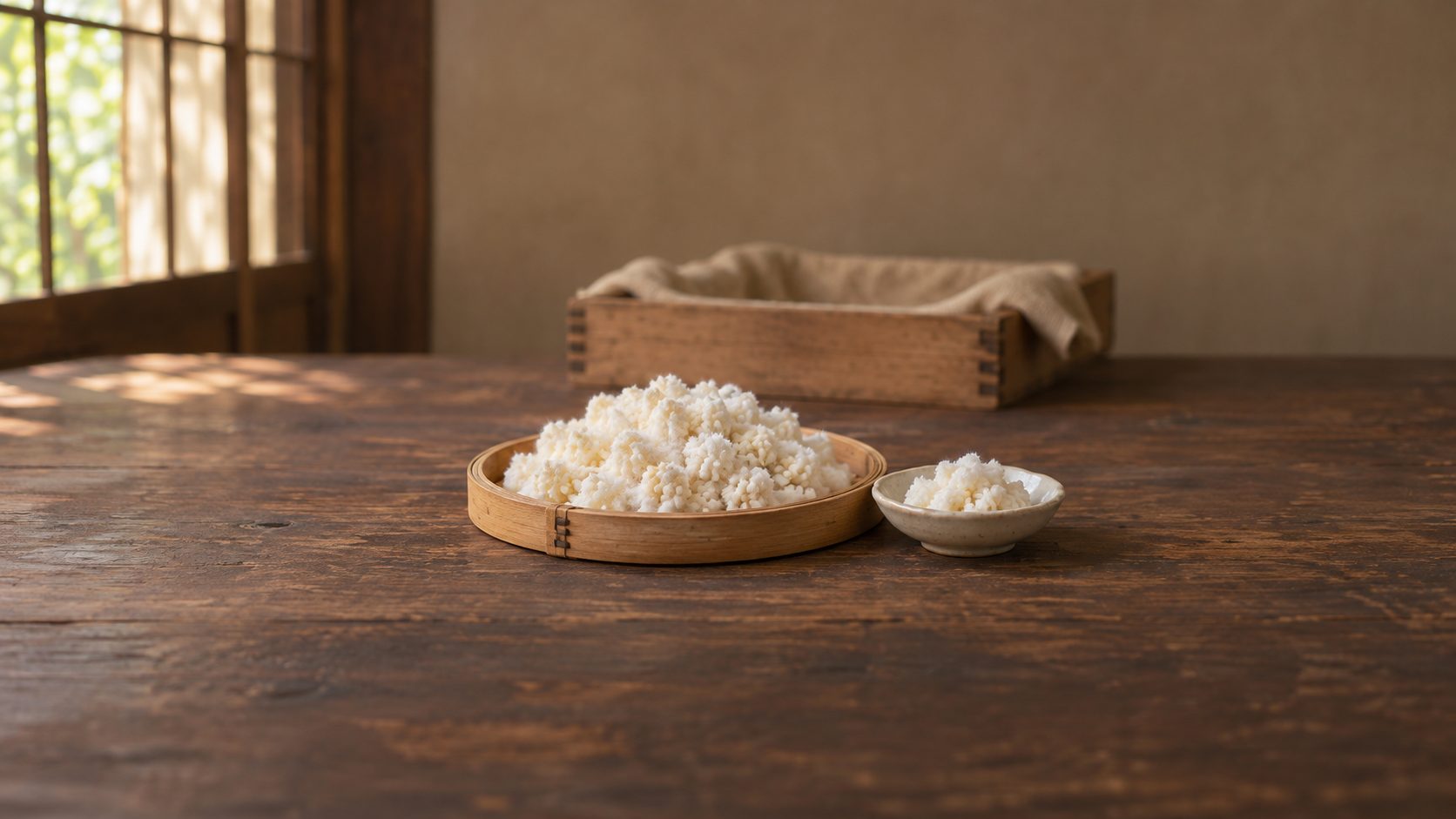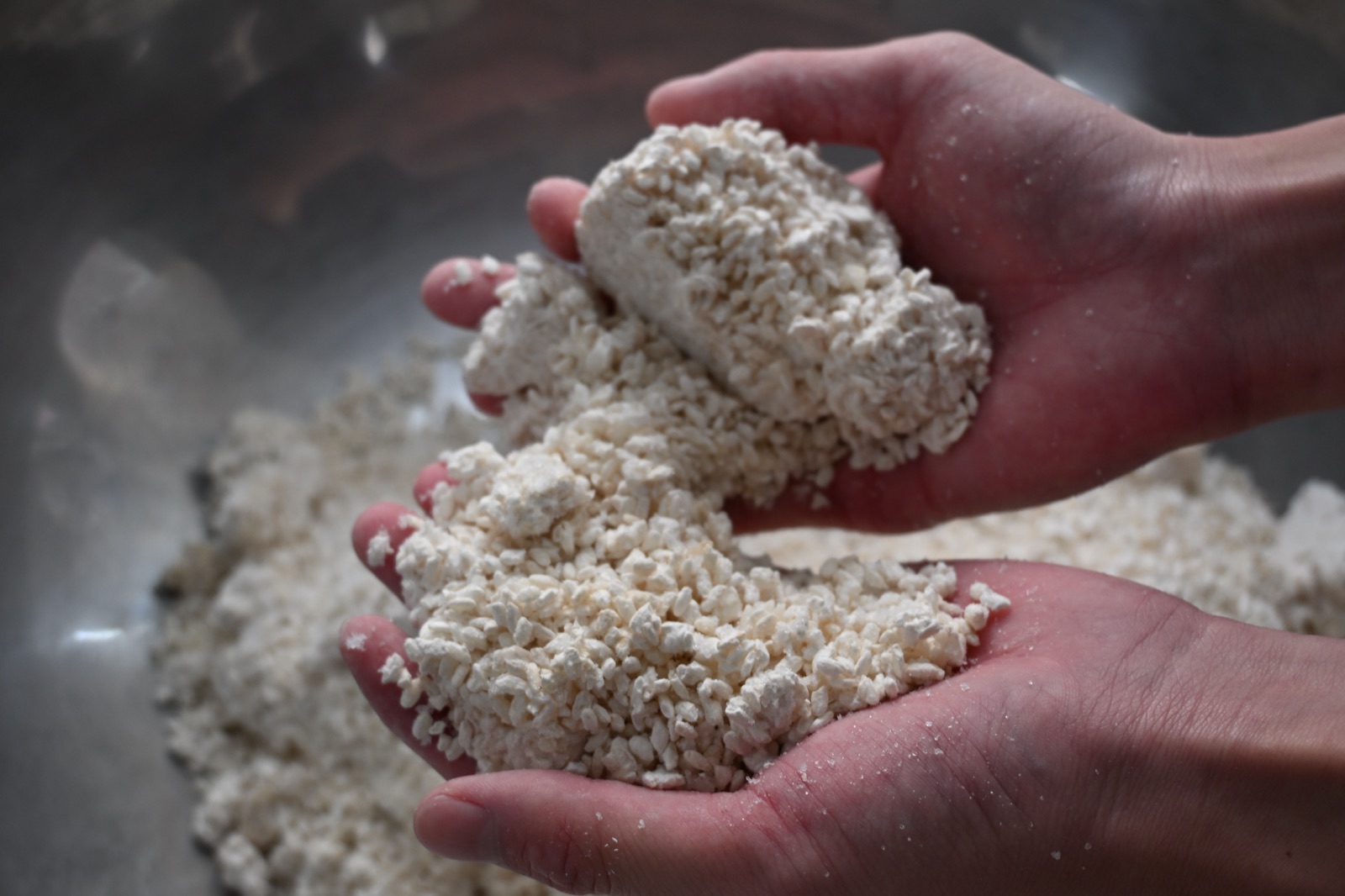
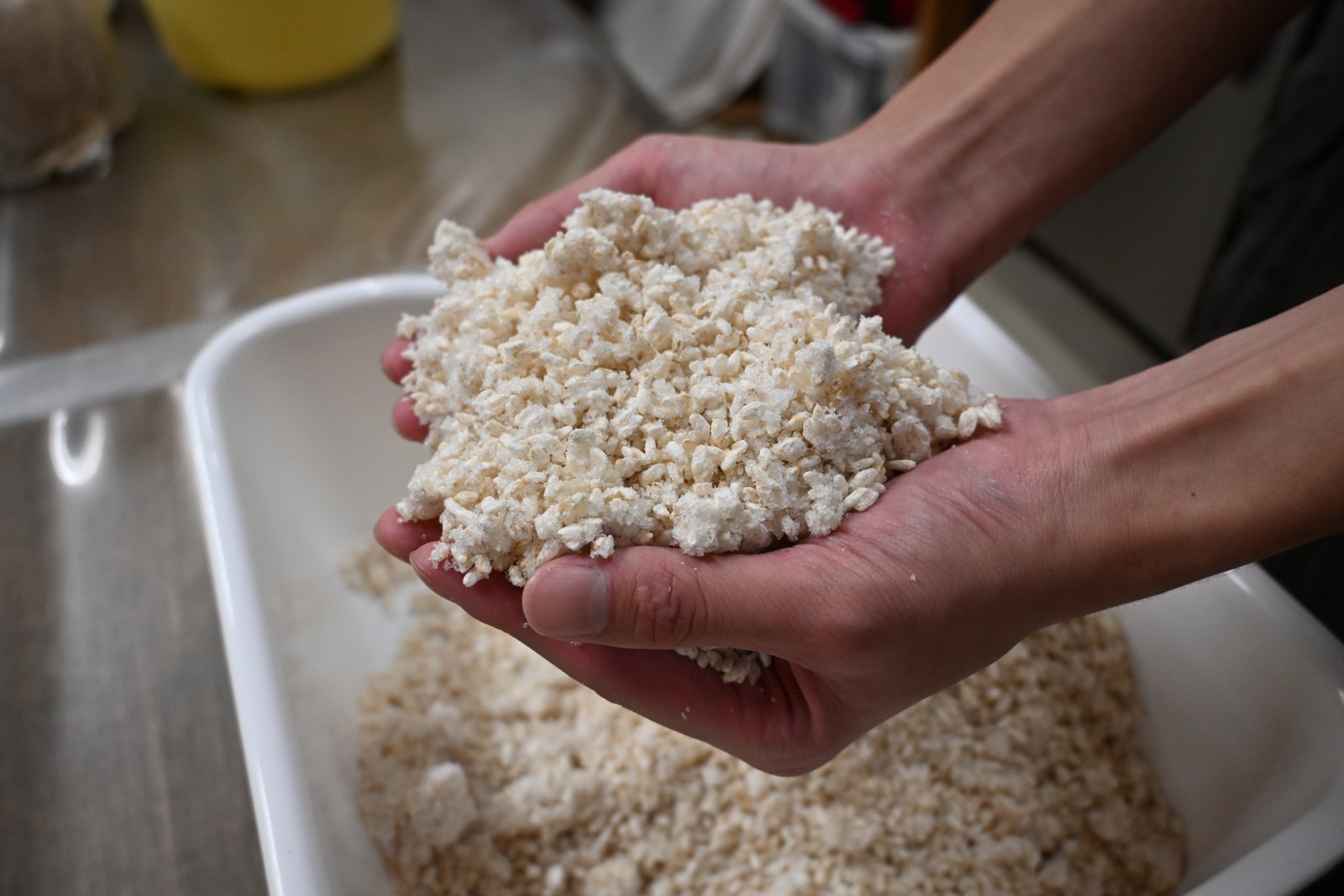
Some people buy koji and mix a year's worth of miso at home. Koji is steamed rice, wheat or barley on which koji mold has been grown, and it is the base of miso, shoyu (soy sauce) and amazake. Miso and shoyu are leading examples of fermented seasonings, made by letting koji do the fermenting work.
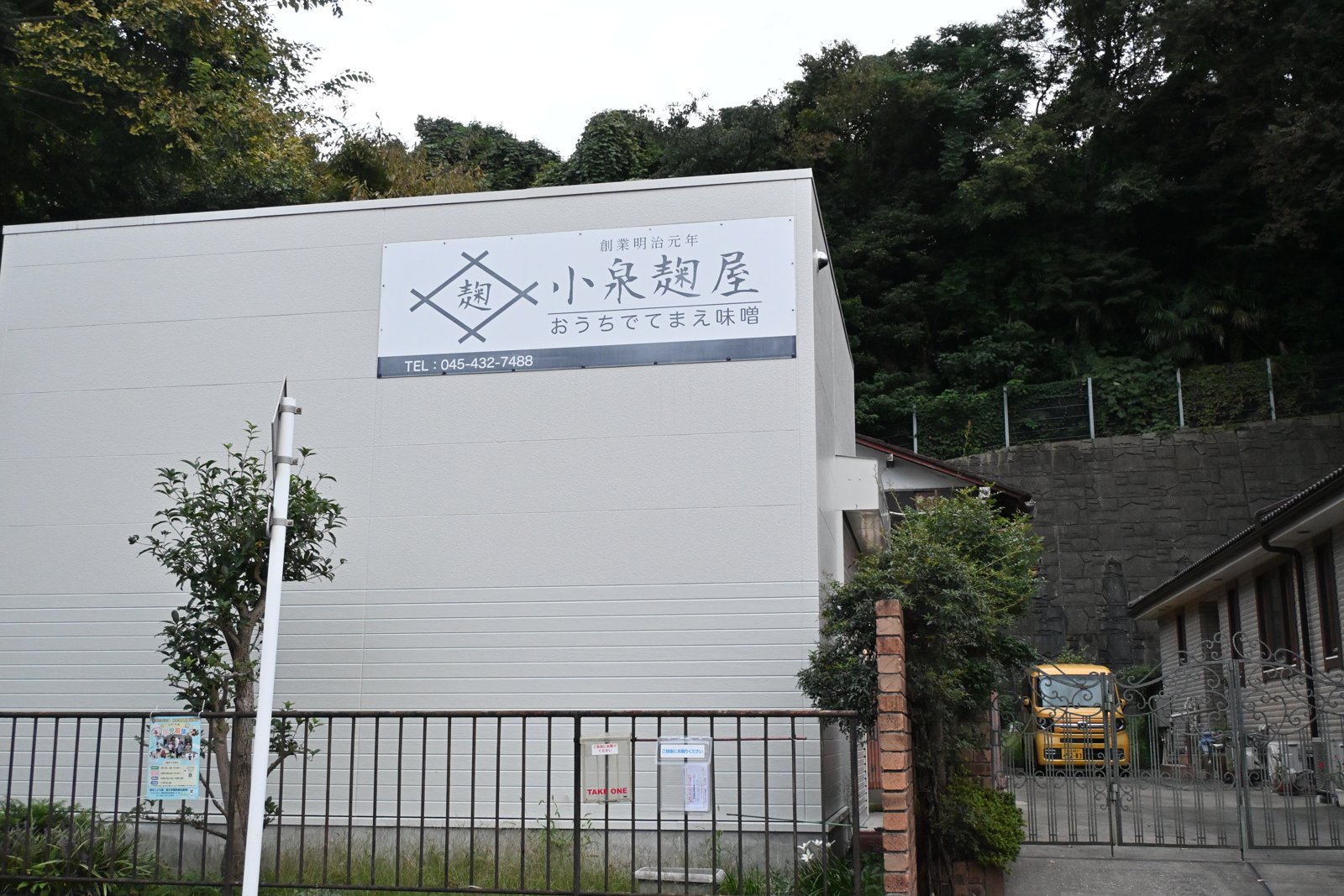
Koizumi Koujiya (小泉麹屋), in Kikuna, Kohoku Ward, Yokohama, is a koji maker that makes and sells that koji. It was founded in 1868, the first year of Meiji. The shop closed once, and fifth-generation owner Satoshi Koizumi (小泉聡) reopened it 15 years later. Today it holds miso workshops at the shop 25 days a month, teaching around 3,000 people a year how to make miso.
Why would a koji maker start teaching miso making? We asked Satoshi how the shop came to open again, and how temperature and humidity are read in the koji room (koji-muro), the room where koji is grown.
Kikuna's fields, and koji making in the farmers' off-season
— When koji making began in Kikuna, what was the area like?
It was all fields around here back then. We were farmers originally, too.
In the winter off-season, every household used to make a year's worth of miso. And for that you need koji. So people would bring us their broken rice, the cracked grains that would not sell after the harvest. We turned it into koji, handed it back, and took a fee for the work. We gathered up the farms in the area and made koji for them. A neighborhood koji maker. That is how it started.
My father's generation was still doing that work. Then the farms nearly disappeared, and it was clear we could not go on like that, so it was my father's generation that began making miso in earnest.
Why a koji maker that had closed opened its doors again
In 1983, the fourth-generation owner died suddenly and Koizumi Koujiya closed. It was the month after Satoshi started high school.
— Had you always meant to take over the family business?
I went to the high school affiliated with the Tokyo University of Agriculture precisely because I meant to take over. But one month after I enrolled my father passed away, and the company was shut down for a time. I lost all motivation. With the 21st century just ahead, I thought nobody would start a koji shop now.
After university I became a real estate salesperson. I had decided to go independent by 30, but the competition among salespeople was brutal, and it sank in that I could never survive there. I was thinking about industries with less competition when, one day, my father appeared at my bedside. I woke up with a start and thought, "Oh, there's koji." I looked into it, and there was only one koji maker in Yokohama. Honestly, that is where it started.
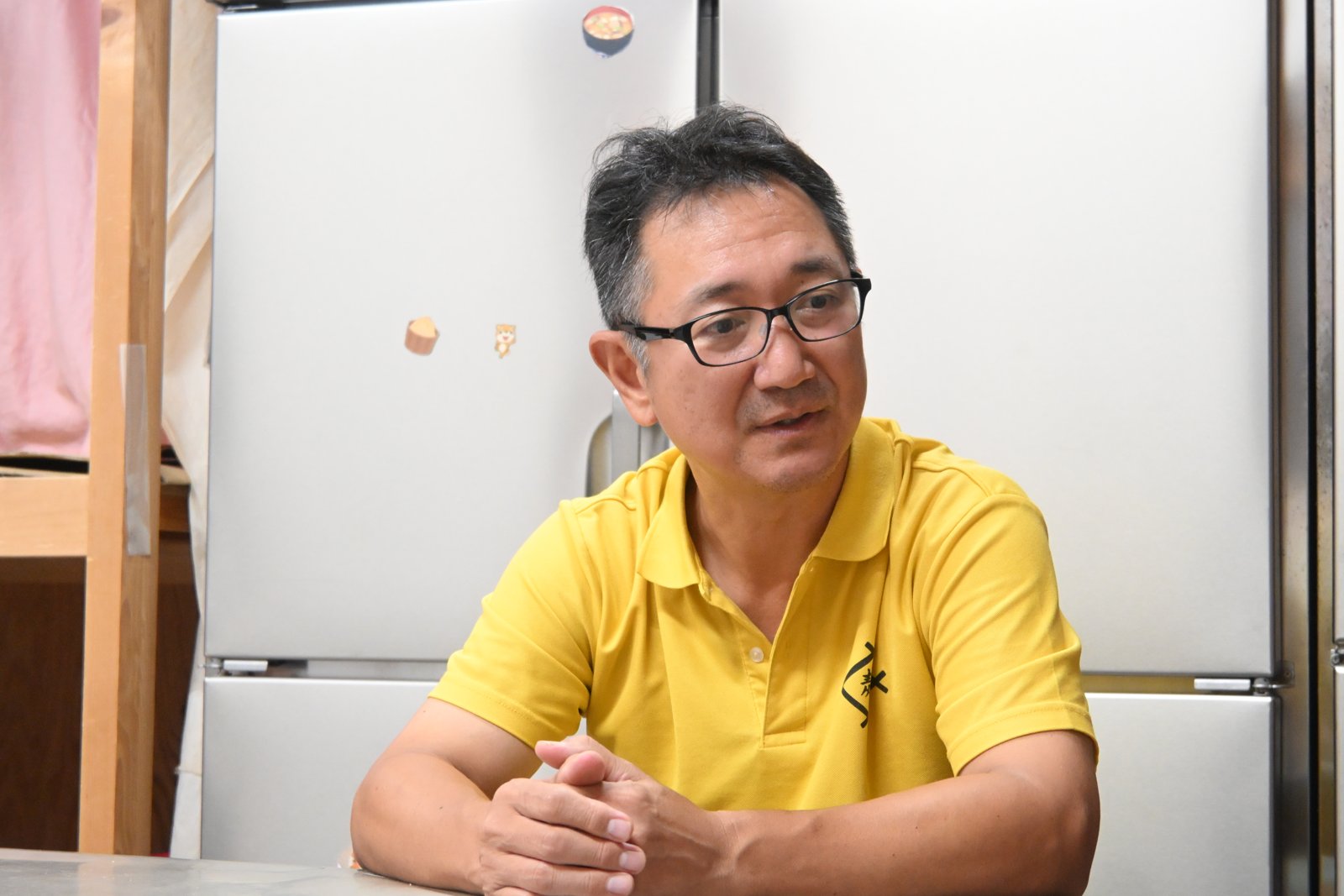
In 1998, 15 years after the shop closed, Satoshi reopened Koizumi Koujiya.
— How did you get the technique back after it had slipped out of the family's hands?
My mother had kept the koji room and the kettles. And my uncle, who had worked with my father, lived just down the street. The next morning I went to see him and said, "I'm thinking of doing it again. Would you teach me?" Tears came to his eyes.
Everyone around me, 100 out of 100 people, was against it. Still, I found the old customer list and phoned, and out of 10 calls, all 10 people remembered us and said, "Hang in there." I thought, this might work.
In 1998 I also started mail order with a homemade website. The media picked it up, and we got something like 200 orders in a single night. Without that, I might have quit.
What the koji room watches: temperature and humidity
— Where exactly does a koji maker's skill show?
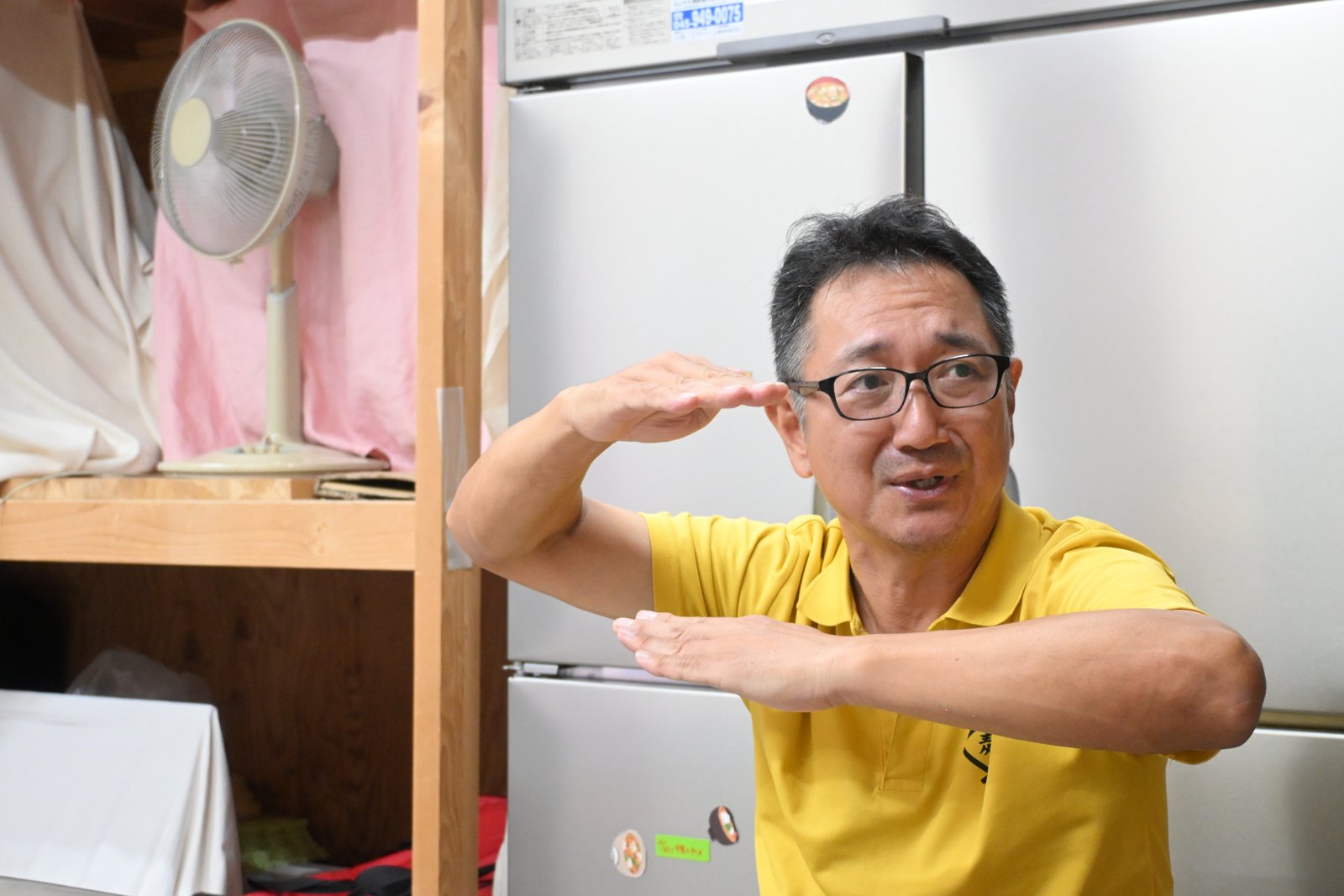
Temperature control and humidity control. That is all there is to it.
Even the time the rice soaks in water changes every time. In a year with a lot of typhoons, or depending on the harvest season and where the rice was grown, the same rice carries different amounts of water. If the soaking time changes, the steaming time changes too.
Koji mold grows better with some moisture. But if there is too much, water droplets form on the surface of the rice. We call it "sweating." The rice goes soggy and the mold will not take. Temperature is the same: go above the range where koji mold grows happily and it sweats, fall short and the mold does not take at all. You have to keep watching that temperature and humidity, always.
— Within that range, is there a spot you aim for?
If you work in the safe zone, you still get koji. For an amateur, that is fine.
But as a professional, I do not want that. In summer or winter, I compete right at the edge, just short of the upper limit. One step wrong and you cannot get back out. Do you play it safe because it is scary? That is amateur work. Because the way the mold takes changes. That is the hardest part, and the part that takes the most care.
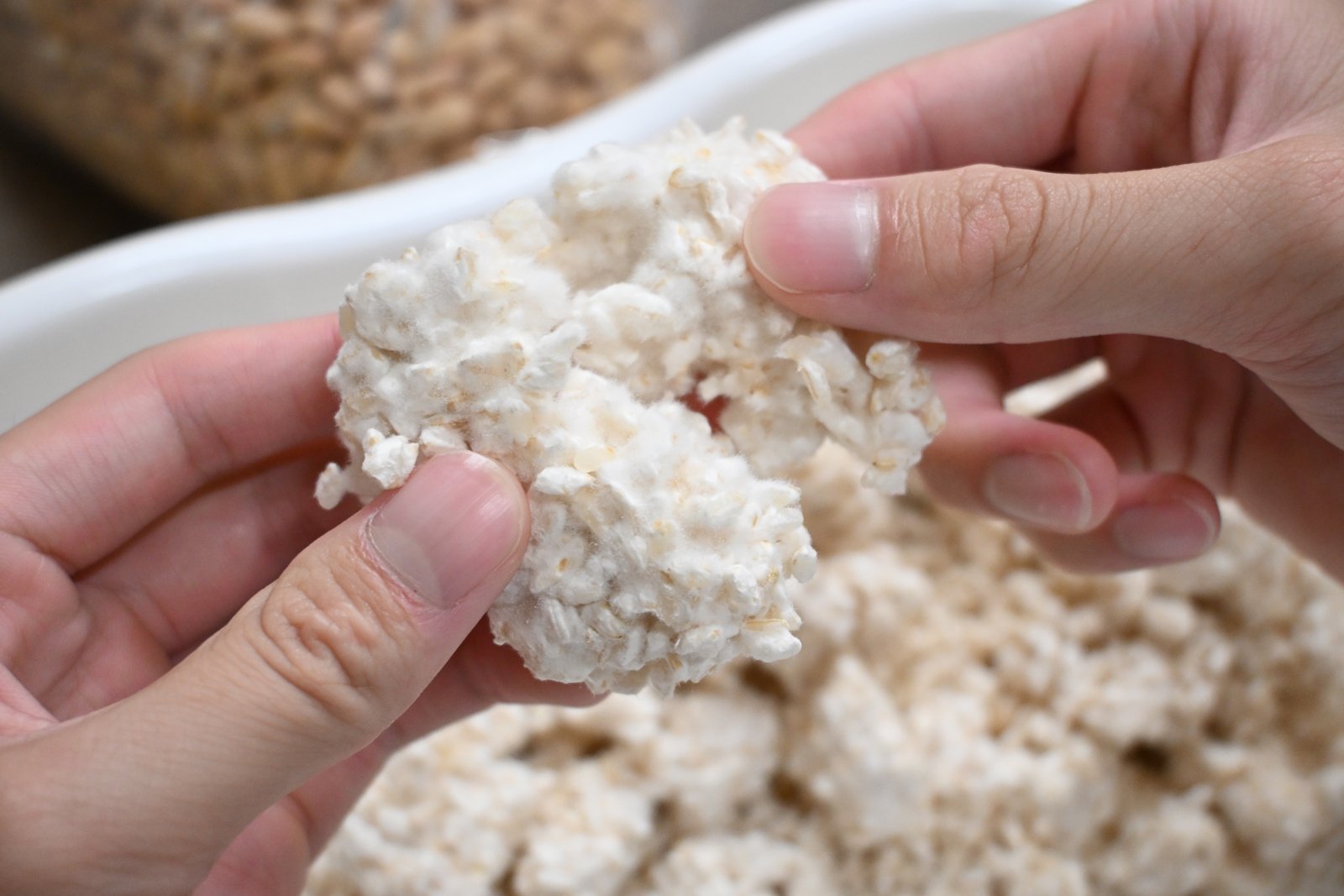
— After the rice is set, how often do you tend the koji?
About every 9 hours. When the temperature starts to rise, we break up the whole batch and turn the mold through it. Working it drops the temperature, and then it climbs again. The next time, we divide it into koji-buta (麹蓋), shallow boxes, because the bigger the lump, the more heat it holds. If you start early in the morning, you only need to tend it in the morning and the evening, over and over.
— Does what you look out for change with the seasons?
In winter, even a slightly open door to the room drops the temperature, so we warm the room thoroughly.
Summer is now too hot and too humid. When we wrap the mounded koji in a blanket, the middle holds heat and runs ahead all at once, so we wrap only the sides and leave the top open. We let the heat out.
The room is underground, so heavy rain floods it and the temperature drops. Even the weather needs constant attention. It is that kind of work.
25 miso workshops a month, and miso making at schools
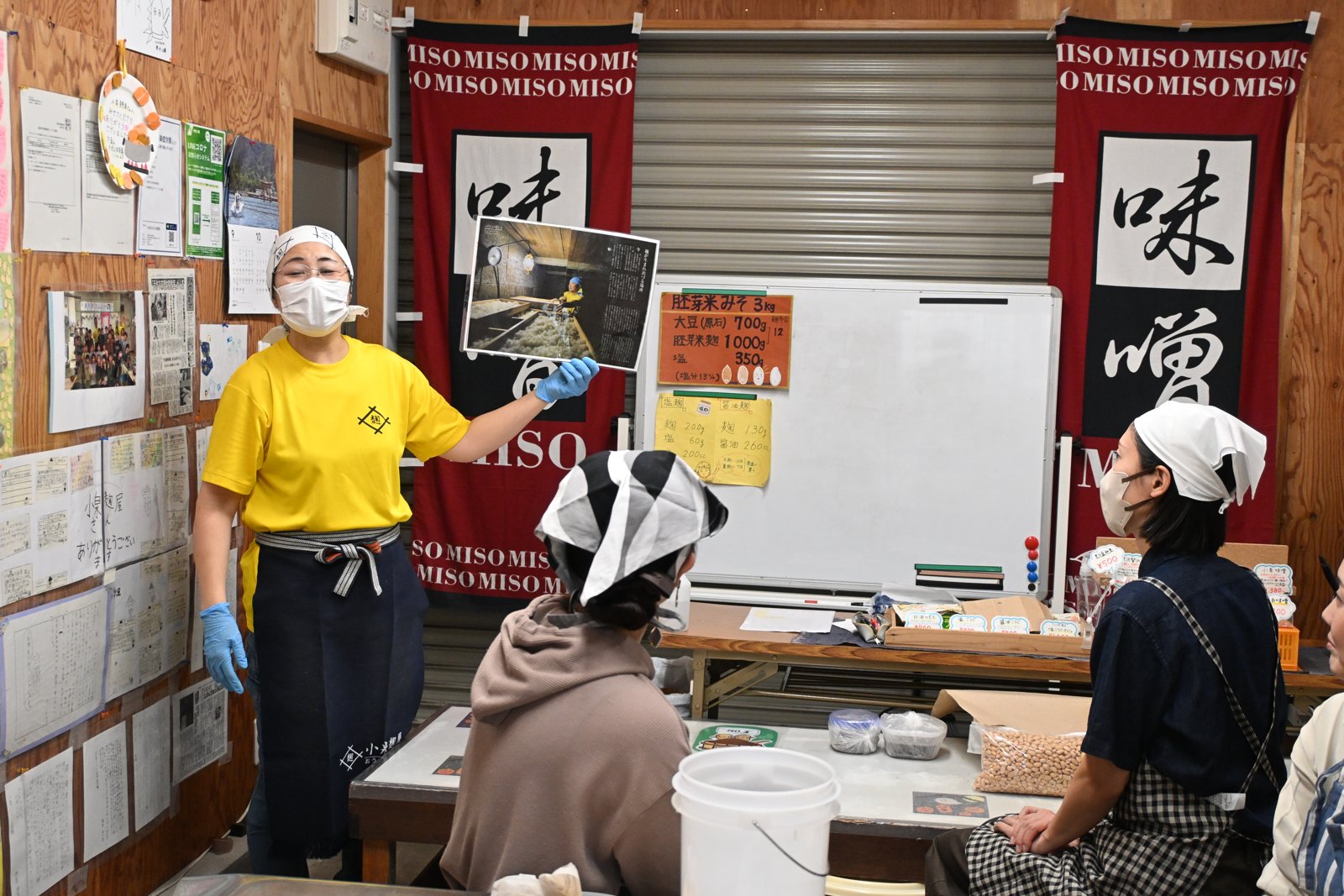
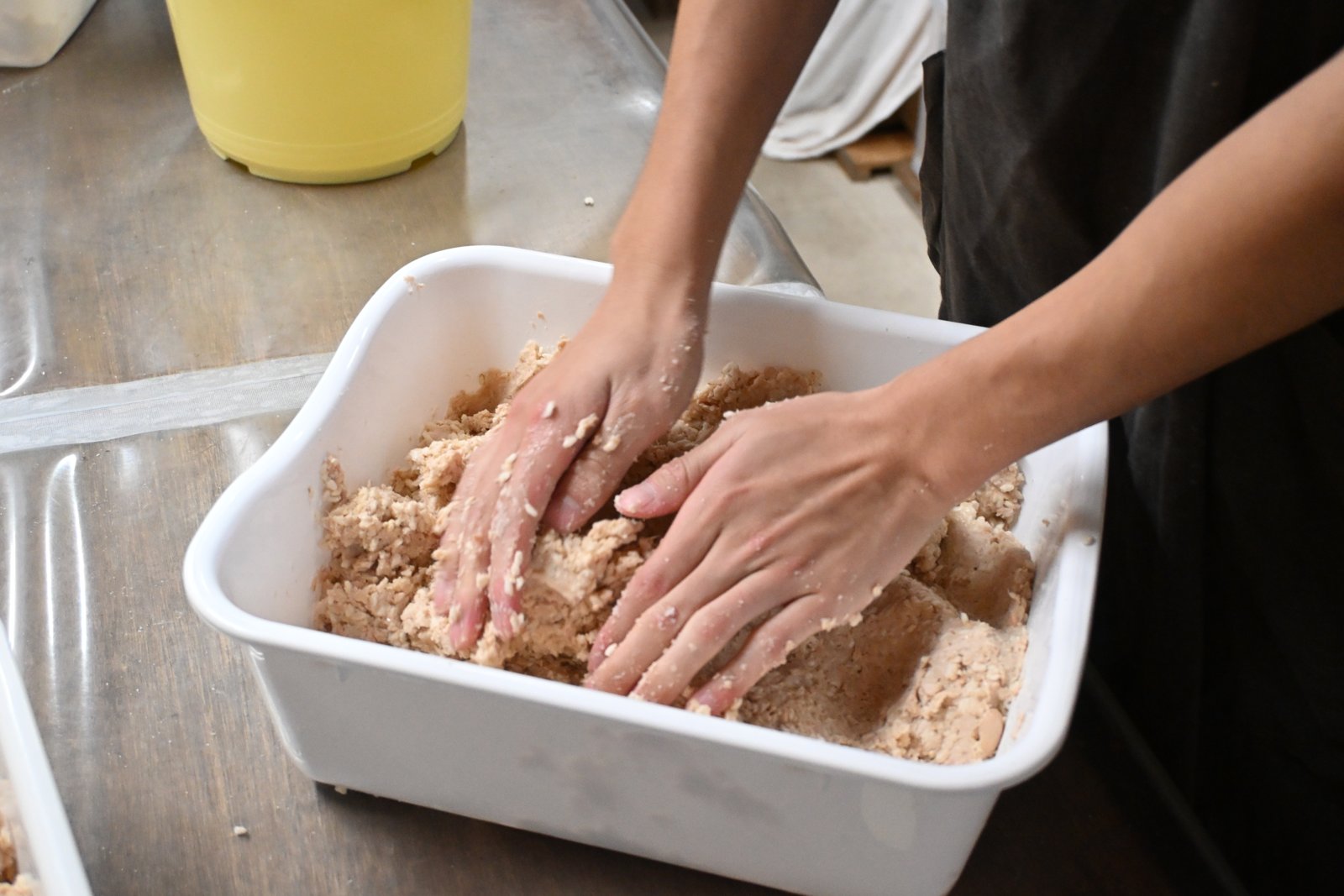
— Why did a koji maker start teaching miso making?
Koji does not sell easily. This is more or less a city, and there are no koji shops in the middle of town. I knew that plenty of people out there make their own miso, so I figured that if I showed them how to use koji, some would. So I started right after reopening, around 1998.
Now we have 3 instructors, and we stop at 25 days a month. About 3,000 people a year, in person. We have kept that up for more than 20 years.
At the workshop, participants mix koji, boiled soybeans and salt by hand to make miso, pack it into a container and take it home. According to the official website, the standard rice miso is 5,150 yen for 3 kg.
— What do participants tell you afterward?
Many of them have small children. A lot of people say their child used to hate miso soup, but once it was miso they had made themselves, the child said "it's delicious" and started eating it. Adults decide on the taste from what they have been told beforehand, but children only say whether it tastes good, so there is no lie in it. That makes me happy.
— The walls of the shop are covered with letters from elementary school children.
In Grade 3 Japanese class there is a lesson called "Sugata wo Kaeru Daizu" (すがたをかえる大豆, "Soybeans That Change Their Form"), and making miso is the hands-on part of it. In Grade 5 home economics, students cook rice and miso soup, and they start from making the miso for that soup. When schools call us, it is almost always Grade 3 and Grade 5.
What made me happiest was a story from one teacher. When they were in Grade 3 they made miso, and it was fun and delicious. After growing up and becoming a teacher, they had their own students do it too. If you keep at it, people like that turn up.
A koji maker that makes koji out of anything, and a household miso that lasts 100 years
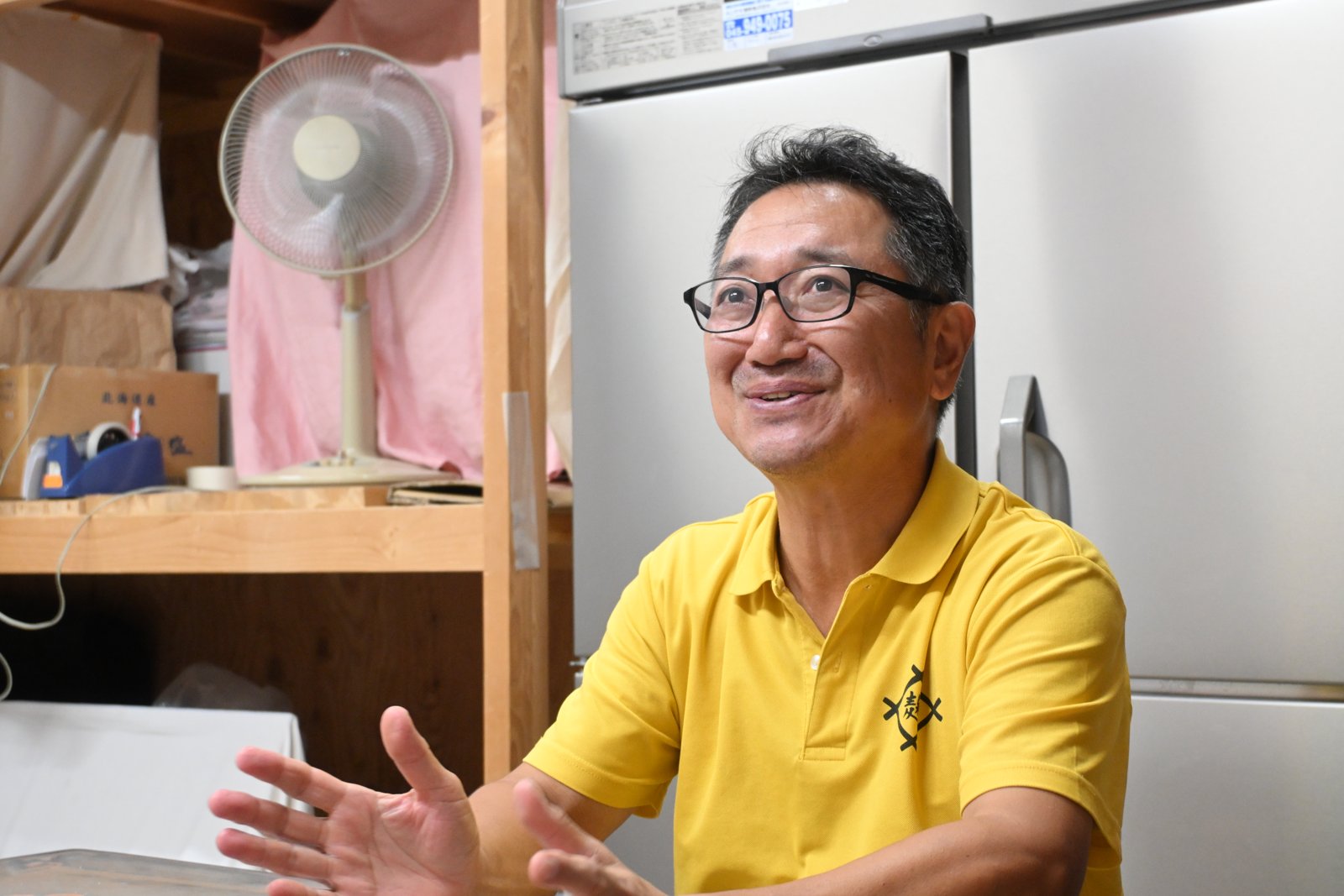
— What kinds of koji do you make now?
Besides rice koji, we make wheat koji, barley koji and mochi-barley koji. We also grow it on germ rice and brown rice. Soybean koji, mame-koji, is in testing right now.
Every koji maker has a koji that is "ours" and does not touch anything else. A company with a lot of history, tradition and things handed down through the generations cannot do otherwise. We are a company that went under once, so anything goes. If we had not done that, we could not have survived. We put koji mold on anything and grow it. That is our advantage.
— What are you aiming for from here?
We are aiming to be a company that lasts 100 years from the reopening. If a grandmother, a mother and a daughter each make miso for 30 years, that is 90 years. Add 10 more and it is 100 years. That household's miso, lasting 100 years across three generations.
We will not get big. That is fine. We make things by hand that people can eat with confidence, and we do work we are not ashamed of. I want the people who work here to understand that too, and for us to do good work, fair and square.
— Finally, what do you recommend to someone using koji for the first time?
Shio-koji (塩麹). All you need is koji, water and salt. Cook meat or fish with it and it is sure to taste better. It is the easiest to understand. After that, amazake. If you have a rice cooker you can make it, and I think people will be surprised that something this sweet can come out without any sugar added.
Once you get your hands on koji, start by making shio-koji, marinating meat or fish in it, and then cooking it. At the Koizumi Koujiya shop and its online shop you can buy fresh rice koji, as well as ready-made shio-koji. It is the first use Satoshi recommends to beginners, and with only koji, water and salt you can feel how it changes the taste of a dish.
Koizumi Koujiya 5-24-25 Kikuna, Kohoku Ward, Yokohama, Kanagawa Prefecture (神奈川県横浜市港北区菊名5-24-25) Where to buy: Shop, official online shop Official site and online shop: https://www.koujiya.com/ Miso workshop information: https://www.koujiya.com/workshop/ Instagram: https://www.instagram.com/koizumikoujiya/ Interview: October 2, 2026
Frequently asked questions
Since when has Koizumi Koujiya been in business?
It was founded in 1868 (the first year of Meiji). The shop closed once in 1983, and fifth-generation owner Satoshi Koizumi reopened it 15 years later, in 1998.
What kinds of koji does Koizumi Koujiya make?
Besides rice koji, it makes wheat koji, barley koji, mochi-barley koji, and koji on germ rice and brown rice. Soybean koji (mame-koji) is still being tested.
What should I start with if I am using koji for the first time?
Satoshi recommends shio-koji, made from koji, water and salt, used to marinate meat or fish before cooking. He also suggested amazake, which can be made in a rice cooker.
Can I learn how to make miso there?
The shop holds miso workshops about 25 days a month, and the standard rice miso is 5,150 yen for 3 kg (according to the official website). There are also online workshops and visiting workshops at schools and other places. Dates are listed on the workshop page of the official website.