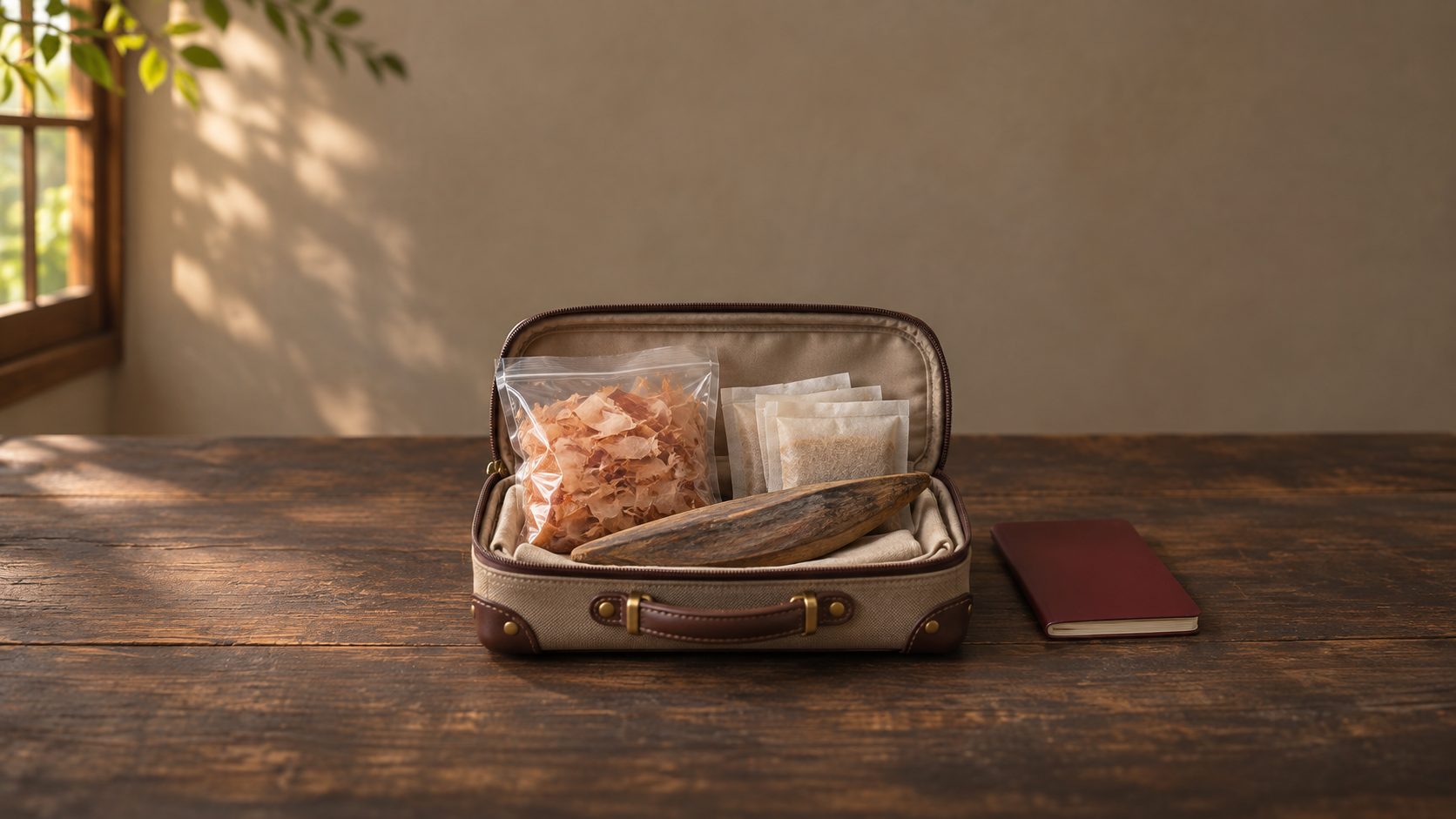
Dashi is where most travellers hesitate, and the hesitation is reasonable. Katsuobushi is an animal product, and the rules on bringing food home are largely rules about animal products. The resolution is that fish and meat are not the same category.
This page was written in November 2026 and links to the official sources throughout. Rules change, so check the source before you fly. Nothing here is legal advice, and the officer at the border makes the final decision.
Fish and meat are separate rules
The rules on animal products are written around animal disease. The UK page cites ongoing animal disease outbreaks as the reason for its meat and dairy restrictions, and Taiwan's controls followed a swine fever outbreak. In the countries covered here, fish is handled on its own line and, usually, with a generous allowance.
That is why one rule of thumb covers most of what a traveller buys. A dashi that is made from fish (katsuobushi, niboshi, sardine, flying fish, bonito flakes) is generally fine. A dashi or soup base that is made with pork, beef or chicken extract is the product that gets refused.
How each country treats it
| Destination | Fish dashi, katsuobushi, niboshi | Meat extract in a seasoning or soup base |
|---|---|---|
| USA | Most seafood is not regulated by the plant and animal health agency | Not allowed. CBP bars food products prepared with meat |
| EU | Up to 20kg or 1 fish, whichever weighs more | Not allowed. Meat and dairy are banned with no small amount exception |
| UK | Up to 20kg per person in total, processed fish must be dried, cooked, cured or smoked | Not allowed. Meat and meat products are banned |
| Canada | Dried fish has a row at 10kg per person | Check the CFIA's import database. Snacks and sweets cannot contain meat |
| Australia | Allowed, inspected on arrival | Check the BICON database before you buy |
| Taiwan | Not the target of the pork rules | Pork products carry the heaviest fines on this list |
| Hong Kong | Not controlled | Controls apply to fresh and frozen meat, poultry, game, eggs and milk |
| Singapore | Fish has its own table in the SFA list | SFA says meat products include all forms of food containing meat |
The detail and the sources for each country are in the guides: the USA, the EU, the UK, Canada, Australia, Taiwan, Hong Kong and Singapore. The UK and Canada rows are the ones to read closely: the UK lists packaged stocks among foods allowed without restriction and also bans meat products, and its page does not settle a stock made from meat, so treat a meat-based stock as the one to avoid.
The sources behind the table are the US plant and animal health agency's statement that it does not regulate most seafood (APHIS, meats, poultry and seafood), the EU's allowance for fishery products (Your Europe), GOV.UK's meat, dairy and fish page and the CFIA's personal use table.
How to read the Japanese label
Japanese labels list ingredients in descending order by weight, so what comes first matters most. A dashi pack looks the same on the shelf whether it is bonito or pork, so turn it over.
| On the label | Meaning | Customs reading |
|---|---|---|
| かつおぶし, かつお節, さば節, いわし | Bonito, mackerel, sardine | Fish |
| 昆布, しいたけ | Kelp, shiitake | Plant |
| 豚, ポークエキス | Pork, pork extract | Meat |
| 牛, ビーフエキス | Beef, beef extract | Meat |
| 鶏, チキンエキス | Chicken, chicken extract | Meat |
| 乳, 乳糖, ミルク | Milk, lactose, milk | Dairy |
| 魚介エキス | Seafood extract | Fish |
If you cannot tell, ask the shop to read it to you or photograph the back of the packet and check it with a translation app before you buy, not at the border.
Where it matters in the catalogue
The distinction is real, not hypothetical. A flying fish dashi such as ago dashi is fish and passes. A white dashi from a soy sauce house, such as shiro-dashi, is usually soy sauce and fish dashi, which also passes, and is worth checking against the label. A chilli oil made with beef tongue is a seasoning by any normal definition and a meat product at a border that bans food prepared with meat.
Packing and declaring
Keep dashi packs in their original sealed packaging with the label visible, which helps an officer identify them quickly. Australia opens dried seafood on arrival as routine, so pack it where it can be reached. Declare it wherever your country asks for all food to be declared, and if you are unsure about a product, declaring costs nothing and carrying it undeclared is where the penalty sits.
For the cabin, Japan's list excludes dried spices such as chilli, pepper and curry powder from the liquid rule. It does not name dashi powder, so I read dry powder as outside it, and liquid dashi concentrate and shiro-dashi in a bottle follow the 100ml limit, covered in our guide to carrying miso and soy sauce on a flight out of Japan.
A short checklist
- Fish dashi is fine in most of these countries, with a 10kg or 20kg ceiling in some
- Meat extract is not. Read for 豚, 牛, 鶏 and エキス before you buy
- Milk powder in a blend counts as dairy
- Keep packs sealed and labelled, and expect Australia to open them
- Declare when unsure
Where to check before you fly
- APHIS: Meats, poultry and seafood: the US statement on seafood
- Your Europe: Taking animal products, food or plants with you: the EU ban and the fishery allowance
- GOV.UK: Meat, dairy, fish and animal products: the UK ban and the 20kg fish allowance
- CFIA: Personal use exemption: Canada's table
Frequently asked questions
Can I bring katsuobushi into another country?
Generally yes. Katsuobushi is dried bonito, which is fish. The USA's plant and animal health agency says it does not regulate most seafood items, the EU and the UK each allow up to 20kg of fish per person, Canada has a dried fish row at 10kg, and Hong Kong does not control it. Australia allows dried seafood but inspects it on arrival.
Can I bring dashi powder or dashi packs through customs?
It depends on what is in them. A pack made from bonito, sardine or kelp is fish or plant material and falls on the allowed side in the countries checked here. A pack that lists pork, beef or chicken extract is a meat product, and that is banned or restricted in the USA, the EU, the UK and Taiwan.
What does meat extract look like on a Japanese label?
Look for 豚 (pork), 牛 (beef) or 鶏 (chicken), and for words such as ポークエキス, ビーフエキス and チキンエキス, where エキス means extract. Japanese labels list ingredients in descending order by weight, so a meat extract high in the list matters more than one near the end. If you cannot read the label, ask the shop.
Is fish dashi really fine in the EU and the UK?
Both treat fish separately from meat. The EU allows prepared or processed fishery products up to 20kg or one fish, whichever weighs more. The UK allows up to 20kg of fish per person in total, and says processed fish must be dried, cooked, cured or smoked. A pack of katsuobushi weighs a few dozen grams.
Why is dashi with meat extract a problem when soy sauce is not?
Plain soy sauce and miso contain no meat or dairy. The meat rules in these countries are written around animal disease, and the US rule covers food products prepared with meat as well as meat itself. A soup base made with pork extract is a meat product even though it sits on the condiment shelf.