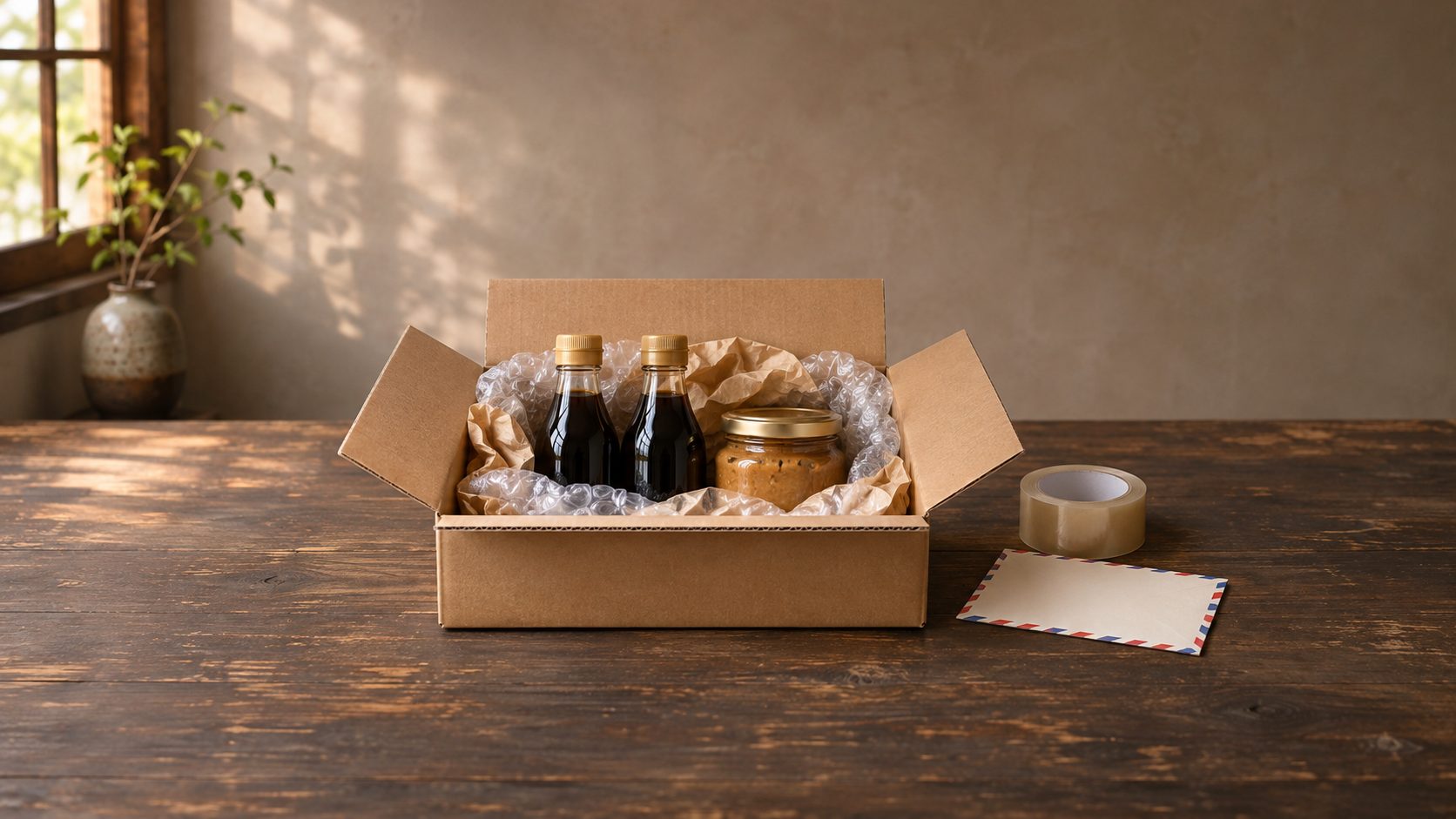
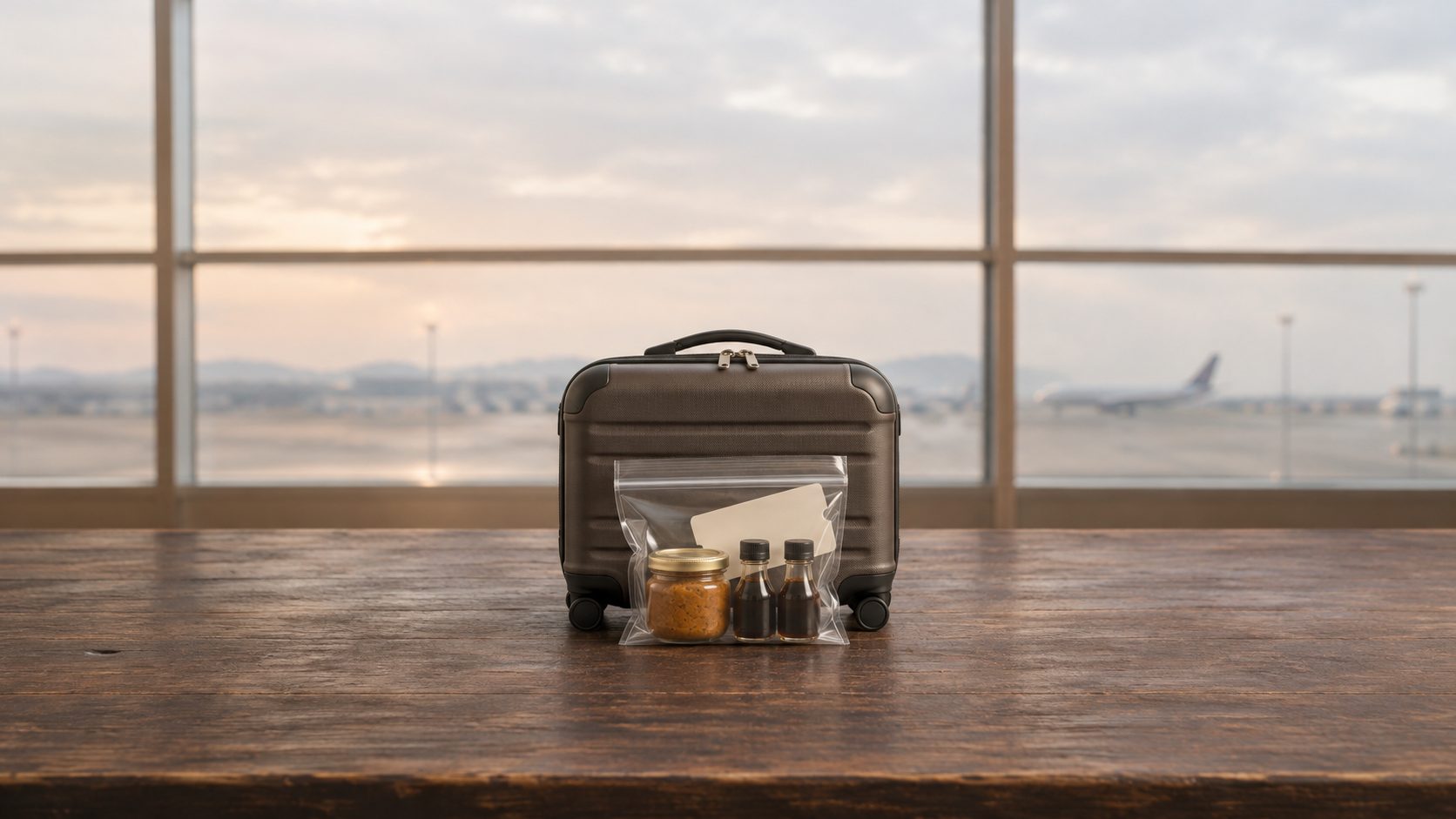
Two separate sets of rules apply to the seasonings in your bag, and travellers often mix them up. Aviation security decides what you can carry through the airport and into the cabin. Customs at the other end decides what the destination lets in. This page covers the first. The second is covered, country by country, in the guides linked below.
This page was written in November 2026 and links to the official sources throughout. Rules change, so check the source before you fly. Nothing here is legal advice, and the airport officer makes the final decision.
What the Japanese list says
For flights leaving Japan on international routes, the Civil Aviation Bureau of Japan's Ministry of Land, Infrastructure, Transport and Tourism publishes a list of the liquids, aerosols and gels that the restriction covers. Under the heading for sauces and condiments it names:
Soy sauce, Bean paste (Cochujang, Miso), Mayonaise, Ketchup
Source: MLIT Civil Aviation Bureau, List and Description of LAGs Restriction, dated 1 October 2015, spelling as in the original.
The list says these are permitted in containers of 3.4 ounces (100ml or 100g) or less, in one clear, plastic, zip-top 1L bag. It covers condiments in cans, bottles, containers and tubes. The general test in the document is whether an item cannot keep its shape without its container. It also says that dried spices such as chilli, pepper and curry powder are not covered by the restriction. The list I read is for international flights leaving Japan, and I did not check the rules for domestic flights or connections.
The document is from 2015 and says it is updated as needed, so check the current version with your airline or airport before you rely on it.
What this means for what you bought
| What you bought | In your cabin bag | In checked baggage |
|---|---|---|
| Soy sauce, 200ml bottle | No, over 100ml | Yes |
| Soy sauce, 100ml or less | Yes, in the 1L clear bag | Yes |
| Miso, a typical tub | No, over 100ml | Yes |
| Wasabi in a 43g tube | Yes, in the 1L clear bag (tube, paste) | Yes |
| Shichimi | Yes, dried spice (named in the list's exception for chilli, pepper and curry powder) | Yes |
| Dashi powder, furikake | Yes, dry (my reading, not named) | Yes |
| Ponzu, mentsuyu, sauces | Same as soy sauce | Yes |
Soy sauce and miso are named in the Japanese list. Ponzu, mentsuyu and other sauces fall under its heading for sauces and condiments. The wasabi tube, dashi powder and furikake are not named, and I am applying its general test and its note on dry spices to them.
The same 100ml limit is the US rule too. TSA's page for sauces says they are allowed in a carry-on at 3.4oz or 100ml or less (TSA, Salsa and Sauces). If you connect through another airport, the strictest rule you meet is the one that applies.
Packing for checked baggage
Glass and soft packaging both fail in a hold, so a little care goes a long way. Keep each bottle in its original sealed packaging, wrap it in a plastic bag, and place it in the middle of the suitcase surrounded by clothes. A miso tub is safer inside a sealed bag as well, because the lid is the weak point. Pack the paste and sauce bottles away from anything you cannot wash.
Then customs: the part that decides whether it gets in
Getting the bottle onto the plane is only half the question. Whether you can bring it into your country is a separate set of rules, and they differ more than the airport rules do. The guides in this series cover the USA, Canada, the UK, the EU, Australia, Singapore, Taiwan and Hong Kong.
The details differ by country. Some set no weight cap for plain condiments, and others cap them: Canada at 20kg or 20L, Thailand at 5kg or 5L inside a 10kg or 10L total, and Singapore at 5kg of processed food combined. Meat extract in a soup base is the product that causes trouble in several of them, and fresh produce such as wasabi root and fresh yuzu is the other thing to be careful with. Our comparison of nine destinations lays it out.
If you are in the US: the same seasonings on Amazon.com
If you live in the United States, some everyday Japanese seasonings are sold on Amazon.com, which saves you the weight and the customs form for those products. These are the product pages that came up when I searched in November 2026. They link straight to the page, and availability can change.
- Hikari Organic Miso Paste, White, 17.6 oz: a mild white miso, certified organic, made in Japan
- S&B Premium Wasabi Paste in Tube, 1.52 oz: the listing says it contains real wasabi. Some other S&B tubes are horseradish-based with colouring, so read the ingredients of the one you pick
- Nemoto Yawataya Isogoro Shichimi Togarashi and Yuzu Shichimi set: a Nagano seven-spice blend with a yuzu version
Stock, price and sellers change often, and I have not listed prices. These links do not carry any tracking tag, and we receive nothing if you buy.
These are everyday products. The makers on this site are mostly small producers, and most of what they make is not sold overseas, so that is what the checklist and the guides are for.
A short checklist
- Cabin bag: containers of 100ml or less, all in one clear 1L zip-top bag
- Checked bag: everything larger, wrapped, in original sealed packaging
- Dry spices and powders are not covered by the liquid rule
- Customs is separate. Read the guide for your destination before you pack
- Declare when you land if the rules of your country say to
Where to check before you fly
- MLIT: List and Description of LAGs Restriction: the Japanese list that names soy sauce and miso
- TSA: Liquids, Aerosols and Gels Rule: the US statement of the 3.4oz and 100ml quart-bag rule
- TSA: Salsa and Sauces: what the US says about sauces in a carry-on
Airports and airlines can apply the rules slightly differently, so if you are unsure, putting it in checked baggage is the safe answer.
Frequently asked questions
Can I take miso on a plane from Japan?
In checked baggage, yes, in any size. In your cabin bag only in containers of 100ml or less, inside one clear 1L zip-top bag. Japan's Ministry of Land, Infrastructure, Transport and Tourism lists bean paste, including miso, among the liquids and pastes covered by the restriction on international flights, so a standard tub does not pass the cabin check.
Can I carry soy sauce in my cabin bag out of Japan?
Only if each container is 100ml or less and all of them fit in one clear 1L zip-top bag. The Japanese government list names soy sauce directly. A typical 150ml or 200ml table bottle goes in checked baggage, wrapped in a bag in case it leaks.
Is wasabi paste in a tube allowed in my cabin bag?
Treat it as a paste. The Japanese list covers condiments in cans, bottles, containers and tubes, and its test is whether an item cannot keep its shape without a container. The list does not name wasabi, so I am applying the general test. A standard 43g to 45g tube is well under 100ml.
Can I take dry seasonings like shichimi or furikake in my cabin bag?
The Japanese list says dried spices such as chilli, pepper and curry powder are not covered by the restriction. Shichimi is a dried chilli blend, so it reads as covered by that exception. Furikake and dashi powder are not named, and I am applying the same logic to them, so treat that as my reading and not a ruling.
Does passing airport security mean the food is allowed into my destination?
No. Aviation security decides what goes through the cabin check. Customs and biosecurity at your destination decide what the country lets in. Soy sauce can be fine on the first and still need declaring on the second.