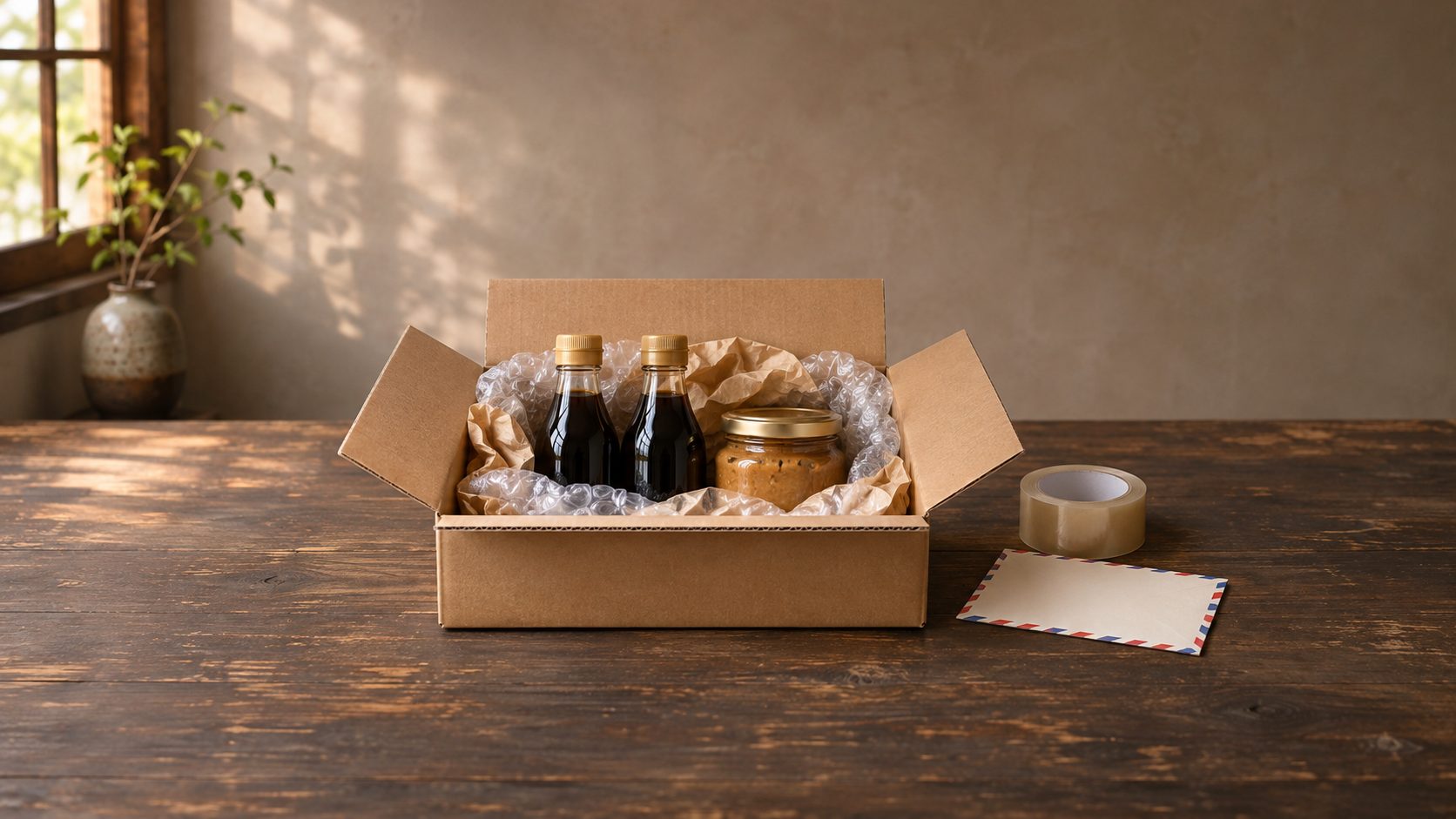
The same bottle of soy sauce faces nine different sets of rules, depending on where you land. They rarely contradict each other. What changes is the weight cap, the penalty, and how much the officer is likely to look.
This page was written in November 2026. It summarises the guides in this series, each of which links the official sources and was written from them. Rules change, so check the source before you fly. Nothing here is legal advice, and the officer at the border makes the final decision.
The comparison
| Destination | Soy sauce and miso | Meat extract in a seasoning | Fish dashi, katsuobushi | Fresh produce | Penalty for not declaring |
|---|---|---|---|---|---|
| USA | Generally admissible as condiments, no weight cap stated | Refused (food prepared with meat) | Most seafood is not regulated | Declare, may be refused | Civil penalty up to $1,000 on a first offence, non-commercial quantities |
| EU | Not caught by the ban | Refused (meat and dairy banned) | Up to 20kg or 1 fish | Limited quantities | Confiscation, fines, possible prosecution |
| UK | Packaged stocks and flavourings unrestricted | Refused (meat products banned) | Up to 20kg in total | Most needs a plant health certificate | Up to £5,000 in England, or prosecution |
| Canada | Condiments 20kg or 20L | Check AIRS | Dried fish 10kg, other fish 40kg | Own table rows | Not stated in the pages checked |
| Australia | Commercially packaged, shelf stable, sealed | Check BICON | Allowed, inspected on arrival | Declare | None if you declare. Substantial if you do not |
| Singapore | Reads as processed food, 5kg combined | Own meat table | Own fish table | Own table | Not stated in the pages checked |
| Thailand | Soy sauce and vinegar named, 5kg or 5L, within a 10kg or 10L total | Meat group 5kg | Not named | Under the Department of Agriculture | Not stated in the pages checked |
| Taiwan | Within a 6kg total for agricultural and food products | Pork fines from NT$200,000 | Not the target | Own rules | Heaviest on this list |
| Hong Kong | Reasonable quantity not controlled | Not a controlled seasoning | Not controlled | Not a seasoning issue | Where a control applies, up to HK$50,000 and six months |
Each row summarises the guide it links. Cells that say "not stated" mean the official pages I checked gave no figure, not that there is none. The detail, the official links and the dates are in the guides.
What the nine have in common
Three patterns hold across the table.
Packaged plant-based condiments pass. Soy sauce, miso, rice vinegar, sea salt and plain spice blends are not the target of any of these rules. The caps in Canada, Singapore and Thailand limit how much, and nothing in the sources checked refuses them outright.
Meat is the trap. A ramen soup base made with pork extract, or a chilli oil with beef in it, looks like a condiment on the shelf and is a meat product at the border. Four destinations here say so explicitly. Read the Japanese label for 豚 (pork), 牛 (beef), 鶏 (chicken) and the word エキス (extract), and see our guide to dashi and katsuobushi for how fish differs.
Fresh produce is the second trap. Fresh yuzu and fresh wasabi root are plants, and plants have their own rules and their own agencies. The processed versions, yuzu kosho and tube wasabi, travel well. See can you bring wasabi back from Japan.
What changes from country to country
The weight cap. The USA, the EU and Hong Kong state no cap for plain condiments in the sources checked here, so the suitcase is the limit. Canada's is 20kg or 20L. Thailand's is 5kg or 5L for liquid sauces inside a 10kg or 10L total of all food, and it adds a three-month rule. Singapore's is 5kg combined for processed food, and it is the tightest. If you are flying to Singapore, spend that allowance on lightweight, concentrated products.
The penalty. Taiwan's pork fine is the heaviest on the table. Australia and the USA are the most explicit that declaring protects you: Australia says you will not face a penalty if you declare all goods, even if they are not allowed in. If you are unsure about one item, declaring it costs nothing.
The packaging test. Australia is the one country that asks for commercially packaged, shelf-stable goods in sealed containers. A bottle filled for you at the brewery is the product to avoid there.
One rule that is not about customs
All nine sit downstream of the airport, and the airport has its own rule. For flights leaving Japan, soy sauce and miso count as liquids and pastes, so containers over 100ml go in checked baggage. See carrying miso and soy sauce on a flight out of Japan.
Where the rules are not covered here
Several destinations are missing: New Zealand, South Korea and the Philippines among them. I could not retrieve an official page for them that was good enough to write from, and I would rather leave a gap than guess. If you are travelling to one of them, go to the agriculture or customs agency's page for travellers and check three things: whether all food must be declared, whether there is a weight limit for condiments, and whether meat extract and fresh produce are restricted.
A short checklist
- Read the guide for your destination before you pack. The table above is a summary
- Check the label for meat extract on any blended seasoning
- Leave fresh produce in Japan, including fresh yuzu and wasabi root
- Pack bottles over 100ml in checked baggage
- Declare wherever your country asks for all food to be declared
Frequently asked questions
Which country is the easiest for bringing Japanese seasonings home?
Hong Kong, on the sources checked here. Its customs guidance generally does not control food in reasonable quantity for personal use, and its controls target fresh and frozen meat, poultry, game, eggs and milk. The one ordinary grocery item with a hard number is rice at 15kg.
Which country is the strictest?
Taiwan on penalties, where pork products carry a fine of NT$200,000 on a first offence, and Australia on enforcement, where detector dogs and x-ray screening are routine. On weight, Singapore is the tightest, with 5kg combined for processed food.
Is there a country where I can bring unlimited soy sauce?
No country sets no limit in practice, because the suitcase and the cabin rule do. The USA, the EU and Hong Kong state no weight cap for plain condiments in the sources checked here. Canada's cap is 20kg or 20L, and Thailand's is 5kg or 5L for liquid sauces within a 10kg or 10L total.
What do all these countries agree on?
Packaged, plant-based condiments are the easy case. Meat is the problem category, and fish is treated separately and more generously. Fresh produce is restricted. Declaring what you are unsure about costs nothing, and not declaring is where the penalties sit.
Where can I find the rules for a country that is not on this list?
Start with the destination's agriculture or customs agency and look for the traveller or personal-use page. Check three things: whether all food must be declared, whether there is a weight limit for condiments, and whether meat extract and fresh produce are restricted.