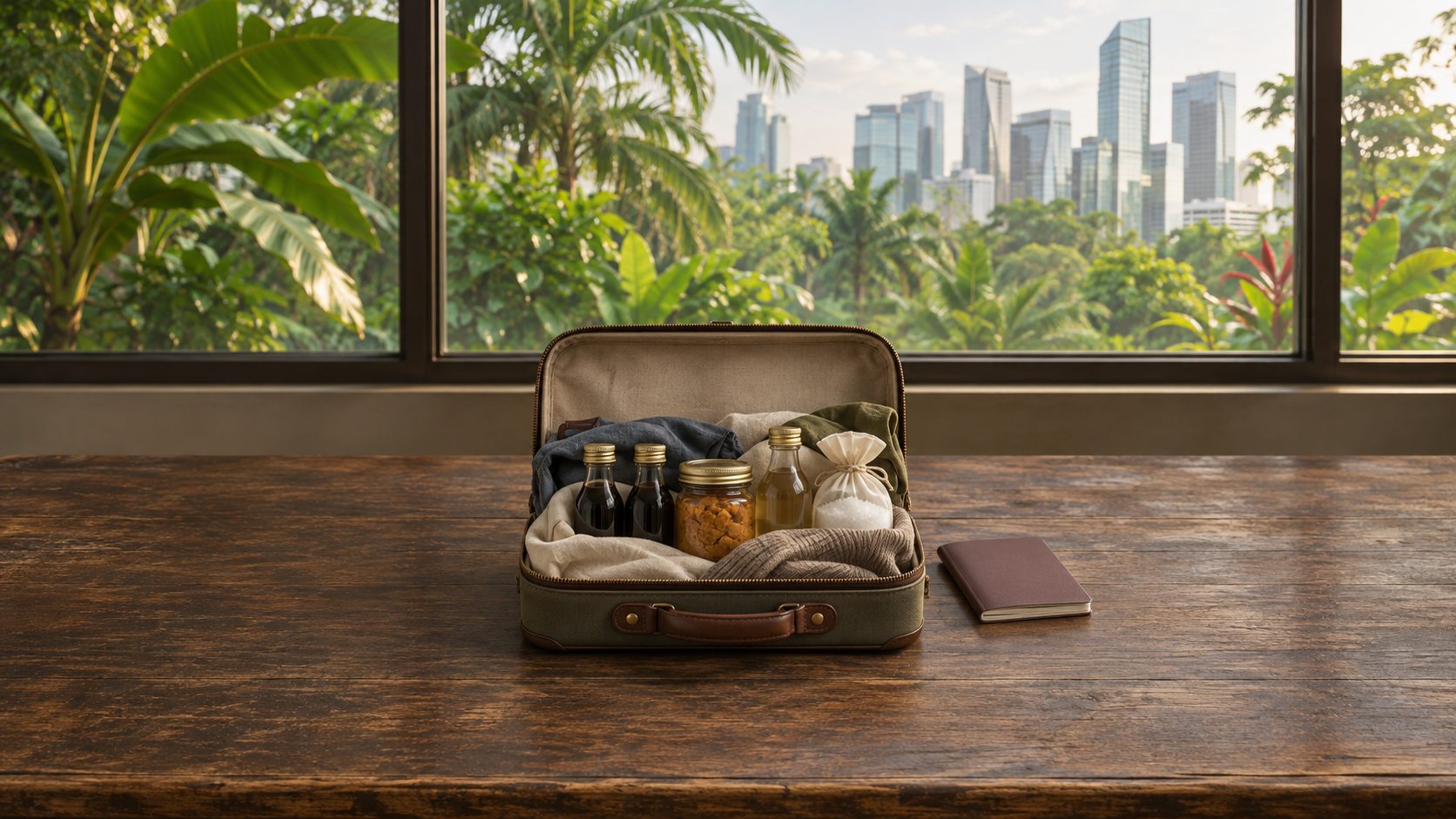
Singapore does not ban Japanese seasonings as such. It limits how much processed food you can carry, and the number is smaller than most people expect. Meat has its own table of approved sources, so a seasoning made with meat is the one to check.
This page was written in November 2026 and links to the official sources throughout. Rules change, so check the source before you fly. Nothing here is legal advice, and the officer at the border makes the final decision.
The number to plan around: 5kg
The Singapore Food Agency (SFA) publishes a list of food products travellers may bring in, with a limit for each category. The category that matters for a bag of seasonings is the last one:
All other processed food that is not meat, fish, eggs, or fruits and vegetables. For example, biscuits, ice cream, jam, kimchi, milk, mooncakes, nuts, and wine. All countries/regions. The combined weight of all items should not exceed 5kg.
Source: SFA, List of Food & Food Products Allowed, last updated 2 November 2026.
Read the unit carefully. It is 5kg combined, across everything in that category, not 5kg of each thing. The page does not name soy sauce, miso, vinegar or sauces. A bottled sauce and a tub of miso are processed foods with no meat, fish, eggs or fresh produce in them, so they read as part of this category. That is my reading of the table, not a line from SFA.
What 5kg looks like
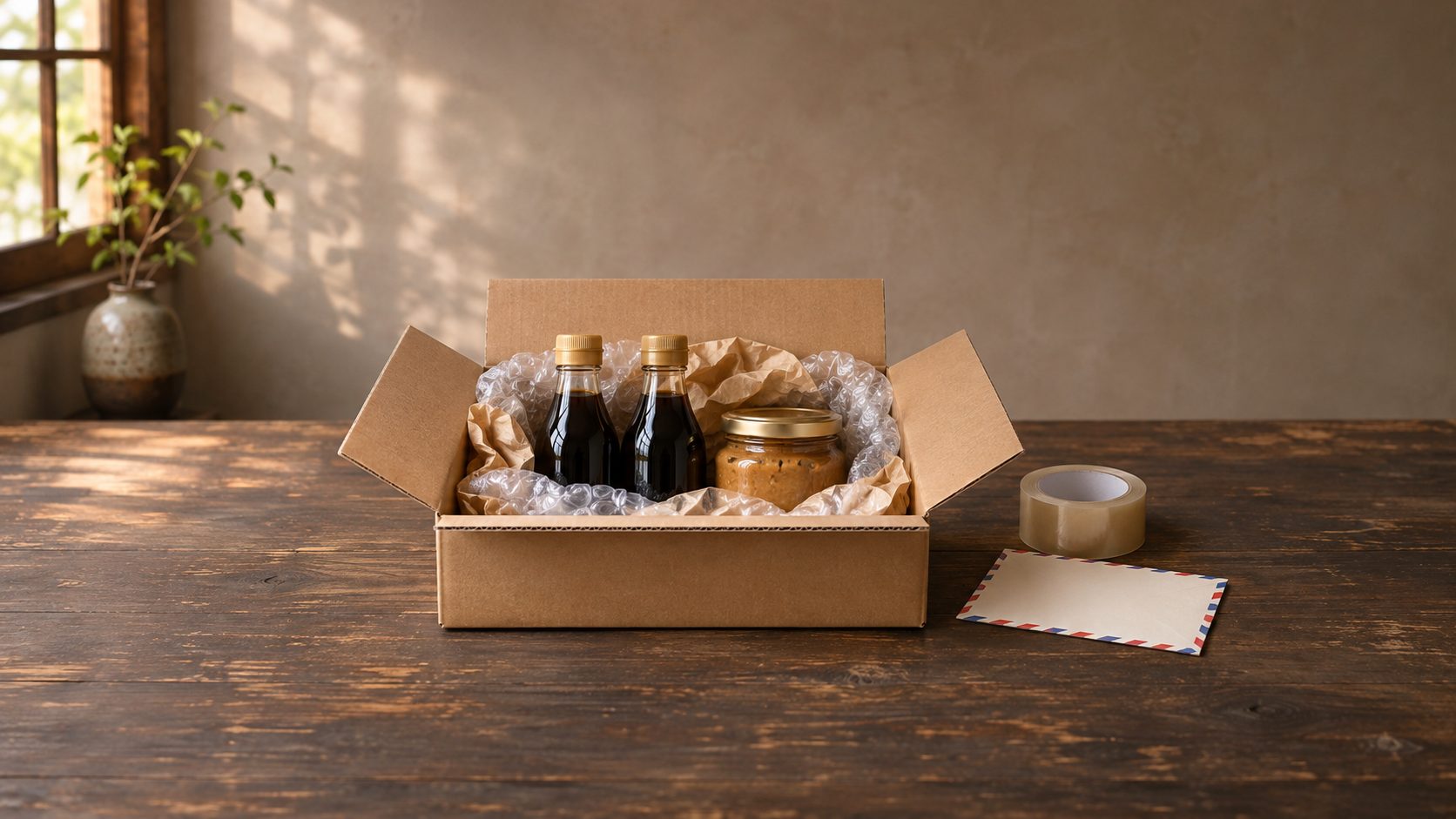
Seasonings are heavy for what they are. As a rough guide, a 1L bottle of soy sauce is over a kilogram on its own, a 750g tub of miso takes up more than a seventh of the allowance, and a jar of yuzu kosho and a bottle of ponzu add up quickly. A traveller who buys one bottle of each of five things is probably already at the limit.
So the useful question in Singapore is not whether you can bring something. It is which few things are worth the weight. Concentrated and lightweight products give you the most for 5kg: shichimi, sansho and yuzu kosho in a tube. A large bottle of soy sauce is the worst use of the allowance. Dashi that is made from dried fish is a separate case, covered below.
For your own use, not for sale
The general rule page states the principle:
An exception is made for travellers who bring in food from abroad strictly for their private consumption.
Source: SFA, General Rule to Bring Food into Singapore (Non-commercial), last updated 12 October 2026.
The same page adds that travellers are not allowed to sell any of the food, whether to friends or through online platforms. Selling is not allowed. For quantities above the limit, SFA points you to an import licence and permit and to its page on the process for larger quantities of food that are detained. I did not find more detail on that than the page gives.
Meat, fish and eggs have their own tables
The 5kg rule excludes meat, fish, eggs, and fruit and vegetables, which SFA handles in separate tables. For meat, SFA states that meat products include all forms of food products containing meat, with a list of approved source countries and a limit for each. That is the table to check for a seasoning or soup base that contains meat extract, because a blended product may count as a meat product, and the allowance depends on the type of meat and where it comes from.
Fish has its own table too. It lists fish products such as live fish, fish fillets, canned tuna and dried fish as allowed from all countries and regions, and the limit column for that row is blank. So katsuobushi, niboshi and dashi packs made from dried fish read as fish, not as part of the 5kg of processed food. That is my reading, because the table does not name them, so check the SFA table before you carry a large amount. Fruit and vegetables have their own row as well, which allows a small, reasonable, hand-carry quantity for private consumption.
Packing advice from SFA
SFA's general rule page gives practical tips that suit seasonings. It recommends choosing non-perishable items such as spices and heat-processed foods, buying from reputable and licensed shops, and wrapping food to keep the packaging secure and intact. For glass bottles of sauce that last point is the one that saves a suitcase.
A short checklist
- Keep processed food to 5kg combined, and expect soy sauce and miso to count
- Bring it for your own use. Do not sell it, including to friends or through online platforms
- Check the meat and fish tables if a product contains either
- Choose lightweight, concentrated products such as spice blends so the 5kg goes further
- Pack bottles over 100ml in checked baggage for the flight out of Japan
Going somewhere else
The rules differ by destination, sometimes sharply. The other guides in this series cover the USA, Canada, the UK, the EU, Australia, Thailand, Taiwan and Hong Kong. Our comparison of nine destinations puts them side by side. For the cabin rule on the way out of Japan, see carrying miso and soy sauce on a plane. For particular products, see dashi and katsuobushi, wasabi and lightweight seasonings that travel well. If you would rather post them, see mailing seasonings abroad.
Where to check before you fly
- SFA: List of Food & Food Products Allowed: the tables and limits, the page to read before you buy
- SFA: General Rule to Bring Food into Singapore (Non-commercial): the principles, including the ban on selling
- SFA: Process for Larger Quantities of Food Detained: what happens above the limit
The SFA page says it reviews approved sources and products from time to time, so the limit and the tables may have changed by the time you read this.
Frequently asked questions
Can I bring soy sauce into Singapore from Japan?
Yes, as part of the 5kg limit. SFA sets processed food that is not meat, fish, eggs or fruit and vegetables at a combined 5kg per traveller, from any country. The SFA list does not name soy sauce, but a bottled sauce is a processed food, so it counts towards the total. A 1L bottle on its own weighs over a kilogram.
Is miso allowed into Singapore?
Plain miso is a processed food with no meat, fish or eggs in it, so it reads as part of the 5kg combined limit. SFA does not name miso, so that is my reading. A tub of miso weighs several hundred grams, so two or three tubs alongside a few bottles of sauce can use up the allowance.
Can I sell Japanese seasonings I bring into Singapore?
No. SFA states that travellers may bring food in strictly for private consumption and may not sell any of it, whether to friends or through online platforms. To bring in larger quantities you apply for an import licence and permit, which is a separate process.
What happens if I bring more than 5kg of processed food?
The SFA page does not set out a penalty. It says that if you want to bring back more than the limit you should apply for an import licence and permit, and it publishes a separate page on the process for larger quantities of food that are detained. I did not find a fine amount in the pages I read, so plan to carry no more than the limit.
Are the Singapore food limits going to change?
SFA's list page says the Food Safety and Security Act includes provisions for more flexibility on the quantity of food brought in for private consumption, that it will be implemented in phases, and that the current rules and limits continue to apply until more details are shared. As of November 2026 the limit on the page is 5kg.