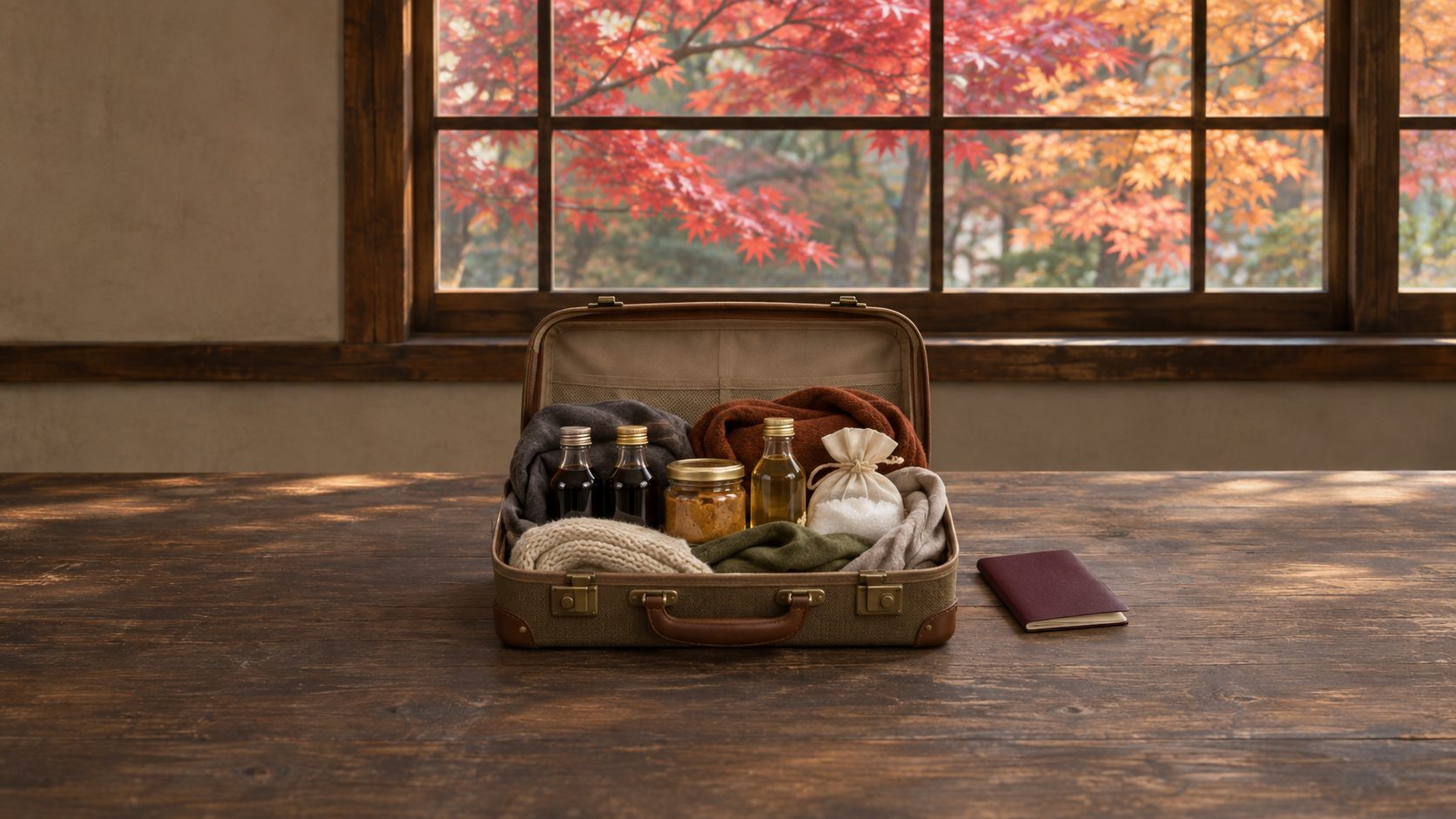
Canada is one of the easier destinations for a traveller carrying seasonings home from Japan, and the reason is the way its rules are written. Instead of a list of banned foods you have to rule out one by one, the CFIA gives a table of categories with a weight for each. Condiments have a high one.
This page was written in November 2026 and links to the official sources throughout. Rules change, so check the source before you fly. Nothing here is legal advice, and the officer at the border makes the final decision.
The one rule: declare it
Before the limits, the procedure. The CFIA's page for travellers puts it in one sentence:
When travelling, you must declare all food products you bring with you into Canada.
Source: CFIA, Food requirements for travellers, page last modified 26 May 2026.
The same page adds that the product may be inspected by the Canada Border Services Agency at the airport. Declare the sealed bottle with the rest of your food and be ready to show it.
The limits that apply to seasonings
The CFIA publishes a per-person table of what you may bring for personal use. The traveller page above shows the condiments row, and the full table sits on a separate page last modified in April 2021. These are the rows a traveller with a bag of Japanese seasonings will meet:
| What you bought | Category in the CFIA table | Limit per person |
|---|---|---|
| Soy sauce, ponzu, mentsuyu, sauces | Condiments, dressings | 20kg, or 20L if measured by volume |
| Miso | Condiments, dressings | 20kg |
| Sesame oil, rapeseed (canola) oil | Oils | 50L |
| Dried bonito, niboshi, dried fish | Dried fish | 10kg |
| Other fish and seafood products | Fish and seafood, other than dried fish and fish roe | 40kg |
| Honey | Honey | 20kg |
| Biscuits, rice crackers | Baked goods, confectionery, snacks | 20kg, and cannot contain meat |
The limits come from the CFIA's personal use table (Personal use exemption, CFIA), and the condiments and baked goods rows also appear on the traveller page. Every match between a product and a row in my table is my reading, because neither page names soy sauce, miso, katsuobushi, ponzu or rice crackers. The condiments row reads as the home for sauces and miso. The CFIA's own wording for the table is the one to rely on.
Twenty kilograms is a lot. A traveller's suitcase gives out long before the allowance does, so for soy sauce and miso the practical limit is airline baggage, not the CFIA.
Dried fish and dashi
Dashi products are where the labels need a second look, because the table separates fish by form. Dried fish has its own 10kg row, and a dashi pack that contains dried bonito or dried sardine looks like a fit for it, though the table does not name them. Ten kilograms of katsuobushi is far more than anyone carries home, so the limit does not bite.
The sensible habit is the same as in other countries: read the ingredients for the animal. Fish products have a row. A soup base or seasoning that contains meat is a different question, and the CFIA points travellers to its import database, AIRS, for items the table does not settle.
Fugu, and anything with meat
Two things in the CFIA text are specific to Japan. The first is that pufferfish is not permitted into Canada. A packet of dried or processed fugu from a gift shop is not a seasoning, but it sits on the same shelf, and the CFIA's answer is no.
The second is meat. For baked goods and confectionery the table says plainly that they cannot contain meat, so a rice cracker flavoured with a meat extract is the kind of product that fails that test. A ramen soup base built on pork is not in those rows, and the table does not settle it, so check AIRS before you pack one. Plain soy sauce, plain miso, vinegar and salt contain no meat.
Fresh wasabi and fresh yuzu
The table covers fresh vegetables and fruit under their own rows, and neither page names wasabi root. Fresh wasabi rhizome and fresh yuzu are produce, not condiments, so the condiments row does not cover them. If you want the flavour, buy the paste in a tube or the yuzu kosho. Both are processed, they travel better, and they sit in a category with a clear answer.
A short checklist
- Declare everything when you land in Canada
- Soy sauce, miso, vinegar and sauces fall under condiments, 20kg or 20L per person
- Dried bonito and dried fish have their own row, 10kg
- No pufferfish products, and nothing with meat in the snack and sweet categories
- Pack bottles over 100ml in checked baggage for the flight out of Japan
Going somewhere else
The rules differ by destination, sometimes sharply. The other guides in this series cover the USA, the UK, the EU, Australia, Singapore, Thailand, Taiwan and Hong Kong. Our comparison of nine destinations puts them side by side. For the cabin rule on the way out of Japan, see carrying miso and soy sauce on a plane. For particular products, see dashi and katsuobushi, wasabi and lightweight seasonings that travel well. If you would rather post them, see mailing seasonings abroad.
Where to check before you fly
- CFIA: Food requirements for travellers: the traveller-facing summary, including the declaration rule
- CFIA: Personal use exemption: the full table of per-person limits, last modified April 2021
- CFIA: Automated Import Reference System (AIRS): the database to check when the table does not settle a product
The two CFIA pages carry different modification dates, 26 May 2026 for the traveller page and April 2021 for the full limits table, so if the limits matter for what you are carrying, read both pages and check with the CFIA that the table is current.
Frequently asked questions
Can I bring soy sauce into Canada from Japan?
Yes, within a limit. The CFIA lists condiments and dressings at 20kg, or 20L if measured by volume, per person, and the table shows no other restriction for the category. Soy sauce is a condiment. Declare it when you arrive, and pack any bottle over 100ml in checked baggage for the flight itself.
Is miso allowed into Canada?
Plain miso is a soybean paste with salt and koji, and it sits in the same condiments category. The limit is 20kg per person. The one thing to check is the label, because some miso has dashi blended in, and fish, dried fish and meat are each handled under their own rows of the CFIA table.
How much katsuobushi or dried fish can I bring into Canada?
The CFIA table sets dried fish at 10kg per person, and fish and seafood other than dried fish and fish roe at 40kg. Katsuobushi is dried bonito, so the dried fish row is the likely fit, but the table does not name it, so check the CFIA's import database (AIRS) if you are carrying a lot.
Do I have to declare food at the Canadian border?
Yes. The CFIA says that when travelling you must declare all food products you bring into Canada, and that your product may be inspected by the Canada Border Services Agency at the airport. Keep the food in its labelled packaging so it is easy to identify.
Can I bring fugu or pufferfish products to Canada?
No. The CFIA states that pufferfish is not permitted into Canada. That covers dried or processed fugu products you might find in a Japanese gift shop.